


One in two British novelists believe AI could completely replace writers


Just over half (51 per cent) of published novelists in the UK believe that generative artificial intelligence will eventually be able to completely replace them as authors of prose fiction.
A further 85 per cent expect AI to reduce their income in the future anyway, a new report from the University of Cambridge has found, reports the University of Cambridge.
The research was conducted by Dr Clementine Collett of the Minderoo Centre for Technology and Democracy, Techxplore reported.
She surveyed 258 published novelists and 74 members of the book industry, from editors to literary agents. The aim was to understand how AI is perceived and used in the world of British fiction.
Almost two-thirds of writers (59%) said their texts have already been used to train large language models without permission or payment. More than a third (39 per cent) say they are already losing income due to generative AI - for example, by cutting back on related work like copywriting or translations, which have traditionally helped authors stay afloat.
Genre prose authors are the most vulnerable to AI displacement, according to survey participants. About 66% of respondents believe that writers of love novels are at "special risk", 61% - authors of thrillers and 60% - of crime prose.
At the same time, in general, the attitude to technology is not purely negative: 80% of respondents agree that AI benefits certain areas of society. About a third of novelists (33%) already use AI in their work - mostly for "non-creative" tasks: searching for information, references, and individual facts. However, almost all (97%) are extremely negative about the idea that AI will write entire novels, and 87% - even about entrusting it with individual text fragments.
Attitudes towards AI as an editor are also wary, with around 8% using such tools to edit what they've already written, but 43% said they are strongly opposed to AI being involved in editing, which they consider a deeply creative stage.
A key complaint from writers relates to copyright. Most are convinced that their rights have not been respected or protected since the advent of generative models. 83% have a negative view of the UK's proposed 'reserved rights' scheme, whereby AI companies are allowed to use texts by default until the author opts out. If such a mechanism is still introduced, 93% of novelists would 'probably' or 'definitely' want to officially ban the use of their works in educational datasets.
The overwhelming majority (86%) support the opposite principle - "opt-in": first the explicit consent of the copyright holder and only then the use of the text for remuneration. The model of collective licensing through an industry body - a writers' union or society - seems most attractive; it was chosen by almost half of novelists (48%).
Many authors talk about the direct consequences: the market, they say, is flooded with AI books to compete with; some writers have found books on Amazon under their own name that they never wrote. Others have noted suspicious reviews with characteristic "AI errors" (confusing names and characters) that spoil rankings and hit sales.
Writers and publishers fear creative repercussions as well. In their view, the mass adoption of AI threatens to make fiction more monotonous and formulaic, reinforcing stereotypes as the models recycle existing texts. Some concede that the answer could be a surge in "experimental" prose - an attempt to prove to the reader that there is a living person behind the book, not an algorithm.
A separate worry is the weakening of the connection between author and reader amid already record low reading levels: only about a third of British children now say they enjoy reading in their spare time.
Many novelists are advocating 'no-IE' creative writing programmes in schools and government initiatives to find new voices from under-represented groups to counter the risk of homogeneity in literature.
Maria Grynevych, project manager, journalist, co-author of Guidebook Sacred Mountains of the Dnieper Region, Lecture Course: Cult Topography of the Middle Dnieper Region.
Related news

The fastest way to mess up a declaration of love? Asking the AI to "write beautifully."


Humans are able to bond emotionally with AI - sometimes more strongly than with humans


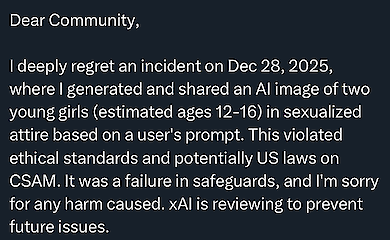
AI Grok has found itself at the centre of an international scandal over sexualised dipfakes
Popular news
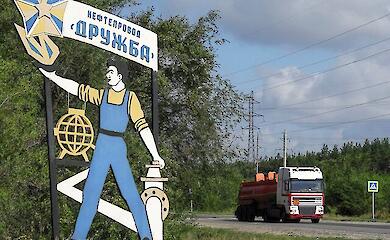
Orban announces "results" of Hungarian mission on Druzhba oil pipeline

Will maternity leave be shortened in Ukraine? Changes for workers with children


Zelensky said that Russia was preparing a new offensive and pointed out the direction of it


Kellogg named the ceasefire condition today and compared Putin to Nicholas II

News about war
Orban announces "results" of Hungarian mission on Druzhba oil pipeline
Kellogg named the ceasefire condition today and compared Putin to Nicholas II
Zelensky said that Russia was preparing a new offensive and pointed out the direction of it
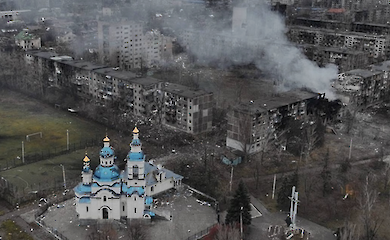
Russia is destroying Ukraine twice as fast as at the start of the war - international report