


'Not in the mood' at Christmas: why it happens and how to help yourself


Psychological normality, "temporal anchoring" and micro-rituals: how to survive the holidays if you're not having fun.
Christmas is commonly thought of as a time of warmth, closeness and "obligatory" happiness. But for many, the festivities become the opposite experience - increasing feelings of isolation, sadness and painful comparisons. If you're spending Christmas alone, experiencing a loss, a break-up or just not feeling the festive spirit, it doesn't mean there's "something wrong" with you, writes The Conversation author Paul Jones.
The key takeaway: psychological loneliness doesn't equal physical loneliness. It has nothing to do with the number of people around you, but with a sense of connection - and the fact that that connection is missing right now.
According to the author, December often "brings up" memories - of people who aren't around and of "the old version of ourselves." Psychologists call this phenomenon "temporal anchoring": the season becomes a reference point that brings us back to the past and forces us to summarise, sometimes very painfully. Against this backdrop, the contrast with the cultural expectation of joy and gratitude is heightened: it is as if it is not only the garlands that need to "shine", but also ourselves.
People can be particularly vulnerable in times of change: after a breakup, move, dismissal or medical diagnosis. A separate risk group is those who have had difficult experiences of family, loss or trauma: "forced cheerfulness" can feel unbearable.
What's happening to the body
The author reminds us: studies have linked chronic loneliness to increased stress hormones (e.g. cortisol), weakened immune function and cardiovascular risks. Social neuroscientist John Cacioppo described loneliness as a "biological warning system": a signal that a basic need for connection is not being met.
That said, loneliness is a normal human response to the gap between the kind of sociality we want and what is actually there. Through the lens of "self-expansion" theory, it is explained this way: when there is a gap between "the real me" and "the way I should be" (including "should be happy at Christmas"), there is emotional pain. The holidays only widen that gap.
Loneliness as a choice is not the enemy
One important emphasis: being alone at Christmas isn't necessarily a bad thing. For some, it's a chance for quiet, recovery and a 'reset'. Supporting yourself can be about consciously embracing autonomy - choosing to live the day in the way that suits you, rather than the way you 'should'.
What can help
The author suggests not "fixing" loneliness with a to-do list, but tuning in to your needs. Among the practices:
Give yourself permission to feel. Loneliness is painful - and it can be called out loud. Suppressing it usually only adds to the tension.
Create micro-rituals. Tea "like when I was a kid," a film, a candle in memory of a loved one, a short walk - small actions give structure and meaning.
Redefine connection. Intimacy isn't just about the crowd. Sometimes all it takes is one text, a short phone call or a quiet online contact.
Take away the pressure of the 'perfect holiday'. Do what's supportive, not what looks "right" on social media.
Find your Christmas format. A pyjama day, a solo outing, a conversation with one person you trust - there is no "right" scenario.
Author's conclusion: if you feel "out of rhythm" with the holidays, it's not a breakdown, it's an awareness. Sometimes the most important connection that can be reestablished on days like these is the connection to yourself.
Maria Grynevych, project manager, journalist, co-author of Guidebook Sacred Mountains of the Dnieper Region, Lecture Course: Cult Topography of the Middle Dnieper Region.
Related news


Toxic people in your environment may accelerate ageing, study shows


Scientists show: working with childhood memories helps you fear failure less

Sometimes the brain itself is looking for something to distract itself with - scientists have explained why
Popular news
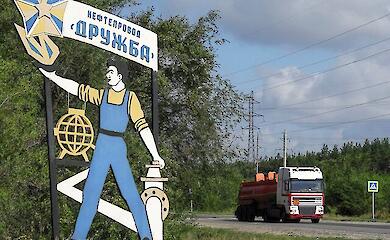
Orban announces "results" of Hungarian mission on Druzhba oil pipeline


Will maternity leave be shortened in Ukraine? Changes for workers with children


Zelensky said that Russia was preparing a new offensive and pointed out the direction of it

Kellogg named the ceasefire condition today and compared Putin to Nicholas II

News about war
Orban announces "results" of Hungarian mission on Druzhba oil pipeline
Kellogg named the ceasefire condition today and compared Putin to Nicholas II
Zelensky said that Russia was preparing a new offensive and pointed out the direction of it
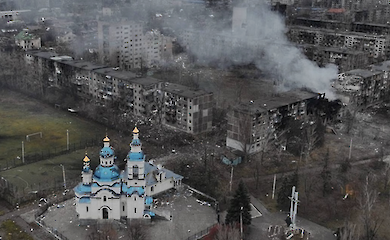
Russia is destroying Ukraine twice as fast as at the start of the war - international report