


New material from China can stop a bullet better than Kevlar


Kevlar, for decades a symbol of reliable protection from body armour to armoured vehicles, has a serious competitor.
Researchers from Peking University have developed a new fibre that is stronger, more resilient and more efficient than Kevlar, although it is considerably thinner. The results are published in the journal Matter.
In order for a material to withstand the impact of a bullet, it must simultaneously have high strength(the ability not to collapse under the influence of force) and high toughness (the ability to absorb the energy of impact without breaking). But until now, these two properties have rarely been combined: the stronger the fibres become, the more brittle they become.
Professor Jin Zhang 's team has spent six years trying to solve this problem. The researchers created a new type of fibre by combining two materials: heterocyclic aramid - a type of ultra-strong synthetic fibre similar to Kevlar - and treated long carbon nanotubes (tl-SWNTs). These nanotubes are unique structures, much thinner than a human hair, characterised by tremendous stiffness and lightness.
The key step was not simply joining the materials, but precisely aligning the molecular chains. The scientists made the base aramid fibre more flexible and stretched it repeatedly until the polymer and nanotube chains lined up strictly parallel. This orientation creates a dense internal structure in which molecules literally "block" each other's movement. As a result, the material is able to absorb huge amounts of energy without collapsing even under strong shocks.
In laboratory tests, the new fibre has demonstrated outstanding performance. Its dynamic strength was significantly higher than all existing analogues, and the absorbed energy reached 706 megajoules per cubic metre - double the previous record. In tests simulating ballistic loads, the fabric made from the new material outperformed Kevlar samples in terms of resistance to penetration.
"Our research offers an efficient way to create aramid fibres with record-breaking dynamic strength and toughness, and provides new insights into their mechanisms of operation," the authors said.
If the technology is implemented, body armour and protective materials of the future could become many times lighter, thinner and safer. This is especially important for military, police and rescue workers, whose protection directly affects mobility and endurance.
The new development opens up opportunities not only for the defence industry, but also for aviation, space and automotive production - wherever strength and lightness need to be combined.
Mykola Potyka has a wide range of knowledge and skills in several fields. Mykola writes interestingly about things that interest him.
Related news
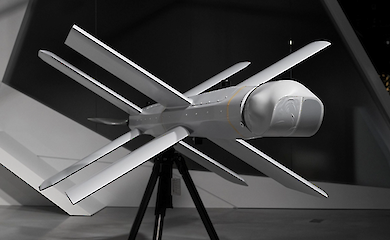
Drone with artificial intelligence? What fell on Maidan Nezalezhnosti - statement of the Ministry of Defence and experts' opinion


The planet's most destructive weapon: what is the difference between atomic and nuclear bombs


It has become known who in the United States decided to stop supplying weapons to Ukraine

Media: Ukraine has handed Germany a "secret list" of desired weapons worth billions of euros
Popular news

Orban announces "results" of Hungarian mission on Druzhba oil pipeline


Will maternity leave be shortened in Ukraine? Changes for workers with children


Zelensky said that Russia was preparing a new offensive and pointed out the direction of it

Kellogg named the ceasefire condition today and compared Putin to Nicholas II

News about war
Orban announces "results" of Hungarian mission on Druzhba oil pipeline
Kellogg named the ceasefire condition today and compared Putin to Nicholas II
Zelensky said that Russia was preparing a new offensive and pointed out the direction of it

Russia is destroying Ukraine twice as fast as at the start of the war - international report