


Nearly half of middle-aged women experience sexual dysfunction - study
- Home
- Life
- Healthy lifestyle
- Nearly half of middle-aged women experience sexual dysfunction - study


Almost 50 per cent of women aged between 40 and 69 have problems with sexual wellbeing - this data was presented by researchers from Monash University (Australia).
A large-scale study published in The Lancet Obstetrics, Gynaecology & Women's Health was the largest of its kind and showed that in early perimenopause the likelihood of desire and arousal disorders doubles compared to pre-menopause.
The authors emphasise that early perimenopause is an important period of change when women's sexual health is particularly vulnerable and there are few therapeutic solutions available.
Study leader Professor Susan Davies, who heads Monash University's Women's Health Research Programme, said the importance of sexual wellbeing is often underestimated:
"It's impossible to separate sexual health from a woman's overall health. It affects not only intimate relationships, but also her emotional and physical wellbeing."
The study involved 5,468 middle-aged Australian women. Among them, 2,583 women identified personal experiences related to sexual dysfunction. One in four participants had experienced clinical sexual dysfunction, and a similar number experienced emotional discomfort without significant physiological problems.
The WHO classification (ICD-11) defines female sexual dysfunction (FSD) as a constellation of difficulties causing personal distress - these are disorders of desire, arousal, orgasm or unspecified forms. FSD reduces quality of life and increases the risk of depression, emotional crises and relationship problems.
According to the paper, the most common disorders were decreased sex drive (13.3%), decreased arousal (13.1%) and negative perceptions of one's own body and sexuality (12.8%). And it was women with low sexual self-esteem who most often reported severe emotional distress.
First author of the study, Dr Yuanyuan Wang, specified that the scientists took into account many factors: age, marital status, body mass index, vaginal dryness, symptoms of depression, taking antidepressants and experience of psychological or sexual abuse.
"Sexual difficulties become more common with age, but the emotional strain associated with them decreases. Female sexual dysfunction was most likely to occur between the ages of 55 and 59," explained Wang.
Professor Davies added that the risk of impaired desire, arousal and self-esteem doubles in the early stages of perimenopause, making this period particularly important for prevention and medical support.
However, the authors note, formal clinical guidelines for perimenopausal women are almost non-existent, and approved medications for the treatment of sexual dysfunction are limited and mostly reserved for premenopausal or postmenopausal patients.
"Our data show that millions of women need effective interventions and standards of care specifically at the perimenopausal stage," Davis emphasises.
Maria Grynevych, project manager, journalist, co-author of Guidebook Sacred Mountains of the Dnieper Region, Lecture Course: Cult Topography of the Middle Dnieper Region.
Related news

'If you have kidney stones, you need to drink more water'. Scientists have tested a well-known myth




Scientists have discovered how a father's health affects his child before conception
Popular news
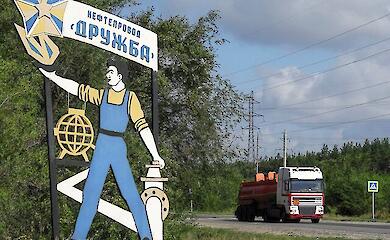
Orban announces "results" of Hungarian mission on Druzhba oil pipeline

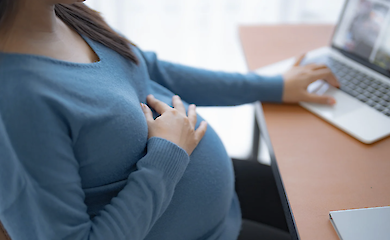
Will maternity leave be shortened in Ukraine? Changes for workers with children


Zelensky said that Russia was preparing a new offensive and pointed out the direction of it

Kellogg named the ceasefire condition today and compared Putin to Nicholas II

News about war
Orban announces "results" of Hungarian mission on Druzhba oil pipeline
Kellogg named the ceasefire condition today and compared Putin to Nicholas II
Zelensky said that Russia was preparing a new offensive and pointed out the direction of it
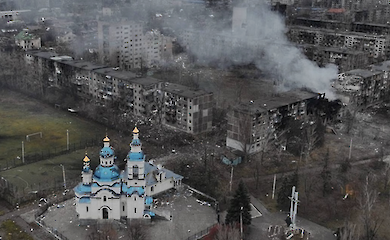
Russia is destroying Ukraine twice as fast as at the start of the war - international report