


Mystery of Toronto's 'underground deer' solved after 50 years


For nearly half a century, mysterious remains found under the streets of Toronto have kept scientists busy.
In 1976, when workers were laying a new underground line, they came across unusual antlers with massive horizontal branches.
The find immediately attracted the interest of specialists, and the species was named Torontoceros hypogaeus - "Toronto's underground deer".
It quickly became a legend among the people as "the deer from the underground".
However, despite the initial surge of interest, to establish to what species belonged to the ancient animal, scientists for many years could not. Antlers seemed too unusual for known North American deer, and attempts to compare the specimens with other fossil material did not yield results.
The situation changed only recently, when specialists from the University of Trent applied modern methods of analysing ancient DNA. The researchers studied the genetic material of about two dozen remains of representatives of the reindeer family - from ancient moose to the ancestors of reindeer - and compared them with the mysterious "horns and h of the underground". As it turned out, the remains do not match any of the known species.
The newest analysis allowed to establish: the mysterious Torontoceros belongs to a previously unknown, now extinct species, close to modern vilorogi - white-tailed and black-tailed (mule) reindeer. As explained the head of the study, Dr Aaron Shafer, "this species can be considered a kind of ancient relative, a kind of "grandfather" of the current North American deer".
The scientists note that the extinction of Torontoceros is most likely linked to the large-scale extinction of megafauna around 12,000 years ago - a period when many large mammal species were unable to adapt to the rapid climate change following the last ice age.
The work was carried out by Dr Schafer and Dr Camilla Kessler. The full study will be published in the journal Biology Letters and is already available as a preprint.
An independent researcher, interested in archaeology and sacred geography. He researches them and writes about them.
Related news
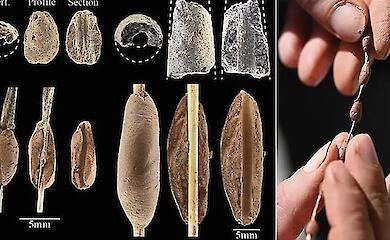
Archaeologists have found children's fingerprints in 15,000-year-old clay

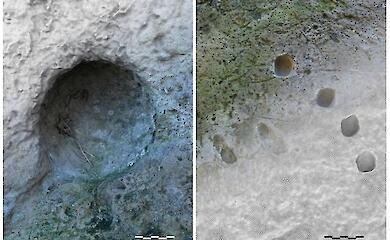
Traces of an "ancient machine gun" have been found in Pompeii
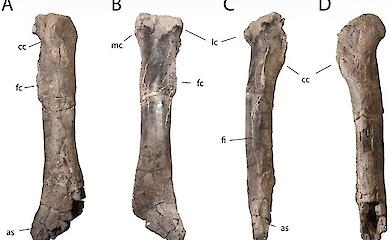
Scientists have found a huge bone from a possible ancestor of T. rex
Popular news
Orban announces "results" of Hungarian mission on Druzhba oil pipeline


Will maternity leave be shortened in Ukraine? Changes for workers with children


Zelensky said that Russia was preparing a new offensive and pointed out the direction of it


Kellogg named the ceasefire condition today and compared Putin to Nicholas II

News about war
Orban announces "results" of Hungarian mission on Druzhba oil pipeline
Kellogg named the ceasefire condition today and compared Putin to Nicholas II
Zelensky said that Russia was preparing a new offensive and pointed out the direction of it

Russia is destroying Ukraine twice as fast as at the start of the war - international report