


Mysterious graves have been unearthed near Pompeii


Archaeologists have made significant new discoveries near the ruins of Pompeii.
This is reported by The Heritage Daily.
The excavations uncovered 35 earthen burials from the pre-Roman period, each covered with amphorae arranged in alternating necks and tips.

According to a press statement, the necropolis was discovered during construction work on an underground car park on Via Fucci, east of the Roman city.
Analyses of the amphorae showed that they date from the 3rd to 1st century BC and originate from North Africa. This conclusion is based on the maker's markings in Punic, also known as Carthaginian.
The anaerobic conditions caused by immersion in groundwater preserved the skeletal remains well. Among these remains are rare funerary objects such as ungentarii (small ceramic bottles) and a few coins.
Other pre-Roman artefacts were found in the adjacent channel, probably associated with destroyed funerary contexts. These artefacts included hundreds of tile fragments, pieces of preserved wood, amphorae and dolii - large clay vessels used to store or transport goods.
The canal also contained 20 small columellae made of volcanic stone, a tile with an inscription in the local Oscan language and a stone head carved from grey Campanian tufa, depicting a woman with preserved red paint.
According to archaeologists, the canal was probably built after the siege of Pompeii by Sulla during the Social War (91-87 BC), a conflict between the Roman Republic and several autonomous allies, including Pompeii.
Beneath a thick layer of pumice from the eruption of Vesuvius in 79 AD, traces of an extensive field system were discovered. This field system indicates the presence of ancient furrows and pits, aligned in a north-south direction, which supplied the markets and households of Roman Pompeii with fresh produce.
Organic residues and pollen are being analysed to determine what vegetables were grown. However, the root system and distribution patterns suggest that perennial artichokes were most likely grown in the area.
Mykola Potyka has a wide range of knowledge and skills in several fields. Mykola writes interestingly about things that interest him.
Related news
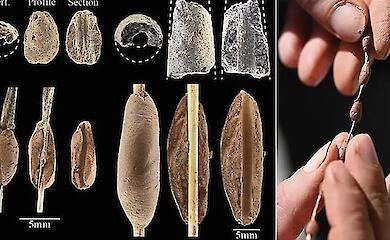
Archaeologists have found children's fingerprints in 15,000-year-old clay

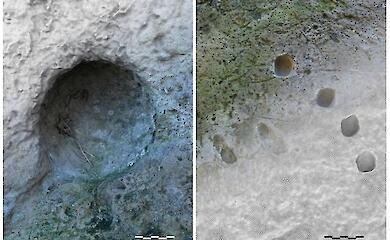
Traces of an "ancient machine gun" have been found in Pompeii



Popular news
Orban announces "results" of Hungarian mission on Druzhba oil pipeline


Will maternity leave be shortened in Ukraine? Changes for workers with children


Zelensky said that Russia was preparing a new offensive and pointed out the direction of it


Kellogg named the ceasefire condition today and compared Putin to Nicholas II

News about war
Orban announces "results" of Hungarian mission on Druzhba oil pipeline
Kellogg named the ceasefire condition today and compared Putin to Nicholas II
Zelensky said that Russia was preparing a new offensive and pointed out the direction of it
Russia is destroying Ukraine twice as fast as at the start of the war - international report