

"My family is here": why millions of Ukrainian women did not leave the country despite the war
- Home
- Society
- War in Ukraine. The storybook
- "My family is here": why millions of Ukrainian women did not leave the country despite the war


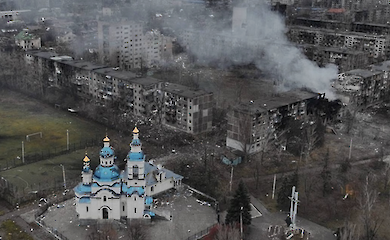
The full-scale war unleashed by Russia in February 2022 has forced millions of Ukrainians, mostly women and children, to flee their homeland. However, some 31 million, according to the Centre for Economic Strategy, continue to live in their homeland despite the daily risks.
Among those who remain are many women balancing caregiving responsibilities, security threats, or economic hardship. And while most men of conscription age are restricted by law from leaving the country, Ukrainian women stay mostly by choice. What keeps them at home, despite shelling and anxiety? How many of them are thinking of leaving, and what conditions could push them to leave Ukraine? Socportal visited the presentation of the study "Women in War: Motivations to Stay and Reasons to Leave", during which researchers and authorities tried to find answers to these questions.
Who Stays: A Portrait of Ukrainian Women During the war
The survey involved 2018 women aged 18-60 from all of Ukraine's controlled territory (additionally, about 300 more internally displaced women and women who returned from abroad were interviewed). The focus on women was chosen because the researchers wanted to eliminate the factor of legal restrictions holding men back.
If you ask a man why he stays, 80-85 per cent will answer: "I have a legal ban on leaving," explains Natalia Zaika, one of the authors of the study.
Therefore, sociologists focused on those who are free to choose—Ukrainians of working age living in the country for the third year of the war.
Since the beginning of the invasion, 39 percent of the women surveyed have had to leave their homes at least once because of the hostilities. More than half of them (53%) have already returned. Now 18 percent of respondents continue to be internally displaced persons (IDPs) in other regions, 12 percent have returned to Ukraine after living abroad, and another 11 percent used to be IDPs but have already returned to their hometown or village. Every tenth respondent has experienced occupation, and 90% of women have experienced traumatic events over the years: rocket attacks (55% of respondents), destruction or serious damage to housing (14%), and loss of someone from their relatives (21%). In addition, almost every third person has a loved one who is currently serving or has served in the defense forces.
Before the war, 76 percent of the survey participants lived in their housing, but now only 16 percent of internally displaced women have a separate flat or house in their new place.

The rest have to rent accommodation (64% of IDPs rent flats) or live with relatives or in state-provided accommodation. Even among those who returned from evacuation abroad, 15 percent cannot return to their homes and have to look for other accommodation. Material deprivation affected most families: 74 percent of women reported that their income had decreased compared to the pre-war period, while only 6 percent had increased. Regions close to the war zone were particularly hard hit, with people in the east, south, and north of the country more likely to lose their earnings. Among those who went abroad, the average level of income was higher. This is consistent with the observation that in the first months of the war, it was mainly people with greater financial resources who left the country. Today, many low-income families remain in Ukraine—according to the survey, about 56% of respondents do not have money even to buy clothes.
Family, Home, and Country: The Main Motives to Stay
Almost 91% of respondents named close people and family among the reasons to stay. Almost as many—88%—mentioned the feeling of belonging to their native country. Material factors are also important: 72% mentioned the availability of their housing and 46% a good job as incentives not to leave.
Socio-demographic characteristics influence intentions. For example, older and wealthier women more often do not plan to emigrate—they are probably more strongly rooted and more positive about their future at home. In contrast, those who have already lived abroad and returned show weaker motivation to stay further away. Interestingly, having small children, living in rural areas, or IDP status alone has little influence on the desire to stay. The female respondents themselves typically described their reasons for staying as emotional. Natalia Zaika emphasizes:
For many, the decision to stay is not about economics, not about income, not about profession, but about relationships. Very often women said: "I can't leave because I have loved ones here - my husband is here; my son is fighting; my daughter's grave is here, I don't want to leave it...". Ukraine as a single network keeps people here much more strongly than it pushes them out.
In other words, internal attachment outweighs the fear of the dangers of war. The hardships have strengthened the sense of solidarity, and many say outright, they stay because "this is my country". Almost half of the respondents strongly agree with this statement, and a significant part of them rather agree. The same factor also stimulates the return of those who left earlier: the feeling that "there is no home there" but "home here" makes many people return eventually.


Who Wants to Leave and Why
Of course, the decision to stay is not equally easy for everyone. Data analysis has shown which groups of women are more likely to consider leaving. Key factors include age, marital status, housing, and income.
Older women are more likely to want to stay in Ukraine, while younger women are more likely to consider leaving, Natalia Zaika said.
Young people are drawn abroad searching for prospects, while the older generation is more attached to home. Family ties play a giant role: married women and those who have children or other close relatives are less likely to plan migration, but among unmarried women the share of those willing to leave is much higher. An additional factor is previous evacuation experience: those who have already travelled abroad and then returned are often dissatisfied with the situation and consider moving again. This confirms that repatriation from Europe alone does not guarantee that people will stay in their home country for a long time.
The material situation influences migration sentiment in two ways. In the first war months, many wealthy Ukrainians traveled abroad to save their families. Now, according to the researchers, the opposite trend is observed among those who remain.
The data clearly shows that the higher the current income, the more a person wants to stay in Ukraine... It seems that those who stayed and have high incomes do not want to go anywhere else. And people with low incomes are more likely to consider leaving, Zaika comments.
Poverty becomes a factor in emigration: if a woman feels that she cannot provide for herself at home, she increasingly considers living abroad. This is exacerbated by the housing issue: owners of their homes are more attached to Ukraine than those who have lost them or never had them.

At the same time, having children does not make Ukrainian women more inclined to leave—among those who stayed, mothers did not show greater emigration sentiments than those without children. There was also virtually no difference between rural and urban dwellers—attachment to their native places is strong everywhere. Moreover, residents of large regional centers even more often expressed a firm intention to stay.
In general, according to the survey data, the greatest migration sentiment is now observed among young, low-income, and Russian-speaking women, especially those living in front-line regions. This is important to consider when developing demographic policy.
What Could Make Ukrainian Women Leave
What could make women who are staying for now leave their home in the future? To answer this question, the authors conducted a behavioral discrete choice experiment—a method to find out which factor most strongly influences the decision to leave when having to choose between different risks. The experiment covered 6 potential factors that could influence the decision to leave:
Security: the situation on the front (from the current level to a sharp escalation of hostilities or the threat of occupation);
Housing: the safety of housing (from a whole house to complete destruction);
Income: financial situation (from stable income to loss of half or all income);
Utilities: basic amenities (e.g., prolonged power and heating cuts);
Politics and aid: internal stability and external support (political crisis, withdrawal of international aid);
Social environment: departure of close friends or relatives.
Deterioration of the security situation is the strongest trigger for migration. It is estimated that a sharp escalation of hostilities or a direct threat of occupation doubles the probability of a woman leaving her locality. This is especially critical for the decision to go abroad—a complete takeover of the country would make emigration an almost non-alternative step. In second place is the loss of housing. Even if a new place within Ukraine offers free accommodation, the very loss of a native house or flat dramatically increases the chance that a woman will leave her place. The significance of this factor is estimated at 57 percent of the influence of the security factor.
Total loss of income is the third powerful factor, almost comparable to the loss of housing in terms of influence. Moreover, in the case of loss of home and loss of income, women are more likely to move within Ukraine first, rather than immediately emigrate abroad. Prolonged blackouts and reduction of international aid proved to be less significant: people are ready to tolerate domestic inconveniences for a long time, if security and a roof over their heads are preserved. Political instability alone did not become a decisive incentive to leave, although in combination with the cessation of foreign aid, it significantly increased the likelihood of emigration. On the other hand, the social factor ("acquaintances have left") practically does not influence the personal decision.
What Ukraine Can Do to Make People Stay
First Deputy Minister of Social Policy Darya Marchak notes that Ukraine is facing serious demographic challenges:
We realise that out-migration continues, especially among young people. We also realise that when we wait for the war to end and peace to come, we risk losing another part of citizens who may prefer to reunite with their families abroad rather than in our country. Therefore, the question of how we can compete for our own citizens both inside and outside of Ukraine is now extremely acute.
The war has exacerbated already negative demographic trends. The government is developing a strategy to reverse these trends. And the findings suggest what public policy should be based on.
One of the findings is that the sense of rootedness that a home and environment provide is key for people.
For many people,their own home is a symbol of stability, a kind of anchor. The second place is confidence in the future: understanding whether it makes sense to stay in the country in the future, to have children, to invest in a profession, to make plans, says Natalia Zaika.
On the contrary, those who find it difficult to make ends meet, find it harder to see prospects, and they more often think about leaving. According to her, in order for Ukrainians to choose life at home, the country will have to resolve many problems: imbalances in the labour market, insecurity, lack of decent incomes, housing, and quality infrastructure. However, it is equally important to understand and support the factors that have already kept millions of people here. Love of family and country, attachment to home are Ukraine's powerful advantages in fighting for its citizens.
Staying is a conscious and resilient choice, the authors of the study conclude.
They recommend that the authorities focus on two key areas. The first is material support that strengthens “anchors”: continue housing assistance programs (rent compensation for IDPs, subsidies to repair damaged houses, support for the construction of new housing). Such initiatives not only improve living conditions, but also strengthen a person's connection to a place, increasing the intention to stay. The second is information policy and recognition: publicly recognizing the resilience of those who have consciously chosen not to leave.
The authors emphasize that it is especially significant for young people and displaced people to see that there is a future in Ukraine. The state should show prospects; then trust grows and the desire to be part of a common cause strengthens.
Maria Grynevych, project manager, journalist, co-author of Guidebook Sacred Mountains of the Dnieper Region, Lecture Course: Cult Topography of the Middle Dnieper Region.
Related news
The loss of the middle class: what a new study on Ukrainian refugees showed


Berlin suggested that Ukraine reduce the number of men leaving the country for the EU

An EU country has announced its intention to stop accepting military conscripted men of conscription age

After temporary defences: how the EU and Ukraine can avoid chaos in 2027
Popular news
Orban announces "results" of Hungarian mission on Druzhba oil pipeline


Will maternity leave be shortened in Ukraine? Changes for workers with children


Zelensky said that Russia was preparing a new offensive and pointed out the direction of it

Kellogg named the ceasefire condition today and compared Putin to Nicholas II

News about war
Orban announces "results" of Hungarian mission on Druzhba oil pipeline
Kellogg named the ceasefire condition today and compared Putin to Nicholas II
Zelensky said that Russia was preparing a new offensive and pointed out the direction of it
Russia is destroying Ukraine twice as fast as at the start of the war - international report