


Love with AI: why you shouldn't judge those who fall in love with chatbots


A recent survey found that about 19 per cent of Americans have tried romance with AI at least once, and the number is growing.
Despite the ambiguous attitude of society, researchers believe that there is nothing wrong with such relationships.
Futurologist Jaron Lanier, in a recent article for The New Yorker magazine, called the mass fascination with virtual partners an alarming phenomenon and even predicted the "degradation of mankind. Podcaster Joe Rogan was even more emphatic, saying that if people start marrying chatbots, humanity is doomed.
However, Neil McArthur, a researcher at the University of Manitoba, takes the opposite view.
"We should be more open-minded and accept romantic relationships between humans and artificial intelligence as something positive and beneficial. There will be many more such unions in the coming years, and my research experience suggests that there is nothing wrong with that," he emphasises.
One of society's biggest worries is the idea that AI could replace human relationships. Many fear that the ease and comfort of communicating with bots could "teach" people to build real, live connections.
However, the author emphasises that there is no serious evidence that virtual relationships have a negative impact on the ability to communicate live. Although it has been less than three years since ChatGPT was launched and it is too early to draw conclusions about long-term effects, short-term studies make it clear that panic is premature.
McArthur acknowledges that chatbots can pose risks in some cases. Problems with user data privacy, unexpected changes to terms of service, and isolated episodes where bots have contributed to self-destructive behaviour in humans are indeed worrisome.
However, he also reminds us that human relationships are not without risks either. Studies show that relationship problems and conflicts with a partner can provoke serious psychological disorders and even diseases.
"We have to remember that any relationship can be difficult and stressful, whether it's with humans or AI. But chatbots don't replace human connections, they just complement them," says McArthur.
There's a common belief that people choose virtual relationships purely because of loneliness. However, preliminary research shows that it's not just that. Researchers at the University of Manitoba have found that the primary motivation for AI users is not so much loneliness as a desire to safely explore romantic fantasies and emotions.
According to MacArthur, many users don't limit themselves to socialising only with virtual partners. They also remain in full human relationships, which are different from, but complementary to, relationships with AI.
McArthur emphasises that society should not condemn, but support people who choose this format of relationships. However, for this to happen, measures need to be taken to mitigate the risks.
"Governments should introduce regulation of such services, obliging developers to be responsible for possible harm to users. It is especially important to limit teenagers' access to bots and control the content that AI provides to minors," the researcher believes.
Another important step is to improve user literacy in the field of artificial intelligence. According to the author, educational programmes should appear in schools as soon as possible. This will help young people to use chatbots safely and avoid negative consequences.
"The love of artificial intelligence will not replace human feelings. People will continue to look for each other despite the complexity of live relationships," says McArthur.
He believes that such technologies should be taken more calmly by society.
"Chatbots can bring joy, be a rewarding experience and simply be enjoyable. So there is no point in banning or condemning people for this kind of communication. It is only important to learn how to use it safely," he concludes.
Maria Grynevych, project manager, journalist, co-author of Guidebook Sacred Mountains of the Dnieper Region, Lecture Course: Cult Topography of the Middle Dnieper Region.
Related news


Toxic people in your environment may accelerate ageing, study shows


Scientists show: working with childhood memories helps you fear failure less


Sometimes the brain itself is looking for something to distract itself with - scientists have explained why
Popular news

Orban announces "results" of Hungarian mission on Druzhba oil pipeline


Will maternity leave be shortened in Ukraine? Changes for workers with children


Zelensky said that Russia was preparing a new offensive and pointed out the direction of it

Kellogg named the ceasefire condition today and compared Putin to Nicholas II

News about war
Orban announces "results" of Hungarian mission on Druzhba oil pipeline
Kellogg named the ceasefire condition today and compared Putin to Nicholas II
Zelensky said that Russia was preparing a new offensive and pointed out the direction of it
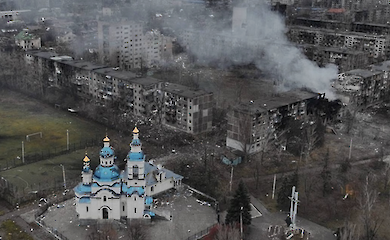
Russia is destroying Ukraine twice as fast as at the start of the war - international report