


Less stress every day: scientists have found a simple way to do it
- Home
- Life
- Healthy lifestyle
- Less stress every day: scientists have found a simple way to do it


Even minor difficulties - a missed deadline, a car breakdown or an argument with a loved one - can make for a stressful day.
But perceived control over a situation not only helps reduce stress levels, but also helps you solve everyday problems faster. That's the conclusion reached by a team of researchers, including scientists from Penn State University (Penn State).
How the "sense of control" works
The study authors found that on days when participants felt more in control of stressors than usual, they were 62% more likely to take concrete action to solve a problem - calling a plumber, clearing up a blockage at work, or going to talk to a loved one. And this link increases with age.
"Even a small increase in the sense of control makes it more likely that everyday problems will be solved," stressed Penn State professor David Almeida, senior author of the paper. "Learning to find and utilise these 'islands of control' can not only reduce stress, but also maintain long-term health."
For the paper, the researchers used data from the National Everyday Experiences Study (MIDUS), involving more than 1,700 adults. For eight consecutive days, participants recorded what stressful events had occurred over the past 24 hours and whether they had managed to resolve them by the end of the day. These included conflict and conflict avoidance, home or work stresses, and so-called "network stress" - situations where a problem occurs with a loved one but causes stress for the participant themselves.
Test subjects also noted how much control they felt: "none," "a little," "some," "some," or "a lot. The researchers repeated the survey with the same people 10 years later to see if the link between feeling in control and successful problem solving changed over time.
The researchers found that the feeling of control is a variable. It varies from day to day, and it's these fluctuations that are linked to how successfully a person handles stress.
On average, on days with a heightened sense of control, the likelihood of solving a problem increased to 61 per cent. Ten years later, the same group with the same "elevated" sense of control already showed a 65% probability of successfully resolving the stressor. The link was independent of the type or severity of the problem itself.
"Not only does the sense of control grow with age, but also the effectiveness of using it to manage stress," said lead study author Dakota Witzel, now an assistant professor at South Dakota State University.
How to develop a sense of control
The researchers emphasise that a sense of control can be strengthened. Simple strategies help:
- Divide large tasks into chunks and track progress;
- Focus on what's in your zone of influence, not outside of it;
- Ask for help or delegate tasks, creating a supportive environment;
- End the day with a short reflection to better prepare for the next one.
These practices help create "quick wins" and increase confidence that the situation is under control.
The team plans to continue research to understand how feeling in control of small stressors can impact chronic stress and overall health.
Maria Grynevych, project manager, journalist, co-author of Guidebook Sacred Mountains of the Dnieper Region, Lecture Course: Cult Topography of the Middle Dnieper Region.
Related news

Scientists have found a possible common cause for two symptoms of schizophrenia




Anxiety and depression rise sharply in young people after pandemic - study finds
Why, when frightened, we get lost easily - scientists have explained
Popular news

Orban announces "results" of Hungarian mission on Druzhba oil pipeline


Will maternity leave be shortened in Ukraine? Changes for workers with children


Zelensky said that Russia was preparing a new offensive and pointed out the direction of it

Kellogg named the ceasefire condition today and compared Putin to Nicholas II

News about war
Orban announces "results" of Hungarian mission on Druzhba oil pipeline
Kellogg named the ceasefire condition today and compared Putin to Nicholas II
Zelensky said that Russia was preparing a new offensive and pointed out the direction of it
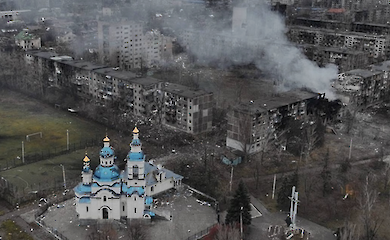
Russia is destroying Ukraine twice as fast as at the start of the war - international report