


Lack of sleep in teenagers increases risk of suicide - study


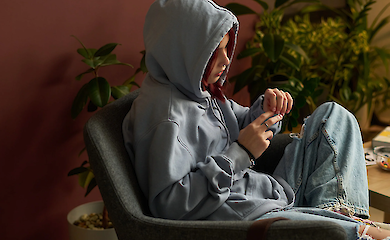
Teenagers who have trouble sleeping on school days are at a higher risk for suicide attempts.
Researchers from the University of Warwick (UK) came to this conclusion after conducting the largest longitudinal study involving more than 8,500 young people. As it turned out, sleep disturbances at the age of 14 were directly related to suicide attempts at the age of 17.
Suicide remains one of the leading causes of death among teenagers in the UK. Although sleep deprivation in adolescents is common and is caused by both physiological and social factors, the long-term effects of sleep deprivation on suicide risk levels have not been studied until now.
The new study, published in the journal Sleep Advances, is the first to establish such a link in the context of decision-making and risk propensity. According to Michaela Polley, a PhD student in the Department of Psychology at the University of Warwick, it is during adolescence that both sleep disturbances and mental health risks are shaped. "Our findings show that adolescents who have difficulty falling asleep and maintaining sleep are more likely to attempt suicide in later years. Lack of sleep is not just a symptom of other problems, but a significant risk factor in its own right," she emphasises.
Key findings of the study:
Teens who sleep less on school days and wake up more often at night at age 14 are more likely to attempt suicide at age 17.
This association persisted even when factors such as socioeconomic status, history of self-harm, and mental health disorders were taken into account.
Sleep disturbances were found to be stronger predictors of suicidal behaviour than even symptoms of depression.
Rational decision-making skills partially reduced the impact of night wakings on suicide risk, but this protective effect weakened with severe sleep disturbances.
Professor Nicole Tang, Director of the Sleep and Pain Laboratory at the University of Warwick, notes:
"Sleep deprivation and fragmented sleep are not trivial matters but potentially fatal factors. Timely help for adolescents with sleep disorders could be key to reducing suicide attempts."
Elena Rasenko writes about science, healthy living and psychology news, and shares her work-life balance tips and tricks.
Related news
Anxiety and depression rise sharply in young people after pandemic - study finds


What are the dangers of AI diets: scientists have discovered a serious problem


Scientists have found that exercise can significantly improve sleep

100,000 net outings in the autumn: what happened after the borders opened up for 18-22 year old men
Popular news

Orban announces "results" of Hungarian mission on Druzhba oil pipeline


Will maternity leave be shortened in Ukraine? Changes for workers with children


Zelensky said that Russia was preparing a new offensive and pointed out the direction of it

Kellogg named the ceasefire condition today and compared Putin to Nicholas II

News about war
Orban announces "results" of Hungarian mission on Druzhba oil pipeline
Kellogg named the ceasefire condition today and compared Putin to Nicholas II
Zelensky said that Russia was preparing a new offensive and pointed out the direction of it

Russia is destroying Ukraine twice as fast as at the start of the war - international report