


Kindness is not an inborn talent: How to cultivate morality in children
- Home
- Life
- Healthy lifestyle
- Kindness is not an inborn talent: How to cultivate morality in children


It seems to many people that a person is either "good" or "bad" - and that's forever.
At family gatherings, at school or in the yard, children are easily labelled as "kind", "difficult", "aggressive". Adults are even more often perceived as people with unchanging character and established morals, writes Phys.org.
But psychological research suggests the opposite: both children and adults are able to change and grow morally. Every child has his or her own set of strengths and weaknesses - some are generous but irascible; some are honest but reserved. These qualities are not cemented - they develop in one direction or another, largely depending on how the child is treated and what is expected of him.
If a child is constantly seen as "bad", he or she will be treated that way, and over time will actually begin to behave according to that image.
The authors of this article draw on psychologist Carol Dweck's concept of the growth mindset. It is usually applied to learning ("I can learn if I try"), but the same principle works in the moral realm:
a child is not "selfish by nature", they just don' t know how to share yet and need help and coaching.
It is important to believe that:
the child can become more caring, honest, fair;
we ourselves, as adults, can also become morally better.
What adults can do
The authors emphasise: parents, teachers and other significant adults have a huge role to play.
They can:
Set an example: how we treat people ourselves, whether we speak respectfully, whether we can admit when we are wrong.
Deal with moral situations: discuss with the child why someone did what he or she did, how it could have been different, how the participants in the conflict feel.
Help to manage emotions: teach the child to cope with anger, jealousy, resentment, which push them to harm others.
It is necessary not only to talk about kindness, but also to give the child a chance to practise it:
helping a classmate who is alone at recess;
help a classmate who is alone at recess;
visit an elderly neighbour;
take care of a pet.
Expand the "circle of caring"
A common problem is caring only about "our own": family, friends, inner circle. It is important for adults to help children notice those who usually remain in the shadows:
the bus driver,
the caretaker at school,
the waiter at the café.
These simple gestures - saying "thank you," showing respect, not being looked down upon - teach children to see the value of everyone, not just "their own."
Talk to children about their own mistakes
One of the most powerful tools is for parents to talk honestly about their own moral lapses:
"I snapped at work today and behaved unfairly, I want to do things differently next time and here's how."
That's how adults
show that it's okay to make mistakes,
demonstrate a growth mindset: "I can do better."
they form a family identity: "in our family it is important to benefit others, to be honest and fair".
For a child, this is a powerful message: morality is not an abstraction or a set of beautiful words, but a lifelong learning practice.
The authors note that today's society often seems morally divided, with increasing individualism and mutual hostility along political and social lines.
Maria Grynevych, project manager, journalist, co-author of Guidebook Sacred Mountains of the Dnieper Region, Lecture Course: Cult Topography of the Middle Dnieper Region.
Related news

Archaeologists have found children's fingerprints in 15,000-year-old clay




Scientists have discovered how a father's health affects his child before conception

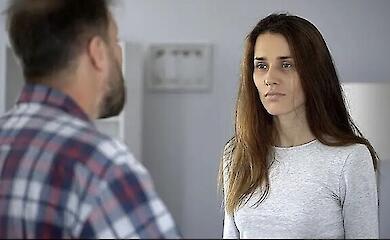
Toxic people in your environment may accelerate ageing, study shows
Popular news
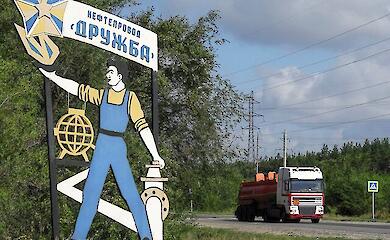
Orban announces "results" of Hungarian mission on Druzhba oil pipeline


Will maternity leave be shortened in Ukraine? Changes for workers with children

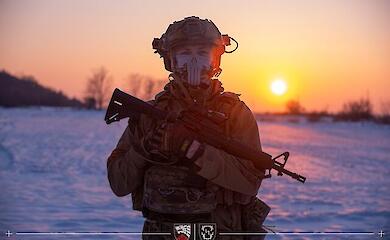
Zelensky said that Russia was preparing a new offensive and pointed out the direction of it

Kellogg named the ceasefire condition today and compared Putin to Nicholas II

News about war
Orban announces "results" of Hungarian mission on Druzhba oil pipeline
Kellogg named the ceasefire condition today and compared Putin to Nicholas II
Zelensky said that Russia was preparing a new offensive and pointed out the direction of it
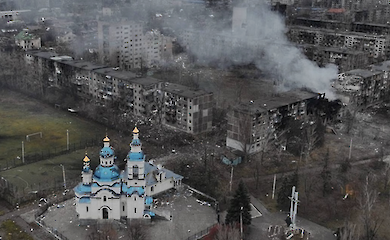
Russia is destroying Ukraine twice as fast as at the start of the war - international report