
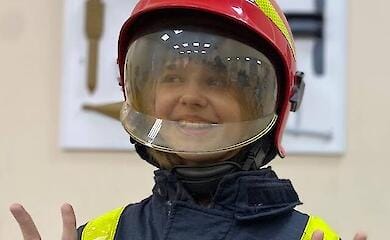

How Employers Prepare for the Return of Veteran Workers


For many people in Ukraine, working in a team with veterans will be a new experience. This is according to the results of the study "Needs and barriers of veterans in employment".
Adaptation of workplaces for people with disabilities
Only one-third of the employers surveyed shared that they already have experience working with veterans. Nearly 7 percent of them considered this experience to be significant, while 25 percent had little experience.
However, the vast majority, 65% of respondents, said they still have no experience hiring and interviewing veteran candidates.
In terms of experience hiring veterans, more than 35% of those who have already hired and worked with veterans said the experience was positive. And only 8% of respondents chose the "rather negative" response option.
It is noticeable that employers with no experience of hiring veterans are open to the veteran community, as a large proportion of them are made up of their mobilised employees. They feel responsible for the conditions under which veterans will work in civilian life and are willing to work with veterans without employment experience despite their own fears.
What are employers afraid of?
The main fears and risks that employers are concerned about when hiring veterans are related to the impact of their psycho-emotional and physical state on work and team interactions.
This view was expressed both by employers during in-depth interviews and by the majority of veterans, saying that problems with physical health (28.3%) and their own psycho-emotional well-being (25.8%) are common barriers to employment.
And while in practice, according to the survey, these concerns and risks are rarely borne out, the perception of veterans' unstable psycho-emotional state influences perceptions of them as candidates for employment.
In addition, more than 30% of employers expressed the view that a veteran or veteran woman has a rather or definitely positive impact on internal team communication.
What are the concerns of veterans themselves?
Servicemen and veterans experience the uncertainty and mistrust of civilian life that awaits them after demobilisation. The war has seriously affected their self-understanding not only as a person, but also as a specialist who deserves decent working conditions and development.
Veterans need special support to rebuild their own competencies and learn new ones, as well as to recognise and appreciate the value of their combat experience as relevant for work in civilian life.
In terms of veterans' skills that can contribute to their employment and professional development, employers highlighted teamwork skills, critical thinking, responsible leadership, driving and operating machinery, computer systems and software skills, engineering and construction skills, and logistics skills.
Thus, it can be concluded that some of the skills acquired by veterans during their service may make them promising candidates in the civilian labour market.
The study "Needs and Barriers of Veterans in Employment" was prepared and conducted by analysts of the Ukrainian Veterans Fund of the Ministry of Veterans with the assistance of Lobby X and Work.ua. In the course of the research the team of analysts surveyed 475 employers and conducted 10 in-depth interviews with representatives of Ukrainian business and managers of enterprises.
Earlier Socportal wrote about how people in Ukraine thanks to self-organisation create jobs, preserve infrastructure in their communities, and help the army.
Do you have a specific question? Contact SocialGRT!


Expert on women's rights, persons with disabilities, motherhood in the modern context, health care reform, education and social welfare.
Related news

Will maternity leave be shortened in Ukraine? Changes for workers with children


Engineers under attack: How globalisation is hitting professionals


From journalism to nursing: a Ukrainian woman's work experience in a Czech hospital

Popular news

Orban announces "results" of Hungarian mission on Druzhba oil pipeline

Will maternity leave be shortened in Ukraine? Changes for workers with children

Zelensky said that Russia was preparing a new offensive and pointed out the direction of it

Kellogg named the ceasefire condition today and compared Putin to Nicholas II

News about war
Orban announces "results" of Hungarian mission on Druzhba oil pipeline
Kellogg named the ceasefire condition today and compared Putin to Nicholas II
Zelensky said that Russia was preparing a new offensive and pointed out the direction of it

Russia is destroying Ukraine twice as fast as at the start of the war - international report