

In Guatemala, a unique 1,500 year old playing field has been found


Long before Monopoly, the peoples of Mesoamerica had their own gambling board game, patolli.
It was played on a cross-shaped field, combining strategy and luck and putting crops and possessions on the line. Now archaeologists have found one of the most unusual Mayan gaming tables - and it's built right into the floor of an ancient building.
During excavations of the ancient city of Naaktun (northern Guatemala), researchers discovered a patolli playing field lined with hundreds of small red and orange ceramic fragments embedded in fresh mortar like a mosaic. Unlike other known examples where the boards are simply scratched out or painted on benches and walls, this variant was originally incorporated into the architectural design of the structure rather than made 'as we go along'.
In terms of style and archaeological context, the find was attributed to the Early Classical period, around the 5th century A.D. The study is described in the journal Latin American Antiquity. The scholars note that the plaque was part of a large residential complex, probably the home of a noble family or a small administrative centre. This emphasises that games had an important place both in the daily life of the elite and in their ritual practices.
Patolli was widespread among the peoples of Mesoamerica - it was played by the Toltecs, Aztecs and Maya from at least the 2nd century BC. Board games served more than just entertainment: they helped to strengthen social ties, demonstrate status and, apparently, had a religious dimension.
Earlier archaeologists found dozens of game boards carved directly into the plaster of walls and benches in palaces and temples. But such boards are difficult to date: it is unclear whether they were created by the building's first occupants or applied later. At Naaktun, the mosaic is embedded in a fresh floor during the construction phase. This allows us to confidently associate it with a specific construction phase and date it to an interval of about 400-550 AD.
Judging by the surviving fragments, the rectangular field had approximate dimensions of about 80 × 110 cm - noticeably larger than most of the known boards (usually 40-70 cm). In total, the researchers calculate that about 478 ceramic pieces were needed. The ornamentation follows a recognisable Maya motif, but the execution technique itself - a mosaic of shards - is still unique.
That the board is embedded in the floor suggests another, deeper level of significance to the game. Patolli here is not a casual pastime, but an activity for which the architects deliberately "programmed" a special space. It is likely that participants and spectators gathered around such a floor, and the game itself could accompany feasts, meetings of influential people or small rituals.
An independent researcher, interested in archaeology and sacred geography. He researches them and writes about them.
Related news
Archaeologists have found children's fingerprints in 15,000-year-old clay

Traces of an "ancient machine gun" have been found in Pompeii
100 years ago, the first rocket was launched - this was the beginning of the space age

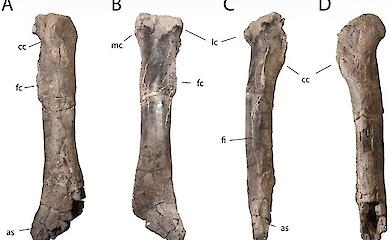
Scientists have found a huge bone from a possible ancestor of T. rex
Popular news
Orban announces "results" of Hungarian mission on Druzhba oil pipeline


Will maternity leave be shortened in Ukraine? Changes for workers with children


Zelensky said that Russia was preparing a new offensive and pointed out the direction of it


Kellogg named the ceasefire condition today and compared Putin to Nicholas II

News about war
Orban announces "results" of Hungarian mission on Druzhba oil pipeline
Kellogg named the ceasefire condition today and compared Putin to Nicholas II
Zelensky said that Russia was preparing a new offensive and pointed out the direction of it
Russia is destroying Ukraine twice as fast as at the start of the war - international report