


How plot twists make books bestsellers: a new study


Researchers have confirmed that emotional "swings" in a story make stories more appealing to a wide audience.
Stories are powerful tools that connect us and help us understand the world around us. For thousands of years, philosophers and researchers have tried to figure out what makes stories successful. But despite all the theories, scientifically predicting the success of a story has long remained a mystery.
Playwrights have long known that unexpected plot twists increase audience engagement. Stories in which characters face abrupt life changes, such as the romantic and tragic events in Romeo and Juliet, are often perceived as more compelling.
A new study suggests that a key factor in the success of stories is so-called "plot twists " - important moments that dramatically change the course of events.
Researchers from Canada and the US found that books with frequent and vivid plot twists generate more interest among readers and have a better chance of commercial success.
Based on analyses of more than 30,000 films, TV series, books and fundraising campaigns, the researchers developed a method to measure such twists. Using computational linguistics and trend analysis, they were able to further understand the nature of storytelling and predict its success.
It turned out that stories with more twists and turns and sharper emotional transitions were significantly more popular. For example, books where happy and sad events alternate were downloaded 160% more often, and films and TV series with more dynamic plot twists received high ratings on IMDb.
Plot twists, it turns out, play a key role in creating an emotional connection with audiences. They make the story move forward, evoking emotion and holding attention.


Maria Grynevych, project manager, journalist, co-author of Guidebook Sacred Mountains of the Dnieper Region, Lecture Course: Cult Topography of the Middle Dnieper Region.
Related news



These microbes survive boiling water and acid - and could help save the Earth

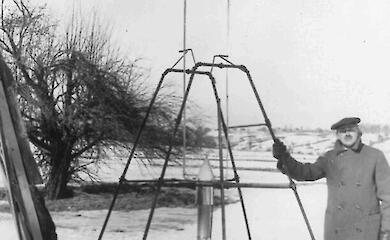
100 years ago, the first rocket was launched - this was the beginning of the space age

Popular news
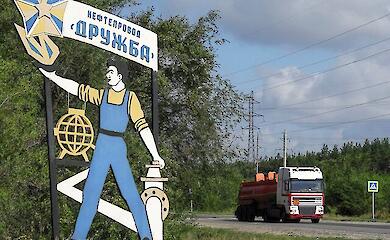
Orban announces "results" of Hungarian mission on Druzhba oil pipeline

Will maternity leave be shortened in Ukraine? Changes for workers with children


Zelensky said that Russia was preparing a new offensive and pointed out the direction of it


Kellogg named the ceasefire condition today and compared Putin to Nicholas II

News about war
Orban announces "results" of Hungarian mission on Druzhba oil pipeline
Kellogg named the ceasefire condition today and compared Putin to Nicholas II
Zelensky said that Russia was preparing a new offensive and pointed out the direction of it
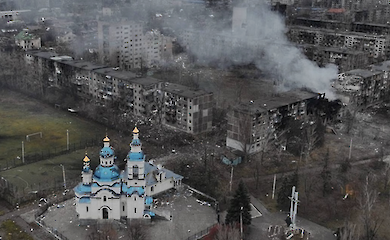
Russia is destroying Ukraine twice as fast as at the start of the war - international report