
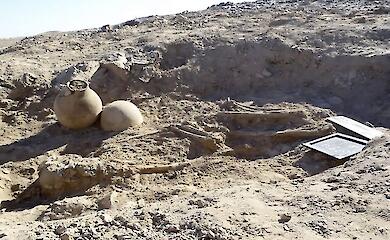

How many thousands of years old are the oldest "frescoes of America" scientists have found out


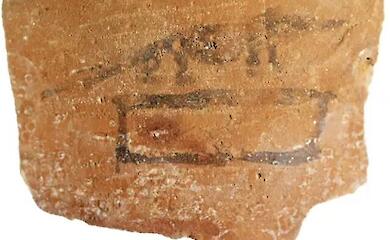
Pecos River style wall paintings in rock shelters in southwest Texas and northern Mexico have long been considered a masterpiece of prehistoric art.
The giant limestone "canvases" feature human figures up to eight metres high, deer, snakes and complex abstract symbols. But how many centuries (or millennia) they were painted - remained a mystery.
New work by an international team of scientists has revealed that this artistic tradition began almost 6,000 years ago and lasted for about 4,000 years - that is, about 175 generations.
The paper is published in the journal Science Advances.
How ancient paint was "made to talk"
Dating rock art is difficult: radiocarbon analysis usually requires a lot of organic material (charcoal, bone, wood), and the pigments in these murals are mostly mineral, such as iron oxides for the red and yellow hues.
The researchers took a combined approach:
- they took microscopic paint samples from 53 drawings on 12 monuments;
- using a plasma oxidation method, they extracted trace amounts of organic carbon from the paint layer - probably from the binder (animal fat, plant sap, etc.);
- then dated this carbon using accelerator mass spectrometry (AMS).
The result: the earliest images are from about 3815 BC and the latest from about 900 AD.
In this way it was possible to show that the Pecos River Style is one of the longest-lived traditions of monumental art in both Americas.
Analyses of the paint layers and figure sequences showed that:
- each large wall ensemble appears to have been created as a single planned project, rather than "finished" over centuries;
- compositional techniques, palette and key motifs have remained remarkably stable over the millennia.
Scholars believe that such stability of style and symbolism speaks of the long-term transmission of a complex religious and mythological system. The authors suggest that the cosmological ideas represented here may have influenced the worldview of later agricultural cultures of Mesoamerica - up to the Maya and Aztecs.
In addition to revising the chronology of Pecos River art, the work is also important because it demonstrates a new reliable method for dating rock paintings with little or no organics.
An independent researcher, interested in archaeology and sacred geography. He researches them and writes about them.
Related news
Archaeologists have found children's fingerprints in 15,000-year-old clay

Traces of an "ancient machine gun" have been found in Pompeii
Scientists have found a huge bone from a possible ancestor of T. rex
Popular news
Orban announces "results" of Hungarian mission on Druzhba oil pipeline


Will maternity leave be shortened in Ukraine? Changes for workers with children


Zelensky said that Russia was preparing a new offensive and pointed out the direction of it


Kellogg named the ceasefire condition today and compared Putin to Nicholas II

News about war
Orban announces "results" of Hungarian mission on Druzhba oil pipeline
Kellogg named the ceasefire condition today and compared Putin to Nicholas II
Zelensky said that Russia was preparing a new offensive and pointed out the direction of it

Russia is destroying Ukraine twice as fast as at the start of the war - international report