

How a starfish with no brain "controls" hundreds of legs


Sea stars seem to be creatures "from another planet": they have no brain in the usual sense and no central nervous system, but they crawl confidently, cling to surfaces and can even move upside down.
Anew study has shown that the secret of their coordination is not in a hidden "central controller", but in local mechanical feedback: each tubular leg adjusts to the load almost autonomously.
At the centre of the work is the common starfish Asterias rubens. Each of its 'arms' has rows of tubular legs (podiums) at the bottom with a suction cup at the end; these are powered by a water-vascular system that moves fluid and helps the legs attach and detach.
To see how the legs 'work' in real time, the scientists used frustrated total internal reflection (FTIR) -based optical imaging - the surface is 'illuminated' at points of contact, and it is possible to measure exactly how much and which legs are clinging to the substrate.
The results were unexpectedly specific: the speed of the starfish is governed primarily by the time of adhesion of individual legs, not by how many legs touch the surface at the same time. The longer the legs "hold on", the slower the animal crawls.
In a series of additional experiments, starfish were loaded with more weight (including small weights/"backpacks") and forced to crawl upside down. And in both cases, the same thing was observed: coupling time increased and speed decreased. The mechanical models confirmed the conclusion: the behaviour is born from local adjustment of the legs to weight and gravity - without the need for a central control program.
The authors note that this principle of "decentralised control" could be useful for soft robotics and devices with multiple points of contact - where stability and adaptation to changing conditions are important.
Mykola Potyka has a wide range of knowledge and skills in several fields. Mykola writes interestingly about things that interest him.
Related news
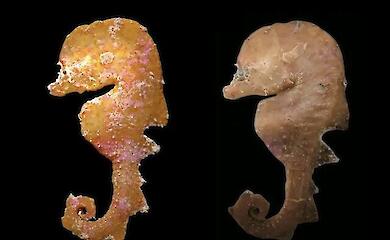
Scientists have discovered a fish that looks like a seahorse but is not one


Scientists have discovered no fewer than seven new species of frog in Madagascar

Scientists have explored the glacier on the summit of Mount Ararat for the first time
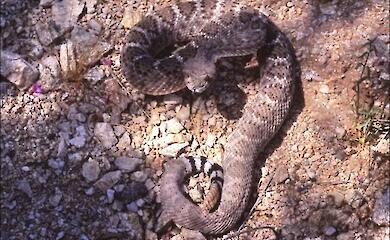
Scientists have discovered a potential antidote to snake bites in the blood of snakes themselves
Popular news

Ukrainian security services have been recognised as among the best intelligence services in Europe – L'Express


Irina Levchenko, the abducted Ukrainian journalist, has been transferred to the Donetsk remand centre: what is known

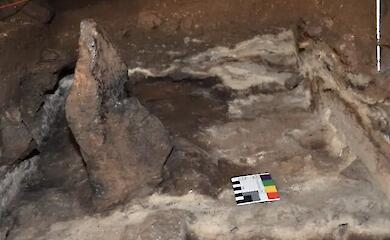
Evidence has been found in Australia of an unusual ritual that has been practised for thousands of generations

News about war

The UN has reported a sharp rise in the number of Ukrainian civilians killed as a result of the war


3 July has been declared a day of mourning in Kyiv. The number of dead and injured is rising