
Global warming makes aggressive plants even stronger - study


Scientists have found out that climate change can strengthen the position of aggressive plants. Warming can compensate for insect damage and accelerate their growth. This is important because it can change the balance of ecosystems.
It's about the unexpected consequences of global warming.
Details
The study centred on goldenseal, a common plant that can quickly take over territories.
Its growth is usually inhibited by insects that lay eggs in the plant's tissues. This causes growths (galls) to form, which reduces growth and the ability to reproduce.
The scientists conducted an experiment simulating future climatic conditions:
- increased temperature
- drought
- a combination of these factors
It turned out that with warming temperatures, the insects' negative effect is weakened.
For example:
- plants with damage were no longer stunted
- their height increased
- they produced more seeds
- their total weight even exceeded that of the "healthy" plants
When heat and drought combined, the effect was even stronger.
Why it matters
The results show that climate change not only affects individual species, but also their interactions.
The scientists note:
- warming can enhance dominant species
- it can reduce biodiversity
- it is important to consider the links between species, rather than looking at them separately
Such changes could cause some plants to start displacing others even faster.
Background
Goldenseal is known as an aggressive plant that spreads rapidly and suppresses the growth of neighbouring species.
Previously, insects were thought to partially inhibit this process.
Source
The study is based on field experiments modelling warming and drought in US ecosystems. The work is published in Oecologia (2026).
Maria Grynevych, project manager, journalist, co-author of Guidebook Sacred Mountains of the Dnieper Region, Lecture Course: Cult Topography of the Middle Dnieper Region.
Related news

Scientists have uncovered the story of a plastic lid that floated across the ocean


Court allows construction of Osokorky Ecopark in Kyiv. Environmental activists say fight will continue


Humans have accelerated the melting of one of Antarctica’s most important glaciers

Popular news
Ukrainian security services have been recognised as among the best intelligence services in Europe – L'Express


Irina Levchenko, the abducted Ukrainian journalist, has been transferred to the Donetsk remand centre: what is known


Russia has attacked Lviv with drones and missiles: dozens of residential buildings have been damaged and there are casualties
Traces of a vast ancient civilisation have been found beneath the Amazon rainforest

News about war
The UN has reported a sharp rise in the number of Ukrainian civilians killed as a result of the war

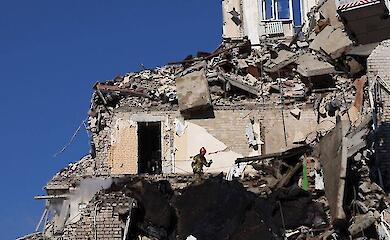
3 July has been declared a day of mourning in Kyiv. The number of dead and injured is rising