


Germany is testing the introduction of a four-day working week

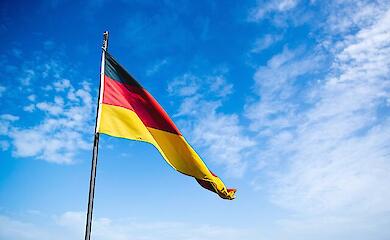
Since the beginning of February, 50 German companies have been testing a four-day working week with pay.
This is reported by the publication Tagesschau.
Last year, Germany conducted a survey which showed that 81% of workers would like to reduce the working week by a day. At the same time, almost 73% of those surveyed said that they would agree to a reduction in working hours only if they retained their salaries.
50 companies decided to test this model of working with a salary.
In general, there are two models of four-day working week in the world:
- when a person works four days of 9 hours, thus reducing the working week to 40 hours;
- when the work schedule does not change and the person works only 32 hours per week.
Laura Wentz, Professor of Work and Organisational Psychology, said that reducing the working week to four days has a positive impact on satisfaction and health, and helps to maintain a balance between personal life and work.
Eugenia Ruban writes about political and economic news. She looks at large-scale phenomena in Ukrainian politics and economics from the perspective of how they will affect ordinary Ukrainians.
Related news
Berlin suggested that Ukraine reduce the number of men leaving the country for the EU


Scientists have discovered that the brain can't do two things at the same time


Popular news

Orban announces "results" of Hungarian mission on Druzhba oil pipeline


Will maternity leave be shortened in Ukraine? Changes for workers with children


Zelensky said that Russia was preparing a new offensive and pointed out the direction of it

Kellogg named the ceasefire condition today and compared Putin to Nicholas II

News about war
Orban announces "results" of Hungarian mission on Druzhba oil pipeline
Kellogg named the ceasefire condition today and compared Putin to Nicholas II
Zelensky said that Russia was preparing a new offensive and pointed out the direction of it

Russia is destroying Ukraine twice as fast as at the start of the war - international report