


From insult to self-affirmation: how the role of the word 'bitch' has changed
- Home
- Life
- Curiosities
- From insult to self-affirmation: how the role of the word 'bitch' has changed


The word "bitch" is one of the most controversial words in the English language.
It can be both an insult and a compliment, a humiliation and an act of self-respect. Its history goes back more than a thousand years, and during this time the meaning of the word has changed with society. As The Conversation writes, its essence has always been linked to power, control and social roles.
The word originally appeared in Old English as "bicce" and meant a female dog. However, even then it began to be used as a metaphor for "unworthy" women. In ancient Greece and Rome "dog" was also a common swear word - for women it meant promiscuity, for men - cowardice and greed.
By the 18th century, "bitch" had become one of the strongest gendered insults. British lexicographer Francis Grose in 1785 defined it as "the most insulting nickname that can be given to a woman." Despite changing eras, the word has not disappeared like "shrew" or "harlot". It survived - because of its flexibility.
Today, "bitch" is used in contexts ranging from reproach ("she's an evil bitch") to admiration ("she's a strong, independent woman"). The word can be heard in songs, on social media and in the streets, and increasingly it is becoming a statement of self-respect rather than a stigma.
Nevertheless, it remains a powerful tool of control. A woman can be labelled a "bitch" for qualities that men consider positive - ambition, assertiveness, sexual confidence. A man, in turn, may be labelled "bitch" as a rebuke for weakness and lack of masculinity.
Since the 1960s, feminists have begun to "reclaim" the word, giving it a new meaning. For example, the BITCH manifesto of the American activist Jo Freeman or the song Bitch by Meredith Brooks (1997) reinterpreted it as a sign of strength. Phrases like "boss-ass bitch" became popular as an expression of pride in independence.
But there has been no complete rehabilitation. It still depends on the context: in a friendly conversation it's a joke, in the office it's a pejorative. Even in LGBTQ+ communities, where the word is sometimes used warmly, its perception can still be hurtful outside these boundaries.
Mykola Potyka has a wide range of knowledge and skills in several fields. Mykola writes interestingly about things that interest him.
Related news



These microbes survive boiling water and acid - and could help save the Earth


100 years ago, the first rocket was launched - this was the beginning of the space age

Popular news
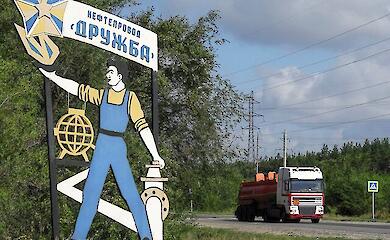
Orban announces "results" of Hungarian mission on Druzhba oil pipeline

Will maternity leave be shortened in Ukraine? Changes for workers with children


Zelensky said that Russia was preparing a new offensive and pointed out the direction of it


Kellogg named the ceasefire condition today and compared Putin to Nicholas II

News about war
Orban announces "results" of Hungarian mission on Druzhba oil pipeline
Kellogg named the ceasefire condition today and compared Putin to Nicholas II
Zelensky said that Russia was preparing a new offensive and pointed out the direction of it

Russia is destroying Ukraine twice as fast as at the start of the war - international report