

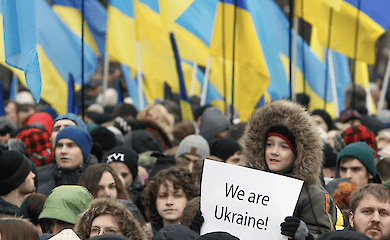
Forests on fire, soil in toxins: what the war is doing to Ukraine's nature
- Home
- Economics
- War in Ukraine. The storybook
- Forests on fire, soil in toxins: what the war is doing to Ukraine's nature


War affects not only people and cities - it strikes nature as well. After Russia's full-scale invasion in 2022, the environmental situation in Ukraine has changed dramatically. The European Commission's official 2025 State of the Environment and Climate in Ukraine report details these changes. Below we tell you in simple words what environmental consequences the war has brought - from polluted air to the threat to public health.
According to the European Commission (JRC) report "Status of Environment and Climate in Ukraine" (2025), the war in Ukraine has dealt a massive blow to the environment. This war is not only about destroyed cities and human losses, but also an environmental disaster. Polluted air, greenhouse gas emissions, toxic waste from the fighting, burnt forests, soil degradation, a suffering sea - all these are invisible wounds of nature that are already affecting people's health. Below we break down the main environmental impacts of war by section of the JRC 2025 report - from air and climate to forests, water and health.
Air pollution during war
Even before full-scale war, air quality in Ukraine was a concern. In 2018-2022, average levels of sulphur dioxide (SO₂), nitrogen oxide (NO) and carbon monoxide (CO) met national standards, but nitrogen dioxide (NO₂) and formaldehyde exceeded safe limits. In Kiev, concentrations of fine particulate matter (PM10 and PM2.5), although within EU standards, remained above the more stringent WHO recommendations. Polluted air directly hits people: in 2019, dirty air caused around 42,900 premature deaths, accounting for ~10% of all illness and deaths.
With the outbreak of war, the air situation has taken on new risks. Fighting has led to "atypical pollution" - particles from explosions, burning machinery and fuel enter the air. The war is accompanied by smoke from fires and emissions from burning oil and ammunition, which worsens air quality even far from the front. For example, residents of frontline towns have repeatedly smelled the odour of burning fumes and chemicals in the air. All this adds to the strain on the lungs and can lead to an increase in respiratory diseases.
Greenhouse gases: the climate cost of conflict
Ukraine has historically reduced greenhouse gas emissions: by 2021, volumes were 62.5 per cent below 1990 levels- both economic changes and environmental policies have helped. However, before the war, the country was still emitting tens of millions of tonnes of CO₂ annually. In 2021, as the economy recovered from COVID-19, emissions even rose slightly by 7.5 per cent.
The 2022 war changed the picture dramatically. On the one hand, due to the destruction of industrial facilities and power grids, emissions fell by a quarter ( 23-26% in 2022 compared to 2021). It would seem that nature got a break - after all, the factories stopped. But on the other hand, warfare itself has become a new source of greenhouse gases. Burning cities, explosions and military equipment released about 77 million tonnes of CO₂ (equivalent) into the atmosphere in the first 18 months of the war. The irony is that the war has simultaneously "turned down" familiar emissions but "added" its own, linking the environment to military action. These unexpected military emissions are an additional factor in global warming, though not immediately noticeable.
The Toxic Legacy of Warfare
Warfare leaves behind a dangerous environmental legacy. Exploding shells, wreckage, destroyed factories and infrastructure all contaminate land and water. War literally "sows" toxic elements into the soil: lead, mercury, arsenic and other heavy metals are released into the environment along with shrapnel and ammunition. These substances can invisibly penetrate into groundwater and food chains, poisoning agricultural products and water. Environmentalists are already calling such areas "toxic zones" that will take years to clean up after the fighting ends.
A prime example of an environmental disaster is the undermining of the Kakhovka hydroelectric power plant. In the summer of 2023, the destruction of the dam caused the uncontrolled release of huge masses of water. A stream rushed into rivers and Black Sea bays, carrying with it tonnes of silt, oil products, fertilisers and other pollutants. More than 70 per cent of the Kakhovka reservoir went into the ground and further into the Dnieper and the Black Sea. This led to the pollution of rivers and a sharp deterioration in the quality of drinking water in neighbouring areas. After the Kakhovka disaster, many residents of southern Ukraine were left without a source of clean water - taps flowed murky liquid and wells were contaminated. Military action has damaged water pipelines, sewage systems and hydraulic structures, exacerbating long-standing problems with the worn-out water supply system. All this means that people in the occupied and frontline territories are forced to drink water of dubious quality or receive it by tanker.
Forests under fire: Ukraine's scorched greenery
Ukraine's forests - from the pine trees of Polesie to the forest belts of Luhansk - have found themselves in the line of fire. Despite the fact that forests cover only about one-fifth of the country's territory, Ukraine used to lead Europe in terms of forest area in peacetime. Now, some 1.7 million hectares of forests have been affected by the war - about 15 per cent of the country's total forest cover. Since the start of hostilities in 2022, several disasters have hit the forests at once: cutting and destruction of vegetation in battle zones, mined and scorched areas, and a surge in forest fires.
Shelling and explosions have caused fires where forests could have grown for decades in peacetime. In addition, climate change has already made Ukrainian forests more "flammable" - droughts and heat waves in recent years have increased the risk of large-scale fires. According to estimates, in recent years, 45-65% of all forest cover losses have been caused by fires. the year 2024 was a record year: about 965,000 hectares of forest burned during the season, which is more than twice the area of all burned forests in EU countries during the same period. Many large fires were burning along the front lines and in occupied territories, where it was almost impossible to extinguish them.
The consequences are obvious: hundreds of thousands of burned trees, destroyed nature reserves (for example, the unique forests of Donbass were affected in the war zone), animal deaths and habitat loss. Reforestation will take decades, and some rare species of plants and animals may disappear forever.
Soils: the invisible victims of war
Ukrainian black soils are among the most fertile in the world, "feeding" the country and much of the world. Agriculture contributes 11% of the country's GDP and 60% of export earnings (€23.3bn in 2023). Soils are rich in organics and nutrients, but they are also vulnerable. Even before the war, around 40% of the land suffered from erosion - weathering and erosion of the fertile layer. Improper use of fertilisers, pollution and salinisation eroded the fertility of fields.
The war added new wounds to the soil. From explosions the earth became saturated with harmful substances: heavy metals, fuel residues, combustion products. Shell fragments and mines remain on the fields, which not only make farmland dangerous for work, but also poison the soil. For example, lead and other metals from ammunition can find their way into grain or vegetables grown in contaminated fields. This is a silent danger: black soil looks like black soil, but it can hide toxic "surprises." As a result, war threatens food security - crops from some areas may be unfit to eat. After the fighting, soils will need to be tested and cleaned to restore them to their former health.
Marine ecology: the Black Sea is under attack
From small rivers to large seas, war also affects aquatic ecosystems. The Black Sea has long been under environmental pressure from human activity: excess fertiliser from fields causes blooms in the water, tonnes of plastic rubbish and oil slicks from shipping accumulate in the water, the climate changes temperature and salinity, and fish and dolphins suffer. With the outbreak of war, new troubles were added to these problems. The water area was full of military equipment, ammunition and sunken objects. Shelling of ports and coastal towns led to fuel and chemical spills into the sea. The blown up Kakhovka dam brought a wave of fresh water and silt into the Black Sea, upsetting the fragile salt balance. Biologists fear massive fish kills due to water blooms and lower oxygen levels after fertilisers and organics entered the sea.
Warfare is also destroying marine ecosystems physically, with explosions and bottom trawling destroying reefs and seagrass beds that were a refuge for fish and other marine life. In the coastal zone, for example, colonies of mussels and oysters are destroyed, killing algae that purify the water. This affects the food chain and biodiversity: if, for example, algae and molluscs disappear, the food base for fish will be reduced, which means that the catch will also decrease.
Unfortunately, it is difficult to accurately assess the state of the Black Sea at the moment - because of the war, environmental monitoring of the sea has virtually ceased. Scientists and ecologists cannot measure water and bottom sediments in dangerous areas. Therefore, many of the consequences will manifest themselves later, and it will take years to study them. But it is already clear: marine nature has suffered a serious blow and will take a long time to recover.
Human health: threatened by an environmental crisis
The environmental consequences of war are not abstract problems of nature; they directly affect people. Polluted air, poisoned water and other factors are already affecting the health of Ukrainians. According to estimates, even before the current war, every tenth case of illness or premature death in Ukraine was related to bad ecology, primarily dirty air. Now the risks have increased. Smog from fires and shelling can cause a surge in respiratory diseases, from asthma to bronchitis. Dust from destroyed buildings contains fine particles and asbestos, dangerous if inhaled. In frontline regions, doctors record more cases of allergies and mucous membrane irritations among the population, which is favoured by the constant smoke and dust.
Problems with water supply after the destruction of the Kakhovskaya HPP and damage to the networks threaten outbreaks of intestinal infections. If people are forced to drink water from wells or rivers without sufficient treatment, the risk of diseases such as diarrhoea, hepatitis A and even cholera increases. In addition, heavy metals sprayed by war can lead to chronic poisoning over time - lead, for example, is dangerous to the nervous system, especially for children. Experts are already warning of a possible increase in cancer and other chronic diseases in the affected areas in the coming years.
Psychological health also suffers, as it is morally difficult to live among the destroyed nature. For example, it is painful for villagers to see scorched forest belts and poisoned fields that used to feed their families. The health of a nation is inextricably linked to the state of the environment, so ecological rehabilitation is an important part of the country's post-war reconstruction.
Broken monitoring systems: the blind spots of ecology
To monitor the environmental situation, you need data - sensors, monitoring stations, laboratories. Unfortunately, the war has "blinded" Ukraine in many ways: environmental monitoring stations have ceased to operate in the areas of hostilities. Earlier, the country, with the support of the EU, was just developing observation networks for air, water and soil, bringing standards closer to European ones. But shelling and occupation have destroyed or disabled many of the measuring stations. For example, cities under occupation no longer regularly measure air quality. No one monitors chemical leaks at captured industrial sites. In the Black Sea, scientific expeditions and marine monitoring have ceased due to the military threat. All this creates "blind spots": where the environmental situation is the worst, the state has the least data on it.
The lack of information makes it difficult to assess damage and plan restoration. JRC experts note that the lack of data is a serious obstacle to assessing environmental conditions. Therefore, one of the first priorities after the war is to restore and strengthen environmental monitoring systems. New tracking stations need to be installed, soil and water samples need to be collected again, and satellite technology needs to be used to assess pollution. Without this, it will be difficult to know where to direct resources first. Environmental monitoring is like nature's eyes and ears: without it, we will not know where it hurts the most and how to help it.
Maria Grynevych, project manager, journalist, co-author of Guidebook Sacred Mountains of the Dnieper Region, Lecture Course: Cult Topography of the Middle Dnieper Region.
Related news
What happens to a cigarette butt after 10 years - scientists' answer


Kellogg named the ceasefire condition today and compared Putin to Nicholas II


Britain says under what circumstances Putin will start a war in Europe


Popular news
Orban announces "results" of Hungarian mission on Druzhba oil pipeline

Will maternity leave be shortened in Ukraine? Changes for workers with children


Zelensky said that Russia was preparing a new offensive and pointed out the direction of it
Kellogg named the ceasefire condition today and compared Putin to Nicholas II
News about war
Orban announces "results" of Hungarian mission on Druzhba oil pipeline
Kellogg named the ceasefire condition today and compared Putin to Nicholas II
Zelensky said that Russia was preparing a new offensive and pointed out the direction of it
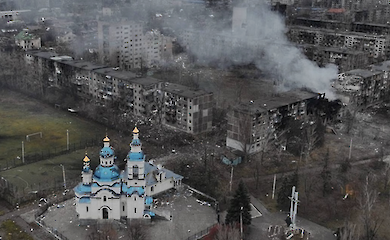
Russia is destroying Ukraine twice as fast as at the start of the war - international report