

Europe must give up Russian gas - Greenpeace

Polish environmental activists Greenpeace held a protest at the bottom of the Baltic Sea near the destroyed Nord Stream gas pipeline.
They demand that European countries finally abandon the use of Russian gas and accelerate the transition to renewable energy sources, Greenpeace Ukraine reports.
The activists plunged into the water in the area where the pipeline sabotage was recorded almost three years ago and unfurled a huge banner on the surface that read: "No Nord Stream, no fossil gas.
Why it matters
Despite the war, which has been going on for 10 years, in 2024 Russian gas accounts for almost 20 per cent of the European Union's blue fuel imports. Deliveries are made by tankers to ports in the Netherlands and France, from where the fuel reaches Germany and then countries like Poland.
Although a complete ban on fossil fuel supplies from Russia to the EU is not due to come into effect until 2027, activists insist: Europe must get rid of its energy dependence on the aggressor sooner.
Gas exports are direct financing of the war
"Oil and gas exports are fuelling the Russian war machine. Last year alone, EU countries paid Russia 22 billion euros for energy resources - that's about 15 per cent of its military budget. We must permanently close the topic of restoring the Nord Stream pipeline and stop buying Russian fuel," said Nataliya Gozak, director of Greenpeace Ukraine.
According to the representatives of the organisation, the ideas about resuscitating the gas pipeline are unacceptable not only from the political but also from the climate point of view.

Threats to the climate
In addition to the political consequences, transporting and extracting gas comes with massive emissions of methane, a gas that is 80 times more harmful to the climate than carbon dioxide in the short term.
So giving up gas is not only a way to stop war funding, but also a real contribution to saving the climate.
What Greenpeace proposes
The activists emphasise: the future lies in clean energy. The development of solar and wind energy should be a priority for Europe. This will not only strengthen the region's energy independence, but will also help reduce greenhouse gas emissions.
Greenpeace calls for closing the Nord Stream issue for good and focusing on sustainable energy development.

Journalist and editor of informational and analytical programs.
Related news
What happens to a cigarette butt after 10 years - scientists' answer

Population ageing could reduce global freshwater withdrawals by 15-31% by 2050


Popular news
Orban announces "results" of Hungarian mission on Druzhba oil pipeline

Will maternity leave be shortened in Ukraine? Changes for workers with children


Zelensky said that Russia was preparing a new offensive and pointed out the direction of it


Kellogg named the ceasefire condition today and compared Putin to Nicholas II

News about war
Orban announces "results" of Hungarian mission on Druzhba oil pipeline
Kellogg named the ceasefire condition today and compared Putin to Nicholas II
Zelensky said that Russia was preparing a new offensive and pointed out the direction of it
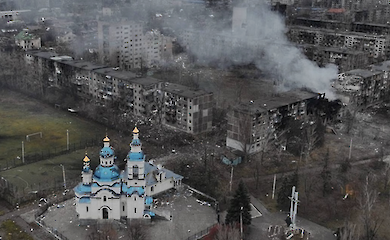
Russia is destroying Ukraine twice as fast as at the start of the war - international report