


Egypt unveils tomb of Amenhotep III after 20 years of restoration


After more than twenty years of restoration, the tomb of one of the most powerful rulers of ancient Egypt, Pharaoh Amenhotep III, has reopened to visitors in Luxor.
The ceremony took place on 4 October 2025 in the famous Valley of the Kings, located on the west bank of the Nile.
The tomb belongs to Amenhotep III, who ruled from 1390 to 1350 BC and is known as one of the greatest pharaohs of the XVIII dynasty. About it reports Phys.org with reference to the Associated Press.

The tomb was discovered in 1799, but was soon looted, with the sarcophagus and other valuable artefacts removed. An international team has been working on it for the past 20 years as part of a three-phase restoration project led by Japanese specialists.
According to Mohamed Ismail, Secretary General of the Supreme Council of Egyptian Antiquities, during this time, wall paintings depicting the pharaoh and his consorts were restored, as well as elements of the funerary decoration. There are traces of the sarcophagus frame with the lid in place, where the ruler's body once rested.
The tomb begins with an inclined corridor 36 metres long and 14 metres deep, leading to the main burial hall. Inside there are also two additional rooms reserved for Amenhotep III's wives, the queens Tia and Sitamon.
Unlike the other tombs in the Valley of the Kings, this one is not fully decorated, but the surviving frescoes depict a scene with the pharaoh and Egyptian deities. The walls also display texts from the Book of the Dead, an ancient Egyptian collection of incantations that accompanied the soul of the deceased to the afterlife.
The pharaoh's mummy was later moved by ancient priests to the tomb of his grandfather Amenhotep II, also located in the Valley of the Kings. The damaged body of the ruler is now in the exposition of the National Museum of Egyptian Civilisation along with the remains of 16 other royalty.
Amenhotep III ascended the throne at a young age and ruled for about 38 years. His reign was marked by the construction of monumental temples and the strengthening of Egypt's international relations.
The opening of the tomb is timed to coincide with the upcoming opening of the Great Egyptian Museum, scheduled for 1 November 2025 next to the Pyramids of Giza. Both initiatives were part of Egypt's efforts to revitalise its tourism industry.
An independent researcher, interested in archaeology and sacred geography. He researches them and writes about them.
Related news
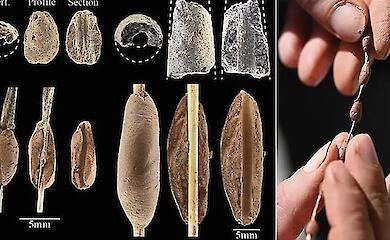
Archaeologists have found children's fingerprints in 15,000-year-old clay

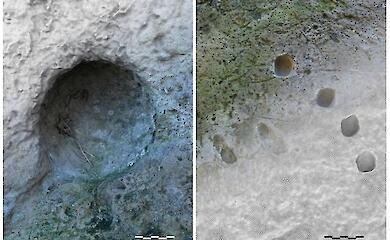
Traces of an "ancient machine gun" have been found in Pompeii
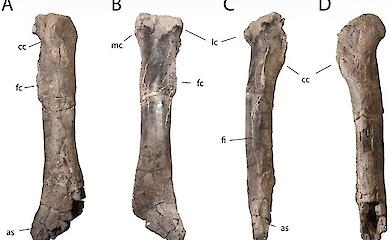
Scientists have found a huge bone from a possible ancestor of T. rex
Popular news
Orban announces "results" of Hungarian mission on Druzhba oil pipeline


Will maternity leave be shortened in Ukraine? Changes for workers with children


Zelensky said that Russia was preparing a new offensive and pointed out the direction of it


Kellogg named the ceasefire condition today and compared Putin to Nicholas II

News about war
Orban announces "results" of Hungarian mission on Druzhba oil pipeline
Kellogg named the ceasefire condition today and compared Putin to Nicholas II
Zelensky said that Russia was preparing a new offensive and pointed out the direction of it

Russia is destroying Ukraine twice as fast as at the start of the war - international report