
Chen-Ning Yang, the Chinese physicist who revolutionised the concept of 'mirror symmetry', has died

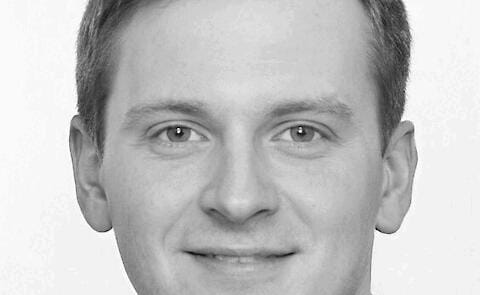
Chen-Ning Yang, a prominent Chinese theoretical physicist and Nobel Prize winner, has passed away in Beijing in his 104th year of life.
About it reports Phys.org with reference to the Associated Press. The cause of death of the scientist was an illness, the details of which are not disclosed.
Chen-Ning Yang (in the Western tradition - Franklin Yang) is considered one of the most influential physicists of the XX century. He became famous for his seminal work in quantum theory and theoretical physics, and for his contributions to science education in China.
In 1957, Yang, together with his colleague Zundao Li, was awarded the Nobel Prize in Physics for their discovery that violated the notion of "mirror symmetry" - the so-called law of parity conservation in weak nuclear interactions. This discovery was a real scientific sensation and started a new stage in the understanding of elementary particles. They became the first scientists of Chinese origin to receive the Nobel Prize in Physics.
Chen-Ning Yang was born in 1922. His father was a professor of mathematics, and Yang himself grew up in an academic environment on the campus of the prestigious Tsinghua University. After earning a master's degree from that institution, he travelled to the United States, where he entered graduate school at the University of Chicago in 1946. There he studied under the legendary physicist Enrico Fermi, winner of the 1938 Nobel Prize.
Yang later became a professor at Princeton's Institute for Advanced Study and has taught at Tsinghua University since the late 1990s. He is also known for his joint development with Robert Mills of the Yang-Mills theory, which formed the basis of modern ideas about the quantum field and symmetries in physics.
Although Yang was granted American citizenship, he officially renounced it in 2015. Earlier he admitted that this decision was hard for him and that his father did not accept his choice. Nevertheless, Yang spoke highly of the United States, calling it the country where he gained scientific freedom and opportunities.
In addition to his scientific achievements, Yang was actively involved in China's educational and cultural life. He gave the University of Hong Kong many of his scientific papers, awards, and even a Nobel Prize medal.
In a farewell statement, Tsinghua University said Professor Yang had made "revolutionary contributions to the development of modern physics" and played an important role in the establishment of Chinese science. The scientist left behind three children.
Mykola Potyka has a wide range of knowledge and skills in several fields. Mykola writes interestingly about things that interest him.
Related news
Scientists have discovered how cockroaches recognise ‘their own’

Scientists have explored the glacier on the summit of Mount Ararat for the first time

A parasite turned worker ants into ‘queens’ and extended their lives
Popular news
How to cook sweetcorn properly so that it’s juicy and sweet: the best method revealed

Archaeologists have discovered who actually built Colombia’s ancient canals

Scientists have put forward an explanation as to why there were no tiny dinosaurs

An expert explains how Russia is changing its tactics for strikes on Kyiv

News about war
An expert explains how Russia is changing its tactics for strikes on Kyiv
The UN has reported a sharp rise in the number of Ukrainian civilians killed as a result of the war