
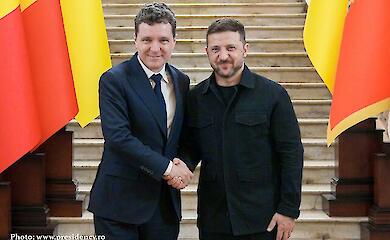

Bratislava is not Moscow? How Fico criticizes Ukraine, but makes money on its defense


Slovak Prime Minister Robert Fico is simultaneously promoting a record increase in arms exports to Ukraine, while promoting anti-Ukrainian rhetoric. Researcher Adam Novak explains how Fico's policies differ from his public statements and how Slovak society is reacting to this.
Slovak Prime Minister Robert Fico regularly speaks with harsh anti-Ukrainian rhetoric and statements about “pacifism”, but the real policy of his government is significantly different. This was stated by Adam Novak, a researcher of the history of the economy of Eastern Europe, quoted by Soсportal.
According to him, Fico's loud statements provide diplomatic cover for Moscow, but at the same time his government is leading a record growth in defence exports to Ukraine.
Slovak arms exports exploded to €1.15 billion in 2023—a tenfold increase from 2021's €100 million, representing 1.1% of GDP. Private companies produce Zuzana 2 howitzers and hundreds of thousands of 155mm artillery shells annually—precisely what Ukraine desperately needs. Defence Minister Kaliňák cynically admitted: "We would not restrict defence companies because we need economic growth." Slovakia secured €92 million from Denmark, Germany, and Norway for 16 howitzers for Ukraine—the largest contract in Slovak arms industry history, the researcher notes.
As Novak emphasizes, Fico’s actions are severely limited by Slovakia’s membership in the EU and NATO. The country participates in the 50 billion European Support Fund for Ukraine, maintains more than 1,200 NATO troops and spends 2.3% of GDP on defence. The government was also forced to lift its veto on the 18th package of sanctions against the Russian Federation, despite the prime minister's statements about the need to withdraw from Western structures.
At the same time, protest sentiments are growing in Slovak society. However, the blame is not formed due to sympathy for Russia, but due to dissatisfaction with domestic politics, economic difficulties and the legacy of crises of recent decades.
Russian disinformation exploits this vacuum, but the root causes are real economic and democratic deficits, the expert believes.
Despite this, public opinion is capable of changing. After falling to 58% in 2023, support for NATO in Slovakia increased to about 70% in 2024. And the mass protests in early 2025 after Fico's visit to Moscow were among the largest in the country's modern history.
Ukrainian President Zelenskyy's message "Bratislava is not Moscow. Slovakia is Europe" resonated with protesters. Opposition parties now lead in polling. However, these demonstrations largely attract conservative and liberal supporters. The left's absence creates a dangerous vacuum—without progressive alternatives addressing economic grievances, the debate traps between neoliberal 'Atlanticism' and nationalist 'sovereignty', notes Adam Novak.

Expert on women's rights, persons with disabilities, motherhood in the modern context, health care reform, education and social welfare.
Related news
The loss of the middle class: what a new study on Ukrainian refugees showed

Thousands of people will be able to receive assistance: how the law for Ukrainian critical infrastructure workers was changed

No ambulance near the front line: emergency substation being liquidated in Donetsk region
"War steals their childhood." Ukrainian teenagers forced to take on adult responsibilities
Popular news
Orban announces "results" of Hungarian mission on Druzhba oil pipeline


Will maternity leave be shortened in Ukraine? Changes for workers with children
Zelensky said that Russia was preparing a new offensive and pointed out the direction of it

Kellogg named the ceasefire condition today and compared Putin to Nicholas II

News about war
Orban announces "results" of Hungarian mission on Druzhba oil pipeline
Kellogg named the ceasefire condition today and compared Putin to Nicholas II
Zelensky said that Russia was preparing a new offensive and pointed out the direction of it
Russia is destroying Ukraine twice as fast as at the start of the war - international report