
Bloomberg wrote why the U.S. is not imposing tough sanctions against Russian Federation


The determination of the United States in announcing a new package of sanctions against Russia went as far as they were concerned because of the risk of upsetting the global economy.
The United States is shying away from the toughest economic measures remaining in its arsenal against Russia because their introduction risks shaking up the global economy. Bloomberg writes about it.
The publication points out that the U.S. has already taken a number of radical measures, including a 200-page sanctions list of a host of facilities based in Russia, the United Arab Emirates, China and other countries, which are related to the Russian military complex.
However, equally notable are the companies and sectors not on the broad list: the metals sector, energy-related restrictions, and secondary sanctions against banks. Such caution suggests that despite all of Biden's statements on sanctions, his team is still not going to target revenue streams that could really undermine the Russian economy for fear of causing a widespread shock that risks affecting the US economy," the publication points out, citing experts.
It is noted that if the U.S. decides to take tougher measures, the sanctions list could include foreign banks that help Russia buy the technology and materials it needs to continue the war, as well as trade in enriched uranium and metals such as aluminium and nickel. Washington may also freeze all Russian assets abroad. Experts believe that further steps in this direction could lead to a significant blow to the global economy, which would also imply consequences.
Bloomberg points out that the measures already taken have not achieved the desired result and the Russian economy continues to develop. The publication quotes Russian economist Alexander Isakov, who claims that the Russian economy will grow by about 1%-1.5% in 2024.
The situation is further complicated by the fact that Russia has partners in China, Brazil and other countries that continue to buy its oil and deliveries," Bloomberg writes.
Meanwhile, the publication reminds, there is still a step missing that Ukraine really needs: approval of a new $60bn financing package for Kiev.
Eugenia Ruban writes about political and economic news. She looks at large-scale phenomena in Ukrainian politics and economics from the perspective of how they will affect ordinary Ukrainians.
Related news
Brussels reacted sharply to the Belgian Prime Minister's call to negotiate with Putin


Kellogg named the ceasefire condition today and compared Putin to Nicholas II
Britain says under what circumstances Putin will start a war in Europe

Popular news
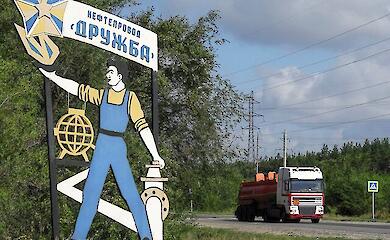
Orban announces "results" of Hungarian mission on Druzhba oil pipeline


Will maternity leave be shortened in Ukraine? Changes for workers with children


Zelensky said that Russia was preparing a new offensive and pointed out the direction of it
Kellogg named the ceasefire condition today and compared Putin to Nicholas II
News about war
Orban announces "results" of Hungarian mission on Druzhba oil pipeline
Kellogg named the ceasefire condition today and compared Putin to Nicholas II
Zelensky said that Russia was preparing a new offensive and pointed out the direction of it
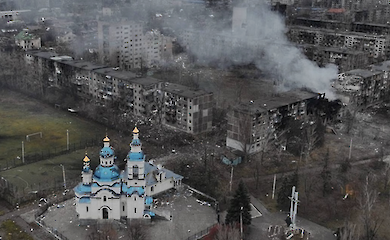
Russia is destroying Ukraine twice as fast as at the start of the war - international report