
Archaeologists have explained why ancient people carved footprints in stone


In southern Scandinavia, footprints carved by Bronze Age people are still visible on rocks. Some look like bare feet with toes, others like sandal prints. A new study suggests: these images may not have been just drawings, but part of rituals.
Archaeologist Fredrik Falander from Stockholm University studied such petroglyphs in the Melaren region in central-eastern Sweden. He paid attention not only to the shape of the traces, but also to where exactly they are located: near water, depressions in the rock, cracks and mineral inclusions. The work was published in the Oxford Journal of Archaeology.
The main idea behind the study is cautious but interesting: the marks in the rock could have been a way of cementing an important bond between people - an alliance, arrangement, friendship or other social act. But this is just an archaeological interpretation, not direct evidence that such marks meant, for example, marriage.
Details
Foot-shaped petroglyphs are called podomorphs. They are representations of human feet or soles carved on a stone surface. In Scandinavia, they belong to the Bronze Age rock art tradition, circa 1700 - 500 BC.
Unlike many other Bronze Age depictions - of ships, animals, people or simple bowl-shaped depressions - these footprints are often made almost life-size. As such, they appear particularly personal: as if a particular person once put their foot on the stone, and then that footprint was preserved forever.
Falander speculated that the process may have started with an actual wet footprint on the rock. While the footprint was still visible, it could have been hammered or gouged into the rock. If so, the petroglyph was not just a picture, but the result of an action involving the human body.
The location of the footprints proved to be particularly important. They are often associated with the microrelief of the rock: small depressions where rainwater collected, natural cracks, places where water could flow over the surface, and areas with noticeable minerals. This suggests that ancient people did not choose the site at random.
Some footprints are found singly, others in pairs. The paired footprints are often not symmetrical: they may differ in size, shape or details. The author of the study believes that such pairs could indicate two different people. And single traces, perhaps, left a place for the future "response" trace nearby.
Hence the version about social ties. If two people embossed their footprints next to each other, it could be a ritual way to make their bond visible and durable. Such a bond could have been an alliance, an agreement, a kinship or friendship. However, we do not know the exact meaning of these actions: there are no written explanations from Bronze Age people.
Why it matters
The study suggests looking at rock art not only as ancient images, but also as traces of actions. Bronze Age people may not have simply 'painted' on stone, but may have carried out rituals involving the body, water, rock and movement.
This changes the very approach to such monuments. If the traces were associated with water and specific surface features, it means that not only the drawing was important, but also the place: where to put the foot, where to carve the outline, how the water would run over the stone and how the trace would look after rain.
For archaeology, this is valuable because it helps us cautiously approach the social world of ancient people. We can't name their rituals exactly, but we can see that stone footprints were probably part of practices related to memory, belonging, and relationships between people.
Background
Bronze Age rock art is widely recognised in Scandinavia. Images of ships, people, animals, weapons, circles and bowl-shaped depressions are found on rocks. Many of them are associated with rituals, the sea, travelling, exchange and ideas about the world.
Footprints occupy a special place. They are not as common as the bowl-shaped depressions, but they look very distinctive. In some cases toes are visible, in others sandal straps or sole details. This creates a sense of the presence of a concrete person rather than an abstract symbol.
In the past, such images were often interpreted as signs, symbols of a path, presence or contact with the divine. The new work doesn't invalidate these versions, but adds another level: perhaps the footprints were also action "devices" - objects that created a connection between people, stone, water and place.
Source
Fredrik Fahlander, "A step in stone. Ontologies of podomorphic petroglyphs in Southern Scandinavian Bronze Age", Oxford Journal of Archaeology, 2026.
The study analyses foot-shaped petroglyphs in the Southern Scandinavian Bronze Age tradition, especially in the Mälaren region of central-eastern Sweden. The author studied their distribution, shape, pairing and relationship to rock surface features such as water, cracks and mineral inclusions. Based on this, he suggested that such traces could have been not only images but also part of ritual activities.
An independent researcher, interested in archaeology and sacred geography. He researches them and writes about them.
Related news

A discovery in Spain has brought us closer to unravelling the mystery of human origins

Scientists have explored the glacier on the summit of Mount Ararat for the first time

Two babies were found carefully buried in an abandoned Roman latrine
Traces of a vast ancient civilisation have been found beneath the Amazon rainforest
Popular news

Ukrainian security services have been recognised as among the best intelligence services in Europe – L'Express



Irina Levchenko, the abducted Ukrainian journalist, has been transferred to the Donetsk remand centre: what is known

Evidence has been found in Australia of an unusual ritual that has been practised for thousands of generations
News about war
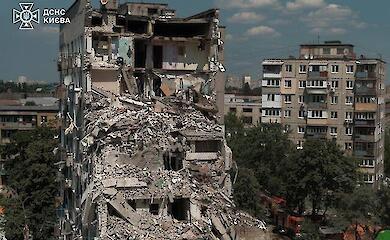
The UN has reported a sharp rise in the number of Ukrainian civilians killed as a result of the war
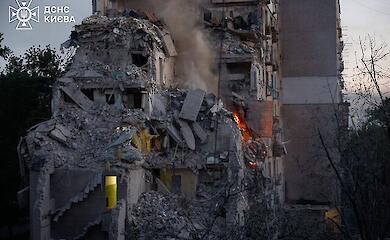
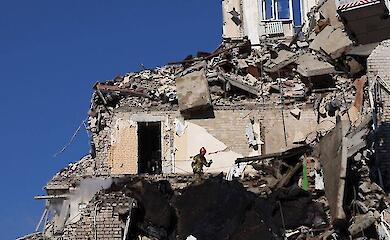
3 July has been declared a day of mourning in Kyiv. The number of dead and injured is rising