
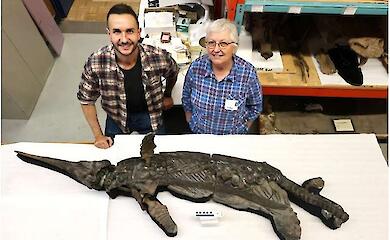

Another species of mammal is extinct in the world


It's now official: the Christmas shrew, the only representative of the shrew in Australia, has been declared extinct.
This is according to the updated version of the International Union for Conservation of Nature (IUCN) Red List, which is the most comprehensive global registry of endangered species, The Converastion reports.
This event may go unnoticed by the general public - few people were even aware of the tiny animal's existence. However, its disappearance is the 39th extinction of a mammal in Australia since 1788. This is a world record: the country has lost around 10% of its land mammals since colonisation.
What are shrews?
Shrews are small, long-nosed insect-eating mammals. They are widely distributed in Asia, Europe, Africa and the Americas. In Australia, a similar ecological niche is occupied by small marsupials such as dunarts or antechinus.
The reputation of the shrew has suffered greatly due to cultural stereotypes. Thanks to Shakespeare, the word "shrew" is firmly associated with an irritating and grumpy character, which has also undermined interest in the animal itself.
History of the Australian Shrew
The migration of the Christmas shrew's ancestors to the island occurred, presumably tens of thousands of years ago, when they travelled on rafts of vegetation from what is now Indonesia to isolated Christmas Island (1500 km from mainland Australia). There they became the only representative of their species on the continent.
At the end of the nineteenth century, shrews were abundant. However, in 1900, black rats infected with the trypanosome parasite were accidentally introduced to the island. The local animals, isolated from the outside world, had no immunity and began to die en masse.
Already by 1908, two species of native rats and shrews were thought to be extinct. In the following years, the island's ecosystem was destroyed by invasive species: cats, ants, snakes, plants and other animals.
The last vestiges
Yet the shru survived. In the 1950s, two individuals were accidentally caught during jungle clearing. In 1984, one live female was found in the forest and kept in a terrarium, followed a few months later by a male. However, no breeding attempts were made. The male died soon after, the female lived longer but did not breed.
Since then, over the last 40 years, the shrew has never been seen again. Special searches, analyses of the stomach contents of wild cats, ecological studies - all this has not yielded any results.
Official recognition of the extinction has only now occurred, although the last representative most likely disappeared back in the 1980s or 1990s.
Dr John Wojnarski, author of the paper, emphatically states:
"The disappearance of the shrew is a disturbing reminder of how important it is to take action in time. Rare species can be lost for a multitude of reasons, and each loss is irreparable."
While Australia's Environment Minister pledged in 2022 to prevent any more extinctions, the Christmas shrew was a reminder that intentions are not enough - action is needed.
Maria Grynevych, project manager, journalist, co-author of Guidebook Sacred Mountains of the Dnieper Region, Lecture Course: Cult Topography of the Middle Dnieper Region.
Related news
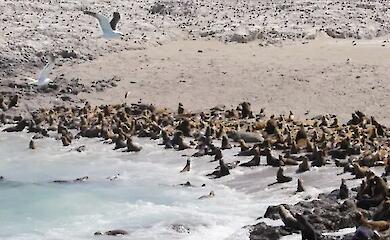
More than 50,000 seals killed by bird flu - scientists sound the alarm


Popular news

Orban announces "results" of Hungarian mission on Druzhba oil pipeline


Will maternity leave be shortened in Ukraine? Changes for workers with children


Zelensky said that Russia was preparing a new offensive and pointed out the direction of it


Kellogg named the ceasefire condition today and compared Putin to Nicholas II

News about war
Orban announces "results" of Hungarian mission on Druzhba oil pipeline
Kellogg named the ceasefire condition today and compared Putin to Nicholas II
Zelensky said that Russia was preparing a new offensive and pointed out the direction of it

Russia is destroying Ukraine twice as fast as at the start of the war - international report