

Anomalies at the core-mantle boundary helped explain why Earth became habitable


Geophysicists have proposed a new model of the depths of the mantle: leaks of matter from the core could help make Earth habitable.
Nearly 2,900 kilometres beneath our feet - at the mantle-core boundary - hide two giant anomalous formations that have stumped geophysicists for decades. A new study published in Nature Geoscience offers an explanation of how they arose and why they are important to understanding how the Earth became habitable.
What was found inside the Earth? We're talking about two types of structures:
low-Low-Low Transverse Wave Velocity (LLSVP) regions - these are continental-scale "clumps" of hotter, denser rocks, one under Africa and the other under the Pacific Ocean;
ultra-low velocity zones (ULVZs) - thin molten "flatbreads" at the core-mantle boundary that look like puddles of lava.
Both structures dramatically slow the passage of seismic waves, indicating an unusual composition compared to the rest of the mantle.
According to Yoshinori Miyazaki, a geodynamicist at Rutgers University and lead author of the paper, these are not "random oddities" but peculiar "fingerprints" of Earth's earliest history. By understanding why they exist, we will better understand how our planet formed and why it became habitable.
Billions of years ago, the Earth was, according to current thinking, covered by a global ocean of magma. As it cooled, it would seem that the mantle should have stratified in composition - like cooled juice, where the sweet concentrate sinks to the bottom and a more "watery" layer remains on top.
But the seismic data show no such clear layer-by-layer structure. Instead, large "piles" of anomalous matter - those LLSVPs and ULVZ melt spots - are visible at the very base of the mantle.
"If we start the calculations from the magma ocean, we don't arrive at what we actually observe in the Earth's mantle. Something was missing in this picture," Miyazaki explains.
In the new work, scientists suggest that the "missing element" is the core itself. The model shows that over billions of years, elements like silicon and magnesium could "seep" from the core into the lower mantle, mixing with it and preventing the formation of a rigid chemical stratification.
Such "mixing" of core matter, according to calculations, explains the unusual composition and behaviour of LLSVP and ULVZ. Researchers consider them as solidified remnants of the ancient "basal magma ocean", contaminated by components released from the core.
It's not just about the chemistry of the subsurface, Miyazaki emphasises. The interaction between the core and mantle affects how the planet cools, how volcanism develops, and how the atmosphere eventually forms. This may partly explain why Earth has oceans, a temperate climate and life, while Venus has become an overheated greenhouse world and Mars a cold desert with a thin atmosphere.
How heat flows and layers change within a planet could be the key to answering the question of why Earth's atmosphere is relatively stable while neighbouring planets are not.
The authors of the paper also believe that deep structures at the core-mantle boundary may be fuelling volcanism hotspots such as Hawaii and Iceland, creating a direct link between Earth's deepest layers and its surface.
The study combined data from seismology, mineral physics and numerical modelling of subsurface evolution. As a result, LLSVP and ULVZ appear no longer "anomalies", but key witnesses to the early history of the planet.
As noted by co-author Jie Deng from Princeton University, the idea that the lower mantle still stores the chemical "memory" of the first interactions of the core and mantle, opens a new way to understand the unique evolution of the Earth.
Each new piece of data, Miyazaki emphasises, helps to build a more complete picture of how the Earth has changed and why it has become special among the planets.
Mykola Potyka has a wide range of knowledge and skills in several fields. Mykola writes interestingly about things that interest him.
Related news
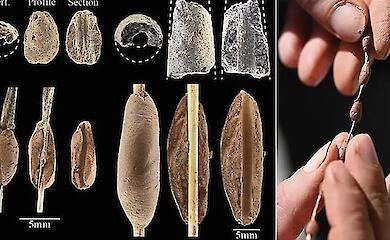
Archaeologists have found children's fingerprints in 15,000-year-old clay

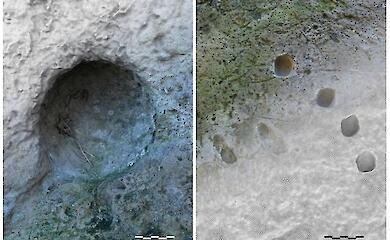
Traces of an "ancient machine gun" have been found in Pompeii
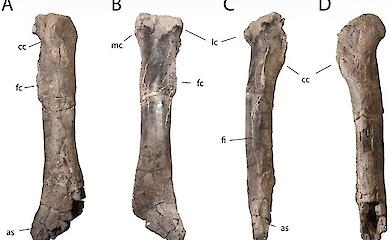
Scientists have found a huge bone from a possible ancestor of T. rex
Popular news
Orban announces "results" of Hungarian mission on Druzhba oil pipeline


Will maternity leave be shortened in Ukraine? Changes for workers with children


Zelensky said that Russia was preparing a new offensive and pointed out the direction of it


Kellogg named the ceasefire condition today and compared Putin to Nicholas II

News about war
Orban announces "results" of Hungarian mission on Druzhba oil pipeline
Kellogg named the ceasefire condition today and compared Putin to Nicholas II
Zelensky said that Russia was preparing a new offensive and pointed out the direction of it
Russia is destroying Ukraine twice as fast as at the start of the war - international report