

Almost a thousand and a half companies have ceased or reduced their activities in Russia


As of May 29, the KSE Institute has identified about 2065 companies and organizations from 70 countries and 55 industries and their position on the Russian market, about half of them are public.
This is stated in the KSE press release.
- Number of companies continuing to operate in Russia (KSE status "remaining") - 590 (+8 per week)
- The number of companies that reduced current operations and suspended new investments (KSE status "waiting") - 438 (+8 for the week)
- The number of companies that curtailed Russian operations (KSE status "going out") - 1037 (+4 for the week)
For ~400 public groups of companies, we also identified (if possible) an operating business in the Russian Federation (the presence of a controlling stake in a legal entity), which made it possible to calculate the value of capital invested in the country (about $113 billion), local revenue (totaling $200 billion), and also personnel (about 0.7 million people).
1475 foreign companies have already reduced, suspended or terminated their activities in Russia
Western agricultural companies remain on the Russian market despite pressure, claiming humanitarian reasons.
Economic sanctions imposed by the EU, US and other countries do not apply to agricultural products due to humanitarian concerns and food security. Russia is the world's largest exporter of wheat, while Ukraine is the world's fifth largest exporter of wheat, the fourth largest exporter of corn, and the largest exporter of sunflower oil and meal. War, of course, will lead to food problems in the world.
The companies themselves announce a reduction in transactions, but remain in Russia, including such major Western agricultural companies as Archer Daniels Midland (ADM), Bunge, Cargill and Louis Dreyfus (or, as they are commonly called, the “Great Four in / g” or “ABCDs”).
Maria Grynevych, project manager, journalist, co-author of Guidebook Sacred Mountains of the Dnieper Region, Lecture Course: Cult Topography of the Middle Dnieper Region.
Related news
Former British Prime Minister Rishi Sunak has become Zelensky's economic recovery adviser



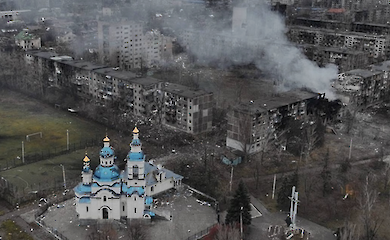
Russia is destroying Ukraine twice as fast as at the start of the war - international report


Popular news
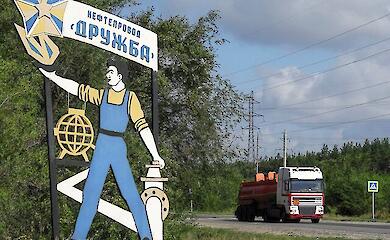
Orban announces "results" of Hungarian mission on Druzhba oil pipeline


Will maternity leave be shortened in Ukraine? Changes for workers with children

Zelensky said that Russia was preparing a new offensive and pointed out the direction of it

Kellogg named the ceasefire condition today and compared Putin to Nicholas II
News about war
Orban announces "results" of Hungarian mission on Druzhba oil pipeline
Kellogg named the ceasefire condition today and compared Putin to Nicholas II
Zelensky said that Russia was preparing a new offensive and pointed out the direction of it
Russia is destroying Ukraine twice as fast as at the start of the war - international report