A skull discovered in a Greek cave turns out to be 286,000 years old. Why does that matter?


Scientists from the Institute of Human Palaeoanthropology in France have put an end to a long-standing controversy surrounding a skull from the Greek cave of Petralona, discovered back in 1960.
As reported by Phys.org, using uranium-thorium dating researchers have determined its minimum age - 286 ± 9 thousand years.
The skull from Petralona has long been of interest to scientists. It belongs to a member of the genus Homo, but does not look like Neanderthal or modern man. Its age has long been a matter of debate: early estimates ranged from 170 to 700 thousand years.
The new study, published in the Journal of Human Evolution, is based on the analysis of calcite crust formed directly on the surface of the skull. In cave conditions, water saturated with soluble uranium compounds evaporates and leaves mineral traces. These deposits turn into a kind of time markers, making it possible to determine with high precision the moment of their formation.
The analysis showed that the calcite layer on the skull began to form about 286 thousand years ago, which means that the find cannot be younger than this date. Moreover, it is possible that the skull was in the cave much earlier, just the deposition of minerals began later - after moisture.
Additional samples in different parts of the cave, including the hall with the name "Mausoleum", showed that the formation of stalactites on the walls began more than 650 thousand years ago. And the layers overlying the skull have been dated to 228,000 years, confirming the age minimum.
Depending on whether the skull was originally attached to the wall or was simply on the floor, scientists estimate the period of its arrival in the cave in the range from 410 to 277 thousand years ago.
The authors' main conclusion is that the skull represents a representative of a more primitive and separate line of development, not directly related to either Homo sapiens or Neanderthals. This confirms that different hominin groups could have co-existed in the late Middle Pleistocene in Europe.
The full scientific publication can be found at the link: Christophe Falguères et al, New U-series dates on the Petralona cranium, a key fossil in European human evolution, Journal of Human Evolution (2025). DOI: 10.1016/j.jhevol.2025.103732
An independent researcher, interested in archaeology and sacred geography. He researches them and writes about them.
Related news

Neanderthal bone tools have been discovered in Romania for the first time

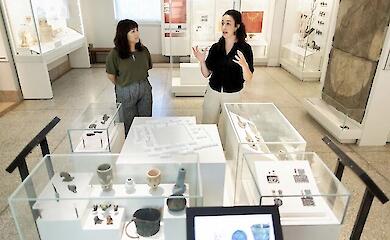
Almost 500 blue artefacts have linked Iron Age Iran with ancient Egypt

A Chinese inscription has debunked the legend surrounding the Boston Tea Party relic
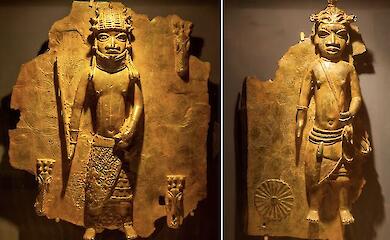
How new technologies have debunked old myths about African history
Popular news

Ukrainian security services have been recognised as among the best intelligence services in Europe – L'Express


Irina Levchenko, the abducted Ukrainian journalist, has been transferred to the Donetsk remand centre: what is known

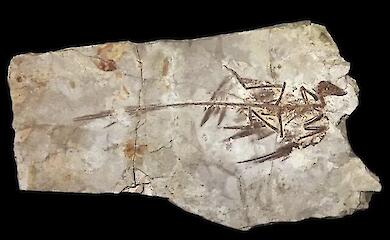
Scientists have put forward an explanation as to why there were no tiny dinosaurs


How to cook sweetcorn properly so that it’s juicy and sweet: the best method revealed
News about war

The UN has reported a sharp rise in the number of Ukrainian civilians killed as a result of the war


3 July has been declared a day of mourning in Kyiv. The number of dead and injured is rising