
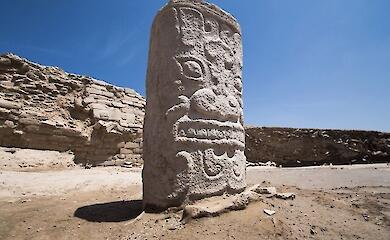

A single grave among the sands: a mysterious burial site has been discovered in Sudan


Archaeologists from a team led by Dr Monica Badura have published the results of a study of an unusual burial site found deep in the Bayouda Desert in northern Sudan.
The work, published in the journal Azania: Archaeological Research in Africa, reveals new data on burial rituals and living conditions in the ancient kingdom of Kerma in the second millennium BC.
The Bayouda Desert, a remote region between the bends of the Nile, has long remained on the periphery of scientific interest. This changed after the launch in 2017 of the project "Prehistoric Communities of the Bayuda Desert - New Frontiers of the Kingdom of Kerma", led by the University of Wrocław and the Archaeological Museum of Gdańsk. One of the sites was the small necropolis BP937, where researchers discovered the only burial of an adult male.
According to ceramics and radiocarbon data, the burial dates back to the period of Old Kush II - about 2050-1750 B.C. Analyses of the bone remains showed that the man was 30-40 years old, about 164 cm tall, of sturdy build. Degenerative changes in the spine and feet indicate heavy physical labour. Traces of inflammation and bone thickening indicate disease or nutritional deficiencies.
The deceased was placed in a grave with two vessels and a necklace of 82 earthenware beads of the characteristic blue colour typical of regional burials on the Fourth Nile Threshold. Similar jewellery is found in the Kerma and C-group cultures, testifying to the extensive trade links and cultural commonality of Nubia at that period.
The first vessel is an inverted clay bowl, a traditional element of Kerma graves, associated, as researchers suggest, with the symbolic "emptying of life" before passing to the world of ancestors. The second vessel turned out to be unique: a small vessel with a faded black stripe was filled with the remains of a fire - charred animal bones, charcoal, insects and even coprolites. No analogues of such an object in Kerma culture are yet known.
"The use of fire in the funerary rituals of the Kermians is virtually undocumented," notes study co-author Dr Henryk Paner. - Therefore, this find is a rare material evidence of a rite that probably included a ritual fire and a memorial meal". According to the researcher, the lack of similar examples in other burials makes the ritual "mysterious and unusual".
Near the grave mound, archaeologists also found fragments of pottery. Similar finds are recorded in the regions of Nubia already in the early phases of the Kerma culture and may indicate a ritual of deliberate breaking of vessels.
The study of the contents of the unique vessel allowed us to reconstruct the environment of that time. Wood analyses revealed the presence of drought-tolerant stocks and ziziphus, while seeds of grasses and fruit plants indicate the existence of a wetter and more diverse landscape than the current desert landscape. Beetles of the genus Cleonini found feeding on amaranth support the hypothesis of richer vegetation.
The scientists plan to continue working with the necropolis materials. However, as Paner notes, the current civil war in Sudan makes field research difficult. Despite this, the experts are counting on further laboratory analyses to help further understand the unusual ritual and its place in Kerm's funerary practices.
An independent researcher, interested in archaeology and sacred geography. He researches them and writes about them.
Related news
Archaeologists have found children's fingerprints in 15,000-year-old clay

Traces of an "ancient machine gun" have been found in Pompeii
100 years ago, the first rocket was launched - this was the beginning of the space age

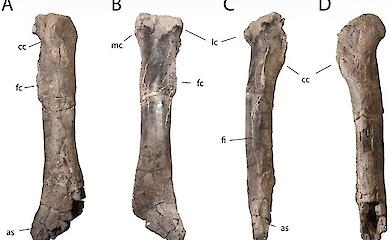
Scientists have found a huge bone from a possible ancestor of T. rex
Popular news
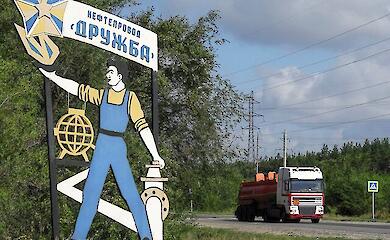
Orban announces "results" of Hungarian mission on Druzhba oil pipeline


Will maternity leave be shortened in Ukraine? Changes for workers with children


Zelensky said that Russia was preparing a new offensive and pointed out the direction of it


Kellogg named the ceasefire condition today and compared Putin to Nicholas II

News about war
Orban announces "results" of Hungarian mission on Druzhba oil pipeline
Kellogg named the ceasefire condition today and compared Putin to Nicholas II
Zelensky said that Russia was preparing a new offensive and pointed out the direction of it
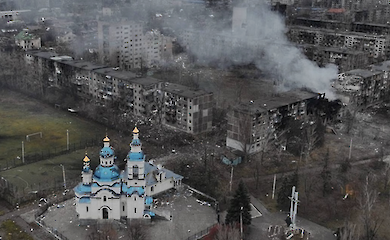
Russia is destroying Ukraine twice as fast as at the start of the war - international report