


A seal escaped from killer whales by jumping into a photographer's boat (VIDEO)


Off the coast of Washington State, a seal miraculously escaped a pack of killer whales by escaping on the stern of a small pleasure boat. The unusual scene was captured on video and photo by wildlife photographer Sharvet Druker. She posted the dramatic five-part rescue story on Instagram.
The incident happened in Saragota Strait between Camano and Whidbey islands, about 40 miles northwest of Seattle. Druker was out to sea in a rented boat about 6 metres long when she spotted a group of at least eight orcas (killer whales), also called killer whales.
It was clear from the coordinated movements and tail slapping the water that the predators were hunting. Zooming in through a telephoto lens, Druker saw a seal in the water desperately trying to evade pursuit. One of the images showed the seal literally "flying" over the foaming water, and the photographer thought she was watching its last moments.
However, as the killer whales approached the boat, it became obvious that the hunt was on. In accordance with the rules of navigation in marine animal habitats, the crew switched off the engine to avoid harming the animals. At this point, the seal chose the boat as an escape: it jumped out of the water and climbed onto a small bathing platform by the engine at the stern.
According to the rules it is also forbidden to touch the wild animal or interfere with what is happening, so the people on board could not help him and only recorded what was happening on camera. In the video footage, Druker can be heard saying, "Poor thing... It's OK, just stay here."
The killer whales didn't immediately give up their prey. According to the photographer, they acted in a co-ordinated manner, trying to rock the boat and flush the seal back into the water. The footage shows the animals lining up and approaching the boat, taking turns diving to create waves. Scientists have observed this technique - called "wave-washing" - in killer whales since the 1980s, the US National Oceanic and Atmospheric Administration (NOAA) recalls.
The seal slipped back into the water once, but managed to climb back onto the platform. After about 15 minutes, the killer whales stopped trying and swam away.
Druker confesses that she usually sympathises with the predators: she has often had to film seals already trapped in the jaws of killer whales, and she believes it is important that the animals get food.
"I'm definitely on the side of the orcas - all day, every day. But as soon as that seal was on the boat, all of a sudden I'm on the seal's side," she told the Associated Press.
The killer whales that hunted the seal belong to the so-called Biggs' or "transient" killer whales, a group that feeds on seals and other marine mammals. According to NOAA, they feel they have a better food supply than "sedentary" killer whales, which specialise in salmon and are on the endangered species list.
Maria Grynevych, project manager, journalist, co-author of Guidebook Sacred Mountains of the Dnieper Region, Lecture Course: Cult Topography of the Middle Dnieper Region.
Related news
More than 50,000 seals killed by bird flu - scientists sound the alarm

Popular news
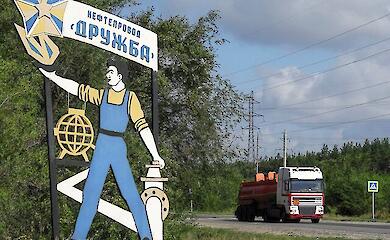
Orban announces "results" of Hungarian mission on Druzhba oil pipeline


Will maternity leave be shortened in Ukraine? Changes for workers with children


Zelensky said that Russia was preparing a new offensive and pointed out the direction of it


Kellogg named the ceasefire condition today and compared Putin to Nicholas II

News about war
Orban announces "results" of Hungarian mission on Druzhba oil pipeline
Kellogg named the ceasefire condition today and compared Putin to Nicholas II
Zelensky said that Russia was preparing a new offensive and pointed out the direction of it

Russia is destroying Ukraine twice as fast as at the start of the war - international report