


Why venomous snakes tend to stand out more: 5 findings from the study


Researchers compared more than 450 species of snakes and found a link between the presence of venom and the visibility of their colouring against their natural background. Red and yellow elements were particularly likely to enhance the contrast.
On average, venomous snakes stand out more against their surroundings than non-venomous ones, and red and yellow patches of colouring increase the contrast particularly significantly. This is the conclusion reached by researchers at the University of Galway after analysing more than 450 species of snakes from around the world.
The study was published in the *Journal of Animal Ecology*. The authors used thousands of photographs of animals in their natural habitats from iNaturalist and compared how well the snakes’ colouration stood out against their natural background. This study examines the relationship between traits; it is not a method for determining the danger posed by a particular snake based on its colour.
Details
The list includes conclusions that follow directly from the analysis and the official press release from the University of Galway. They are arranged from the main finding to its limitations and practical implications.
1. Venomous species are, on average, more conspicuous than non-venomous ones
The main finding of the study is a statistical correlation between the presence of venom and visual conspicuity. Venomous snakes tended to contrast more strongly with their natural surroundings than non-venomous species.
This supports the hypothesis of aposematism – a strategy whereby a dangerous or inedible animal does not hide, but signals the risk of an attack to a predator. The authors suggest that, in some snakes, venom and conspicuous colouration may have evolved to reinforce one another.
2. Red and yellow are particularly effective at making snakes stand out
The researchers analysed red and yellow colour patches separately — colours that are often part of animals’ warning signals. In the data, it was precisely these colours that were particularly effective at making the snake stand out against its natural background.
One striking example is the coral snake with its contrasting rings. However, the conclusion relates to a general statistical pattern amongst hundreds of species, rather than a universal colour scheme for all venomous snakes.
3. Bright colouration may be a defence rather than a disadvantage
For an animal, being conspicuous usually seems risky: it makes it easier for a predator to spot its prey. But if an attack is dangerous to the predator itself, a conspicuous signal may cause it to abandon the attack before contact is made.
The study provides large-scale data supporting this idea. The authors interpret the bright colouration of some venomous snakes as a possible warning signal, rather than as poor camouflage.
4. Not all venomous snakes are brightly coloured — and not all brightly coloured snakes are venomous
This correlation holds true at the level of large groups of species, but is not a rule for identifying snakes in the wild. In their official press release, the researchers specifically emphasise that many venomous species do not have striking colouration at all.
The reverse is also untrue: a bright pattern in itself does not prove the presence of venom dangerous to humans. Some harmless species mimic the warning colouration of dangerous animals, whilst others use bright colours for other reasons.
5. Photographs taken in the wild provided what museum specimens do not
The team used thousands of photographs from iNaturalist, because when it comes to conspicuity, it is not only the animal’s colour that matters, but also the actual background around it. A museum specimen allows for a precise study of body colouration, but does not show how much it contrasts with the leaves, soil or rocks in its natural habitat.
This vast array of citizen observations made it possible to compare hundreds of species in their natural visual environment. However, photographic data depends on lighting, the camera used and the quality of the images; therefore, the study reveals broad patterns rather than providing a precise measure of each animal’s colour.
Why this is important
The study broadens our understanding of warning colouration: the link between conspicuousness and chemical defence has been observed not just in a single genus or a few well-known species, but across a large sample of snakes from around the world.
The findings also show why the intuitive rule that ‘a dangerous animal should hide well’ does not always hold true. If a potential predator is capable of learning to avoid a conspicuous signal, standing out from the background may be more advantageous than remaining inconspicuous.
However, this finding should not be turned into a practical guide for identifying snakes. The study does not claim that a brightly coloured snake is necessarily venomous or that a dull-coloured one is safe. If you encounter an unknown snake, it is safer not to approach it and not to try to determine its danger solely by its colour.
Source
University of Galway: Venomous snakes evolved striking colours to stand out, 5 October 2026.
Mykola Potyka has a wide range of knowledge and skills in several fields. Mykola writes interestingly about things that interest him.
Related news
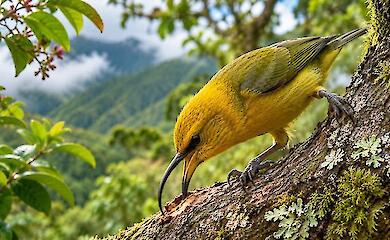
A Hawaiian bird with a ‘double’ beak pecks at a tree with its whole body - scientists have discovered how


Why did the kings of Norway need Sámi ancestors? Historians have re-examined the sagas


A fish with a transparent head was filmed in 4K at a depth of 600 metres

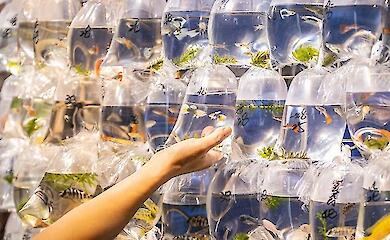
Up to 107,000 wild species have been identified as being used or traded
Popular news

Genetic evidence of natural selection has been found in dogs near the Chernobyl Nuclear Power Station

A fish with a transparent head was filmed in 4K at a depth of 600 metres


News about war

Russia is threatening to destroy bridges, ports and power stations in Ukraine in order to secure territorial concessions from Kyiv – FT


Emergency power cuts have been introduced in Kyiv and warming centres are being set up — Klitschko


Zelenskyy confirmed that the Russian warning system had been hacked: Ukraine has responded to the Russian Federation’s cyberattack

Stephen Hubbard has returned to the US after four years in prison in Russia: what is known about his case