
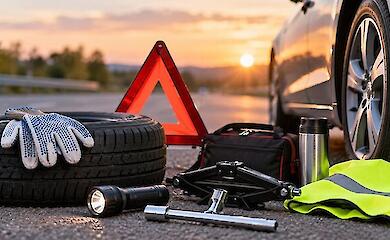
What to prepare at home in the event of missile and drone attacks: 10 points


Preparing at home is no substitute for taking shelter, but it means you won’t waste time when an alarm sounds. We’ve put together 10 points based solely on official recommendations from the State Emergency Service and the authorities.
In the event of a threatened missile or drone attack, the main advice from Ukraine’s State Emergency Service remains the same: once the air-raid siren sounds, you must head for the nearest suitable shelter as quickly as possible. The ‘two-wall rule’ is not an equivalent substitute: the State Emergency Service explicitly warns that whilst it may reduce the risk from flying glass and shock waves, it does not protect against a direct hit from a missile, bomb or large fragments thereof.
Therefore, this checklist is not about how to ‘make your flat safe in the event of a strike’. There is no such guarantee. This is a list of what the official services advise you to prepare in advance, so that during an air-raid alert you do not have to search for documents, medicines and a torch, or decide at the last minute where to go. Sources verified on 13 September 2026.
Details
1. Choose a primary shelter and an alternative route in advance
Check: do you know the address of the nearest shelter, the route to it, and an alternative route in case the entrance is blocked?
The State Emergency Service recommends finding out the locations of shelters in advance and planning a short, safe route. It is also worth checking that the emergency exits from your home are not blocked by clutter. In the ‘Diya’ app, a map of shelters for a number of regions can be downloaded to your phone and used without an internet connection; for the Donetsk, Luhansk, Zaporizhzhia and Kherson regions, this map is unavailable for security reasons, so you should refer to official local authority resources in those areas.
If an alarm sounds, you should use the stairs: the State Emergency Service advises against using the lift due to the risk of a power cut.
2. Keep your emergency rucksack by the exit, not ‘somewhere in a cupboard’
Check that you have already packed the essentials into a single rucksack or bag that you can grab in a matter of seconds.
In a separate guide on home safety, the State Emergency Service advises you to pack your emergency rucksack in advance and keep it in the hallway by the front door. It should contain items you will need in a shelter or during an emergency evacuation. The contents should be tailored to your family: young children, older people, people with disabilities, those with chronic illnesses and pet owners will have specific needs.
3. Prepare water and food that does not require cooking
Check that your emergency rucksack contains drinking water and long-life food that can be eaten without a hob or electricity.
In its guidance on what to take to a shelter, the State Emergency Service (DSNS) provides the following guidelines: approximately 2–3 litres of water per person and non-perishable food for at least two days. In a separate set of recommendations on preparing your home, the service also advises keeping a stock of drinking and non-potable water, as well as long-life food, at home.
This is not a one-size-fits-all ‘food allowance’ for every situation. The quantities should be adjusted according to family composition, health, age, the likely duration of the stay in the shelter and how far away it is.
4. Put together a first-aid kit and a supply of any medicines you take regularly
Check that your rucksack contains a basic first-aid kit and your personal medicines, and that they have not passed their use-by date.
The State Emergency Service advises people who take medication regularly to pack at least a week’s supply of these medicines in their emergency bag, along with a prescription or a note detailing the dosage and schedule. This is not a reason to change your treatment yourself or to stock up on random medicines: we are talking about medicines that have already been prescribed and are needed by a specific person.
For people with special needs, the official list specifically mentions glasses, a hearing aid with spare batteries and, if necessary, a blood pressure monitor or glucose meter.
5. Prepare backup communication and lighting
Check that: your power bank is charged, your torch is working, spare batteries are kept close at hand, and your phone and charging cables are within easy reach.
The State Emergency Service (DSNS) recommends including a mobile phone, a charger, a power bank, a torch, a supply of batteries and a small radio in your emergency kit. A radio may come in handy if mobile networks or the internet are temporarily unavailable. It is useful to have important numbers and addresses not only saved on your mobile phone, but also written down on paper.
An open flame is a poor substitute for a torch in an emergency. If a building is damaged and there is a risk of a gas leak, the State Emergency Service specifically warns against using matches, lighters or candles for lighting.
6. Gather your documents, keys, maps and some cash in one place
Check that you can grab your documents in one go and that their copies are protected from water.
The State Emergency Service recommends keeping originals and copies of essential documents, bank cards, a small amount of cash, and keys to your home and car in your emergency rucksack. They advise placing documents in a plastic bag or folder. The extended list also includes details of family members’ blood groups and contact details for close relatives.
7. Prepare your home for a fire and find out how to quickly shut off utilities
Check that there is a working fire extinguisher in an accessible place in your home, and that adults know where to turn off the electricity, gas and water.
The State Emergency Service advises purchasing a fire extinguisher in advance and learning how to use it, as well as monitoring the condition of wiring, sockets and gas appliances. Before heading to a shelter, the service recommends switching off electrical appliances, disconnecting the power supply to the property where possible, and turning off the gas and water. However, the State Emergency Service itself emphasises that preparing your flat should not delay your evacuation to a shelter — life and health take priority over property.
Important: do not attempt to turn off the gas valves on the communal riser near the entrance or the building yourself. The State Emergency Service considers such operations to be the responsibility of specialists. For your flat, this refers to your own valve or tap before the meter, provided you know how to use it safely.
8. Minimise the risk from windows and do not place your bed near the glass
Check that: beds and permanent resting places are not positioned right up against large windows, and that the glass can be reinforced with film in advance if necessary.
The State Emergency Service recommends covering window panes in advance with wide adhesive tape or clear film to minimise the scattering of shards. Official recommendations from Kyiv also advise keeping a safe distance from windows and moving beds away from the glass.
This does not turn a window or a room into a shelter, nor does it protect against a direct hit. Furthermore, in various State Emergency Service guidelines, the wording regarding the position of the windows themselves during an alert varies slightly: one page advises closing them whilst leaving them in ventilation mode, whilst another advises closing windows and doors before leaving. We therefore do not specify our own ‘correct position’ for windows. A reliable general principle from the official guidelines is to stay away from the glass and not to waste time on everyday activities instead of seeking shelter.
9. Consider an indoor location only as a fallback option in the event of sudden shelling
Check this: do you know where in your flat there is a room furthest from windows and external walls, situated between load-bearing walls?
If shelling has already begun and there really is no time to reach a shelter, the State Emergency Service permits, as a temporary measure, a room following the ‘two-wall rule’ – usually an internal corridor between load-bearing walls. In this case, you must stay away from windows, external walls, gas boilers, gas cylinders and other objects that may pose an additional risk.
A key limitation: two walls can provide protection from some shrapnel and glass, but do not guarantee safety in the event of a direct hit. When a standard air-raid siren sounds, the State Emergency Service recommends seeking shelter rather than remaining in your flat.
10. Prepare separate items for children, the elderly and pets
Check that the needs of every family member have been taken into account in advance, rather than left until the moment the alarm sounds.
For children, the State Emergency Service advises having a separate small rucksack and a note containing their name, date of birth, address and contact details of their parents or other responsible adults. For pets, the official guide recommends preparing documents, a lead or carrier, a collar, any necessary medication, waste bags, a bowl and a supply of food for several days.
For older people and those with disabilities, the State Emergency Service’s checklist specifically mentions medical documents, a list of medicines, care products, spare batteries for hearing aids and other items required on an individual basis.
Why this is important
Most of this list is not intended for ‘waiting out’ an air raid at home, but rather to minimise the time between the air-raid siren and reaching a shelter. The State Emergency Service (DSNS) explicitly states: an emergency rucksack should be packed in advance, the route to the shelter should be familiarised with beforehand, and preparing your home before leaving should not take long.
If your home is damaged or a fire has broken out, you should leave the danger zone if possible and call 101. If a person is trapped under rubble, the State Emergency Service recommends giving rescuers your exact address and location, giving voice or light signals, knocking on pipes or walls, and not using open flames.
And here is another important rule that Ukrainian emergency services regularly emphasise: during an attack, do not go out onto the balcony or into the courtyard to watch what is happening, and do not film air defence operations. This creates an additional risk for you and may reveal information about the activities of the defence forces.
Source
- State Emergency Service of Ukraine: rules of conduct during an air raid alert.
- State Emergency Service of Ukraine: how to choose a shelter during an air raid alert.
- State Emergency Service of Ukraine: what to pack in an emergency rucksack.
- State Emergency Service of Ukraine: staying safe at home during wartime.
- State Emergency Service of Ukraine: electricity, gas and water before taking shelter.
- State Emergency Service of Ukraine: What to do if someone is trapped under rubble.
- Kyiv City State Administration: Safety rules during martial law.
Mykola Potyka has a wide range of knowledge and skills in several fields. Mykola writes interestingly about things that interest him.
Related news
An expert explains how Russia is changing its tactics for strikes on Kyiv

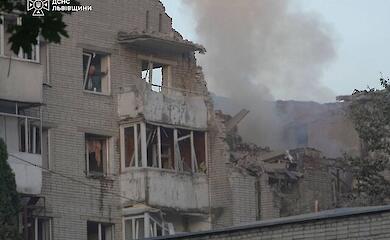
Russia has attacked Lviv with drones and missiles: dozens of residential buildings have been damaged and there are casualties

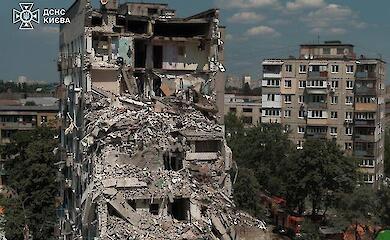
The UN has reported a sharp rise in the number of Ukrainian civilians killed as a result of the war
Popular news

Scientists have identified which childhood experiences are linked to happiness in adulthood

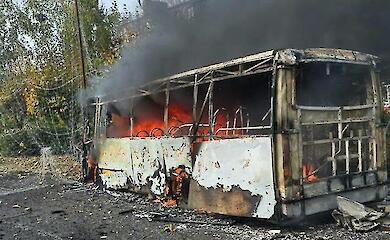
Russian forces struck a public bus in Kramatorsk: 30 dead and 18 injured
A Russian drone struck the South Bridge in Kyiv: metro services have been suspended


New Zealand has successfully restored populations of the country’s heaviest insect
News about war

‘There has been significant damage to energy infrastructure following attacks by the Russian Federation’ – Zelenskyy
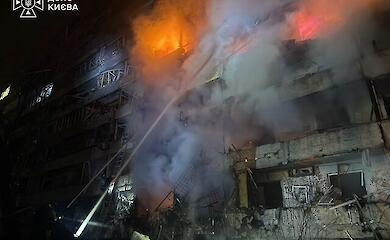
Russia has launched a ballistic missile strike on Kyiv: a residential building has been hit, and there are casualties and injured people
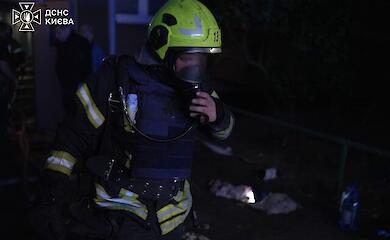
Russian ballistic missile strike on a thermal power station in Kyiv: what is known

Russia is plotting to assassinate the heads of European defence firms in order to undermine support for Ukraine — FT