

What to do in schools when the alert level is yellow. Details

When a yellow-level drone threat is declared, teaching must be suspended in educational establishments that do not have civil defence shelters.
Pupils and staff must move to shelters, and where possible, teaching can continue there, emphasised the education ombudsman, commenting on questions from education sector workers regarding the implementation of the resolution of the Cabinet of Ministers of Ukraine, reports Osvitoria.
Resolution No. 1092, ‘Certain Issues Concerning the Optimisation of Civil Defence and Response to Threats from Air Attacks’, defines two threat levels:
- red level — a missile or missile-drone threat, as well as a massive drone threat
- yellow level — a drone threat.
In accordance with the resolution, in the event of a yellow-level threat, teaching activities in schools — except for those with equipped civil defence shelters — are suspended.
The Education Ombudsman emphasises that in such a situation, teaching is suspended and all those involved in the educational process must take shelter.
If the shelter is suitable for holding lessons, teaching may resume there.
Thus, the procedure for educational establishments during yellow and red threat levels is effectively the same: teaching is suspended, and everyone involved moves to a shelter.
The problem arises in schools where the shelter’s capacity is insufficient to accommodate all pupils and staff at the same time.
The Commissioner recommends organising teaching so that the number of people in the building at any one time corresponds to the shelter’s capacity.
Possible options include:
- blended learning — on certain days, some pupils attend in person whilst others learn remotely, after which they swap
- shift-based learning
- organising face-to-face learning for specific categories of pupils, for example those in primary school and Year 5, whilst the remaining pupils study remotely.
The headteacher, together with the teaching staff, should select the specific format depending on the school’s capacity.
The Education Ombudsman drew particular attention to situations where staff at educational institutions are obliged to remain at their place of work whilst a threat is present.
The Ombudsman emphasises that education staff must not be forced to leave a safe place and go to school. According to her, such actions are unacceptable, as an employer cannot require an employee to leave a safe place where they are required to be during an air raid alert.
This is particularly important given that a yellow alert level may escalate to a red one.
The Commissioner reported that she had received complaints about instances where, during an air raid alert, staff from education authorities were checking whether teachers were present at their workplaces.
As for children, parents should take into account the security situation on a given day: whether teachers have managed to get to work and whether the school will be able to accommodate their child in a shelter.
According to the education ombudsman, these issues have to be addressed on a daily basis given the constantly changing security situation.
The Education Ombudsman suggests that communities facing increased security risks should draw on the experience of towns located close to the combat zone. In particular, during her visits to Dnipro and Zaporizhzhia, she saw mobile shelters set up at bus stops and in crowded areas.

Journalist, publicist, and expert on European integration and Ukrainian-Polish dialogue. Author for several Polish media outlets, including the weekly Polityka, the online platform Oko.press, and others.
Related news
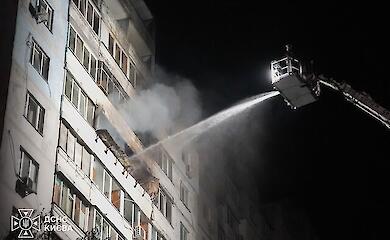
A Russian drone struck a multi-storey building in Kyiv: there have been fatalities, and children are among the injured

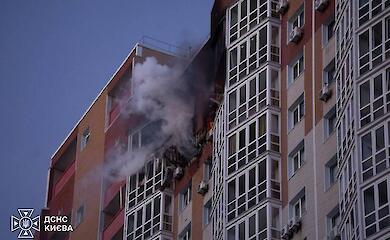
"Russia wants Ukrainians to flee their cities, and we must do everything we can to save people" – Zelenskyy



Russia attacked a passenger coach in the Dnipropetrovsk region. Five people were killed
Popular news

Scientists have identified which childhood experiences are linked to happiness in adulthood

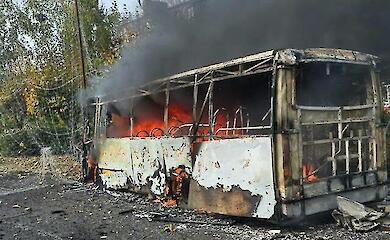
Russian forces struck a public bus in Kramatorsk: 30 dead and 18 injured
A Russian drone struck the South Bridge in Kyiv: metro services have been suspended


New Zealand has successfully restored populations of the country’s heaviest insect
News about war

‘There has been significant damage to energy infrastructure following attacks by the Russian Federation’ – Zelenskyy
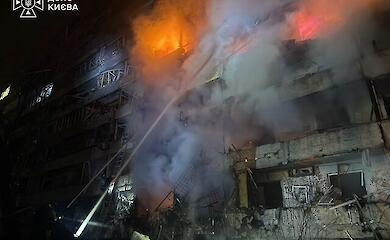
Russia has launched a ballistic missile strike on Kyiv: a residential building has been hit, and there are casualties and injured people
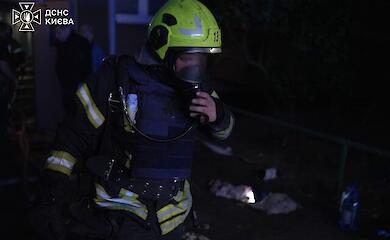
Russian ballistic missile strike on a thermal power station in Kyiv: what is known

Russia is plotting to assassinate the heads of European defence firms in order to undermine support for Ukraine — FT