


Were Roman soldiers paid in salt? A historian debunks a popular myth


A popular myth links Roman pay to salt. A historian explained what legionaries were actually paid in and where the English word ‘salary’ comes from.
The story that Roman legionaries were paid in salt rather than money is often cited to explain the origin of the English word ‘salary’. However, there is no direct evidence of such a practice.
Peter Edwell, a historian of Ancient Rome, notes that surviving sources indicate that soldiers’ basic pay was paid in coins. The connection between the word ‘salary’ and salt is real at an etymological level, but this does not prove the existence of ‘pay in salt’.
Details
The English word ‘salary’ derives from the Latin ‘salarium’ – a monetary allowance or wage. ‘Salarium’ itself is linked to the Latin ‘sal’, meaning ‘salt’. However, the classical scholar Peter Gainsford points out that no known ancient source reports that Roman soldiers were regularly issued with salt instead of money or with separate ‘salt money’.
Salt was indeed an important resource. Before the advent of modern refrigeration technology, it was used to preserve meat and fish, and its supply was vital to the army. But the importance of a commodity in itself does not make it a form of military pay.
According to the ancient Roman historian Titus Livius, the state began paying regular wages for military service in 405 BC. This pay was known as the stipendium. Later, payments were divided into several instalments throughout the year, from which the cost of food, clothing and other expenses could be deducted.
Around 50 BC, Julius Caesar increased the annual pay of an ordinary legionary to 225 denarii. By the end of the 2nd century AD, it had risen to approximately 600 denarii. Centurions and other officers received considerably more.
In addition to their basic pay, there were donativa – supplementary payments which emperors used, amongst other things, to bolster the army’s loyalty. Under Augustus, veterans were entitled to a large lump-sum payment upon leaving service: 3,000 denarii.
Why this is important
The ‘salt wage’ theory is convincing precisely because it links two historical facts: salt was of great economic importance, and the word *salarium* is indeed related to *sal*. However, the exact historical mechanism behind this connection remains unknown. The etymology of the word does not constitute proof of a specific payment practice.
The actual history of Roman military pay is no less revealing. Coins linked the army to the state’s finances, whilst pay rises and imperial bonuses became political tools. The Metropolitan Museum of Art also notes that Roman emperors paid the army in coins and that the maintenance of the troops was one of the largest items of state expenditure.
It is therefore more accurate to say that the English word ‘salary’ is linked to the word ‘salt’, but there is no evidence that legionaries received their regular pay in the form of salt.
Source
Main source: Peter Edwell, ‘Our pay is called a “salary”, but were Roman soldiers really paid in salt?’, Phys.org / The Conversation, 3 September 2026.
Further verification of etymology and ancient evidence: Peter Gainsford, ‘Salt and salary: were Roman soldiers paid in salt?’, Kiwi Hellenist, 11 January 2017.
Background on Roman coins and army pay: The Metropolitan Museum of Art, collection of Roman coins.
An independent researcher, interested in archaeology and sacred geography. He researches them and writes about them.
Related news

Freemasons and the European Left: How a political alliance turned into enmity


The 1381 Uprising: why the rebels declared their loyalty to the king


Babi Yar: what happened 85 years ago and how the memory of the victims has been preserved
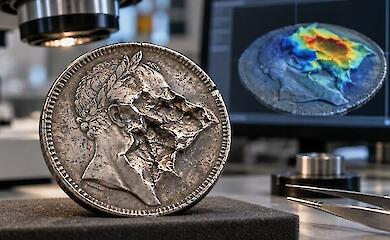
This 1834 six-penny coin was probably deformed during the minting process
Popular news

Scientists have identified which childhood experiences are linked to happiness in adulthood

Russian forces struck a public bus in Kramatorsk: 30 dead and 18 injured

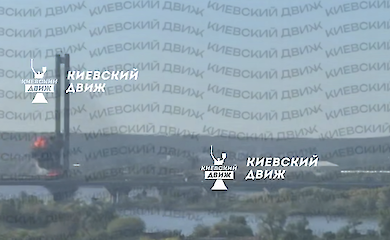
A Russian drone struck the South Bridge in Kyiv: metro services have been suspended


New Zealand has successfully restored populations of the country’s heaviest insect
News about war

Russia has launched a ballistic missile strike on Kyiv: a residential building has been hit, and there are casualties and injured people

Russian ballistic missile strike on a thermal power station in Kyiv: what is known

Russia is plotting to assassinate the heads of European defence firms in order to undermine support for Ukraine — FT
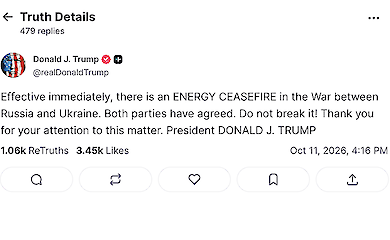
Trump announced an energy truce between Ukraine and Russia. A similar statement was made a month ago