


Walking on the heel may have helped early humans walk further — study


A comparison of human and chimpanzee gaits has shown that the heel-strike gait typical of humans saves 26–41 per cent of energy compared with walking whilst supporting the midfoot, but increases the impact load. The authors believe that this trade-off may have helped hominins to cover long distances.
The way people usually walk, with the heel striking the ground first, may be one of the key features of our bipedal gait. A study led by Nicholas Holowka of the University of Pennsylvania has shown that this type of gait requires significantly less energy than walking with the midfoot strike, but places a more abrupt impact load on the legs.
The paper was published on 8 September 2026 in the journal *Proceedings of the National Academy of Sciences*. The authors view this trade-off as a possible part of the evolution of endurance walking in hominins; however, the study did not directly measure the gait of extinct ancestors.
Details
In the laboratory phase of the study, the researchers compared the gaits of humans and chimpanzees using high-speed cameras and force platforms. Three adult male chimpanzees were observed on a track approximately 11 metres long whilst walking on all fours and on two limbs. The team also used data from a further three chimpanzees from a separate experiment and compared the results with two previously published datasets, which involved a total of 15 chimpanzees.
Twelve people took part in the human part of the study. Nine of them walked barefoot along a track approximately 7.6 metres long, fitted with force plates and reflective markers. The participants walked both in their usual manner and using a specially modified gait, in which they first placed the middle of the foot closer to the outer edge on the ground, followed by the heel. In addition, the researchers measured oxygen consumption and carbon dioxide output on a treadmill to assess energy expenditure.
During normal walking, all recorded human steps began with the heel. In chimpanzees, the position of the foot upon contact with the ground was much more variable, and when walking on two legs, they were less likely to use a heel strike. The range of foot-strike angles in chimpanzees was found to be 2.4–8.6 times wider than in humans.
For humans, heel-strike walking reduced the estimated metabolic cost by 26–41 per cent compared with midfoot-strike walking. At the same time, the rate of increase in impact load during a heel strike was up to 162 per cent higher. In chimpanzees walking on two legs, this figure for a heel strike was up to 138 per cent higher than for the gentler midfoot strike.
The authors suggest that the energy-saving benefits may have made long-distance walking more efficient, whilst thicker heel bones and larger lower-limb joints helped to compensate for the increased load. According to their hypothesis, this combination may have supported hunting and gathering strategies that required covering long distances on a daily basis.
Why this is important
The study shows that the uniqueness of human walking is not solely linked to an upright posture and straight legs. The very way the foot makes contact with the ground also differs from the gait of humans’ closest living relatives and provides a measurable energy advantage.
However, the evolutionary conclusion remains a hypothesis. The study was conducted on modern humans and chimpanzees in laboratory conditions, rather than on extinct hominins. The sample size of chimpanzees was small, and part of the comparison is based on previously collected data. Furthermore, the specially modified human gait does not fully replicate the natural gait of another species.
The authors note separately that modern hard surfaces may alter the balance between efficiency and impact load, but the effect of tarmac or other surfaces was not tested in this study. Nor does the study imply that normal heel-first walking should be avoided.
Source
Nicholas B. Holowka et al. Heel-strike mechanics reveal evolutionary trade-offs in hominin bipedalism. Proceedings of the National Academy of Sciences, 2026. DOI: 10.1073/pnas.2533918123.
Official Penn State press release: EurekAlert. The study was funded by the US National Science Foundation, the Leakey Foundation and the Wenner-Gren Foundation.
Mykola Potyka has a wide range of knowledge and skills in several fields. Mykola writes interestingly about things that interest him.
Related news

Could meditation reveal the secret of the universe? Physicists have put forward an unexpected theory


Why other people’s music drives us mad: scientists have identified five reasons

‘Don’t get dirty!’: how adults unwittingly spoil children’s games

Eye-catching fake news on social media catches the eye more quickly, but isn’t remembered any better
Popular news

Scientists have identified which childhood experiences are linked to happiness in adulthood

Russian forces struck a public bus in Kramatorsk: 30 dead and 18 injured

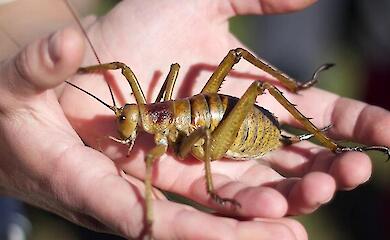
New Zealand has successfully restored populations of the country’s heaviest insect

Russian ballistic missile strike on a thermal power station in Kyiv: what is known
News about war

‘There has been significant damage to energy infrastructure following attacks by the Russian Federation’ – Zelenskyy

Russia has launched a ballistic missile strike on Kyiv: a residential building has been hit, and there are casualties and injured people
Russian ballistic missile strike on a thermal power station in Kyiv: what is known

Russia is plotting to assassinate the heads of European defence firms in order to undermine support for Ukraine — FT
