

Ukraine is training ‘return ambassadors’: what they will be able to do for Ukrainians abroad — and what they won’t be able to resolve


The Ministry of Social Policy is developing a ‘return ambassadors’ scheme — volunteers from Ukrainian communities who will be able to provide people abroad with local information ahead of a potential move. We take a look at how such assistance can be useful, what research says about returning home, and what issues need to be checked before buying a ticket.
Ukraine’s Ministry of Social Policy is developing a ‘return ambassadors’ initiative — volunteers from specific communities whom Ukrainians abroad can turn to for up-to-date information about the place they are considering moving to. This may be particularly important for people who, due to occupation, destruction or security threats, are unable to return to their former town or village and effectively have to choose a new home within Ukraine.
However, an ambassador will not be a professional adviser and will not be able to guarantee accommodation, a job, a place at school or safety. Moreover, the nationwide ambassador programme has not yet been launched: in September, participants were still finalising the model. Against this backdrop, the key question is whether local information can genuinely help people make a decision, given that the main barriers to returning are not linked to a lack of invitations, but rather to security, housing, income, employment, children and the sustainability of life after relocation.
Details
The model was discussed on 7–10 September 2026 at a workshop in Vinnytsia. Participants included the Ministry of Social Policy, Family and Unity; the Council of Europe’s project on access to rights and essential services for IDPs and returnees; the ‘Influence Group’ public holding; civil society organisations; and representatives from 20 communities. In its July invitation to the workshop, the Council of Europe explicitly described the objective as building a community of active residents who would voluntarily support people returning or planning to return, and help them make an informed decision.
According to the organisers’ vision, an ambassador should explain a specific community from the perspective of a resident: how everyday life works, what services and opportunities are available locally, where to go and who to contact. This differs from the work of a return counsellor. A counsellor must have a professional understanding of national and local programmes, services and support mechanisms, and guide individuals through formal procedures. A press release from the Ministry of Social Policy states that such advisers should work in Unity Centres and partner organisations within the ‘Unity Network’.
These elements of the infrastructure should not be confused with the new initiative. Unity Centres have already opened, notably in Berlin and Stockholm: the Berlin centre has been operational since 15 April, whilst the Stockholm centre has been welcoming visitors since 22 June. They offer advice on possible repatriation and other matters. At the same time, the broader regulatory framework for the ‘Unity Network’ was still being finalised until recently: in August, the Ministry of Social Policy held public consultations on a draft government decree; on 3 September, it published a report on these consultations; and as of early September, the document was still listed as a draft on the ministry’s website.
Another tool already in operation is the ‘Home’ digital platform . It has been launched in test mode and is gathering information on services, employment, education, social support and communities ready to welcome people. According to data from the Ministry of Social Policy as at the end of June, more than 100 local communities had joined the platform. This is a convenient starting point for those planning to relocate, but a community’s listing does not in itself mean that a specific job vacancy, accommodation or place in a nursery is available today — it is advisable to confirm key details with the relevant organisation.
No public announcement has yet been made regarding the date of the full launch of the ambassador scheme itself, the final list of communities, the number of volunteers, standardised selection criteria, the format and scope of training, funding, the channel for finding the right ambassador, or the quality control system for their recommendations. Nor has it been explained how information on housing, job vacancies, schools and local programmes will be regularly updated. For the time being, we cannot speculate on these details on behalf of the developers.
Recent data from the International Organisation for Migration (IOM) highlights why the issue of new communities is particularly important. In its report for August 2026, the IOM estimates that approximately 1.5 million people have returned to Ukraine from abroad since the start of the full-scale invasion. Around 1.1 million have reached their usual place of residence, but a further 398,000 have returned to the country whilst remaining internally displaced persons. Furthermore, nearly three in five Ukrainians who remain displaced in Europe come from frontline areas or territories not under government control. For a significant proportion of future returnees, the challenge is not to ‘return home’, but to find a safe place anew and rebuild their livelihoods there.
Some support for such a move already exists, but it does not constitute a universal ‘returnee package’. If a home has been damaged or destroyed, it is worth checking the terms of the єВідновлення programme: entitlement to compensation depends on the type of property, the status of the territory, the registration of ownership rights and other conditions. If a person cannot return to their previous address and is moving to another part of Ukraine, they need to check separately the grounds for IDP status and the current rules on housing assistance — payments are not automatically granted to every returnee. The usual tools provided by the State Employment Service are available for job seekers, whilst for entrepreneurs, the updated ‘Vlasna Sprava 2.0’ programme has been in place since September; these are general programmes, not a special guarantee for returnees.
If you are seriously considering returning, it is worth checking at least the following before buying a ticket:
- The safety of your chosen community. Not only the general situation in the region, but also the frequency of threats, the availability of shelters, the possibility of evacuation, the functioning of hospitals, and the reliability of electricity, water and heating supplies.
- Accommodation for the first few months. Where will you be staying immediately upon arrival, for how long is this option available, how much does it cost, and has it been confirmed in writing? Separately, check your entitlement to compensation, temporary accommodation or local housing schemes, if you are relying on them.
- Work and your actual household budget. Are there any specific job vacancies or the possibility of continuing to work remotely? What is your take-home pay, and will your income be enough to cover rent, utilities, transport and childcare costs?
- School or nursery. Is there a place specifically for your child? What type of education is available? What documents are required? And will you have to change your child’s educational path midway through the school year?
- Healthcare. Where are the nearest GP surgery and hospital; can you choose a GP; and are rehabilitation, medication or specialist care available if needed?
- Documents in Ukraine. Which documents need to be reissued or updated; how to register your place of residence; and if you are not moving back home, whether there are grounds for registering as an internally displaced person (IDP) and what documents will be required.
- Status in the country of residence. Before a long-term absence, check the official rules specific to your country. Your absence may affect your temporary protection or other status, benefits, council housing, health insurance and tax obligations. Rules vary from country to country and are subject to change, so there is no universal safe absence period applicable across the whole of Europe.
- Ukrainian benefits and schemes. Check not only the name of the benefit, but also the eligibility criteria, validity period, required documents and the deciding authority. Simply being told ‘you are entitled to a benefit’ without verifying the conditions is insufficient.
- Contact details in your chosen community and a plan B. Before moving, make a note of the contact details for the Administrative Services Centre (CNAP), social security, the employment service, schools, healthcare facilities and the relevant contact person in the community. Think through what to do if your housing, work or safety turn out to be worse than expected.
The UNHCR’s ‘Ukraine is Home’ platform is useful for checking administrative procedures. It specifically emphasises that return must be personal, informed, voluntary, safe and dignified, and provides country-specific guidance. Even if you have such a factsheet, it is wise to check the date of the last update and consult the official national portal of your host country before you leave: for example, at EU level, temporary protection has been extended until 4 March 2028, but the specific rules regarding registration, benefits, insurance and the consequences of prolonged absence depend on national legislation and individual circumstances.
Why this is important
The most prominent issue in the debate on return is the conflation of different types of intentions. The seventh round of the UNHCR’s ‘Lives on Hold’ study, published in July 2026, is based on 4,375 interviews with Ukrainian refugee households in Europe, conducted by Ipsos between December 2025 and January 2026 by telephone and online. In it, only 3 per cent of respondents had a specific plan to return within the next 12 months, whilst a further 46 per cent hoped to return at some point in the future. 28 per cent were undecided, and 23 per cent no longer expected to return.
This is precisely why the statement ‘49 per cent want to return’, without further explanation, is misleading: this UNHCR figure combines a small group of people with immediate plans to return with a much larger group who simply hope to return at some unspecified point in the future. At the same time, the combined proportion of those who planned or hoped to return fell from 61 per cent in July–August 2024 to 49 per cent in December 2025–January 2026. This indicates a weakening of expectations regarding return, but does not in itself prove that integration abroad is the sole cause.
The Centre for Economic Strategy arrives at a different figure: 43 per cent of Ukrainian refugees report an intention to return. The CES estimates the number of Ukrainian refugees abroad as of January 2026 at 5.6 million. The fifth wave of the study is based on a representative survey conducted by Info Sapiens in December 2025–January 2026; 36 per cent of respondents said they did not plan to return, or were unlikely to do so. Among those who express an intention to return, almost 80 per cent are prepared to do so only after the war has come to a definitive end. This figure of 43 per cent cannot be directly compared with the UNHCR’s 3 per cent: the studies phrase their questions differently and measure different time horizons.
The CES also cautions against drawing causal conclusions from respondents’ profiles. Its regression analysis takes into account country of residence, employment status, income, presence of children, age and region of origin, but reveals statistical correlations rather than proven causality. For example, respondents in Poland were more likely to state an intention to return than those in Germany; however, this does not mean that life in Poland itself ‘compels’ people to want to return more.
A broader 2026 OECD review confirms that the decision is shaped by several factors. Among the most common motives for those who had already returned were homesickness and the desire to be reunited with loved ones. However, safety, housing, employment and access to high-quality services determine the extent to which such a return is even possible and sustainable. The OECD’s econometric analysis reveals a statistical correlation: a longer stay abroad and employment in the host country are associated with a lower probability of actually returning, whilst good housing and the opportunity to return to one’s previous job in Ukraine are associated with a higher probability. Family reunification abroad can also act as an ‘anchor’ for life there. This does not mean that anyone who is working or has been away for a long time will necessarily stay: the authors specifically emphasise the dynamic nature of decisions and the limitations of the data.
For those who remain abroad for longer, the move itself objectively requires more preparatory steps: one must wrap up or transfer one’s job, terminate a tenancy, take into account the children’s school year, check documents and immigration status, and then look for accommodation, employment and access to services anew in Ukraine. Therefore, the trend towards a decline in intentions to return is consistent with the deeper integration of some people abroad, but is not limited to this alone — the war and security remain the fundamental constraints.
The role of children is particularly noteworthy. A qualitative longitudinal study of Ukrainians with temporary protection in Berlin and Munich, published in May 2026, shows how parents’ plans changed depending on security, schooling and their visions for their child’s future. The authors observed participants in several waves between 2022 and 2024; the sample is not representative of all Ukrainians in Germany, so it cannot be extrapolated to general statistics. However, it clearly illustrates a mechanism that gets lost in the percentages: a family’s return is often not a single decision made by an adult, but a choice between several already established life trajectories.
Against this backdrop, ‘return ambassadors’ have a clear potential niche. Someone who chooses an unfamiliar town really does need someone to explain what is not covered in general government guidance: where to look for accommodation, how public transport works, who to approach in the local community, which schools are overcrowded, and where local services actually operate. This is particularly valuable for residents of occupied and heavily damaged areas.
However, a volunteer does not create jobs, does not increase the housing stock, does not eliminate the risk of shelling, and cannot guarantee access to social programmes. Therefore, the usefulness of the initiative will depend not on the number of ‘ambassadors’ or the number of conversations about returning, but on whether they can provide verifiable and up-to-date information and quickly connect people with the real opportunities available in a specific community, a professional adviser and the relevant agency. Otherwise, a good idea risks becoming yet another layer of information piled on top of problems that require not communication, but resources and functioning services.
Source
The initial impetus for this article was a press release from the Ministry of Social Policy, Family and Unity of Ukraine entitled ‘Return Ambassadors: The Ministry of Social Policy is preparing a new format for engaging with Ukrainians planning to return from abroad’, which was provided to the editorial team. The stage of the model’s development, the workshop’s objectives and the role of future volunteers were further verified with the Council of Europe Office in Ukraine.
Data on plans and hopes for return are taken from the seventh round of UNHCR’s “Lives on Hold” survey, published on 13 July 2026. The description of the sample and methodology is from the UN Information Centre for Western Europe: 4,375 interviews with refugee households across Europe, December 2025–January 2026, a mixed telephone and online survey by Ipsos.
Ukrainian assessment of intentions and conditions for return – research by the Centre for Economic Strategy: the fifth wave of a survey of Ukrainian refugees dated 24 February 2026 and the report ‘Return of Ukrainians from Abroad: scale, intentions and conditions’ dated 9 July 2026.
Data on actual returns and secondary internal displacement – IOM Ukraine report for August 2026. Context on the role of security, housing, employment, family and services — the OECD review ‘Ukraine’s Strategic Response to the Displacement Crisis’ dated 20 March 2026. Context on families with children in Germany — Comparative Migration Studies open access study dated 29 May 2026.
The practical section was cross-checked against official resources: the ‘Dodomu’ testing platform, the UNHCR guide ‘Ukraine is Home’, the ‘eVidnovuvannya’ programme, the Ministry of Social Policy’s page for internally displaced persons, reports on the opening of Unity Centres in Berlin and Stockholm, as well as the EU decision to extend temporary protection until 4 March 2028 in EUR-Lex.
Maria Grynevych, project manager, journalist, co-author of Guidebook Sacred Mountains of the Dnieper Region, Lecture Course: Cult Topography of the Middle Dnieper Region.
Related news

Homes for Ukraine in 2027: 7 rules following the reduction in payments


Poland is preparing for a possible increase in the number of Ukrainians this winter


Magyar: Hungary will not refuse to allow Ukrainian men of conscription age to serve
How many Ukrainians have been granted protection in Poland since 2022: data from the Ministry of Foreign Affairs
Popular news

Scientists have identified which childhood experiences are linked to happiness in adulthood
Russian forces struck a public bus in Kramatorsk: 30 dead and 18 injured


New Zealand has successfully restored populations of the country’s heaviest insect

Russian ballistic missile strike on a thermal power station in Kyiv: what is known
News about war
‘There has been significant damage to energy infrastructure following attacks by the Russian Federation’ – Zelenskyy
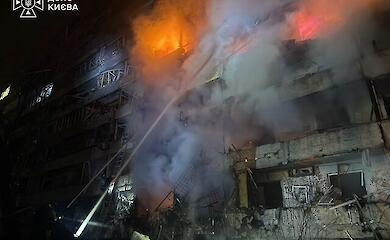
Russia has launched a ballistic missile strike on Kyiv: a residential building has been hit, and there are casualties and injured people
Russian ballistic missile strike on a thermal power station in Kyiv: what is known
Russia is plotting to assassinate the heads of European defence firms in order to undermine support for Ukraine — FT
