

Ukraine and the EU: why the negotiations are stalling over the courts, the agricultural market and the war


On 22 September, during an online discussion organised by the Evangelische Akademie Bad Boll on Ukraine’s future in the EU, participants spoke not so much about the symbolic ‘European perspective’ as about the specific cost of membership.
The discussions centred on the reform of the judiciary and anti-corruption institutions, elections during wartime, the restructuring of industry to meet EU standards, competition in agriculture, and whether the European Union itself is ready for enlargement.
Ukraine is already part of the formal negotiation process. The EU opened the first cluster – ‘Fundamentals’ – on 15 June 2026, and on 14 July the parties moved on to negotiations on the ‘External Relations’ cluster. However, it is the ‘Fundamentals’ cluster that determines the pace of the entire process: this includes the rule of law, democratic institutions, public administration, fundamental rights and economic criteria.
Details
Courts and anti-corruption efforts will be assessed not by the laws themselves, but by the results
During the discussion, the same point was made repeatedly: for Brussels, it is not enough simply to adopt European laws – it is necessary to demonstrate that the new rules actually work. This applies in particular to the judicial system, the fight against corruption and public administration.
The European Commission puts this in no uncertain terms. The decision to open the first negotiation cluster states: ‘Progress in this cluster will determine the overall pace of the negotiations’.
For Ukraine, this means that reforms to the courts or anti-corruption bodies cannot be considered complete merely following a vote in the Verkhovna Rada. The EU will be scrutinising appointment procedures, the independence of institutions, investigative practices and the enforcement of decisions.
The war makes some of the EU’s usual requirements unusually complex
A separate part of the discussion focused on elections. Participants highlighted that, in a war situation, the usual democratic cycle faces several challenges at once: the security of the voting process, the participation of military personnel, millions of citizens outside the country, and the occupied territories.
This does not negate the EU’s requirements for democratic institutions, but it makes the Ukrainian case unlike previous enlargements. Reforms are being carried out simultaneously with the mobilisation of resources for defence, the destruction of infrastructure and constant attacks on the power grid.
The CBAM turns European integration into a very specific cost for industry
The economic aspect of the discussion quickly moved beyond the ‘access to the European market’ formula. From 1 January 2026, the final version of the CBAM – the Carbon Border Adjustment Mechanism – will come into force in the EU. It covers, in particular, iron and steel, aluminium, fertilisers, cement, electricity and hydrogen.
For manufacturers outside the EU, this means they must account for embedded emissions and provide importers with data, which is then subject to verification. This is particularly challenging for Ukraine’s steel industry and other energy-intensive sectors: companies must modernise and document their emissions amidst a war, damaged energy infrastructure and limited access to capital.
This is precisely why, during the discussion, the issue of European environmental standards was viewed not as a technical detail of the negotiations, but as one example of just how costly it can be to adapt to EU rules even before formal accession.
Agriculture – a dispute not only about Ukraine, but also about the EU budget
Another area of potential conflict is the agricultural sector. Ukraine is one of Europe’s largest agricultural producers, so its full integration into the single market will affect not only trade but also the future architecture of the EU’s common agricultural policy.
During the discussion, concerns were raised about European farmers facing competition from large Ukrainian producers. For Brussels, the question is how to reconcile expanding Ukraine’s market access with protecting sensitive sectors within the EU.
The European Commission is already conducting a separate analysis of the implications of enlargement for agriculture. This indicates that Ukraine’s potential membership is not viewed simply as the addition of another country to the existing rules: the rules themselves and the allocation of resources may need to be reviewed.
The Ukrainian position: the country wants to be more than just a recipient of aid
In the Ukrainian part of the debate, accession to the EU was described as ‘a matter of the country’s survival’, but at the same time, participants contested the notion of Ukraine being viewed solely as a future recipient of European funds.
Among the arguments in favour of membership were Ukraine’s military experience and its potential in the fields of security, food, industry, technology and new markets. The logic is simple: integration will require significant expenditure from the EU, but Ukraine can provide the Union with resources that have become particularly valuable since the start of the full-scale war.
Some aspects of integration are already taking place ahead of membership. Since 1 January 2026, Ukraine has been part of the European ‘Roam Like at Home’ zone: Ukrainians in EU countries and EU citizens in Ukraine can use mobile services at domestic rates without the usual roaming surcharge. The European Commission explicitly refers to this as a step towards Ukraine’s gradual integration into the single market.
‘Associated membership’ may turn out not to be a compromise, but a new stage
During the discussion, intermediate models were also considered — for example, participation in certain European mechanisms without full membership or voting rights. For the EU, such a model could allow for the gradual integration of Ukraine.
However, on the Ukrainian side, the idea of ‘associated membership’ is viewed with caution. The concern is that a temporary arrangement could become permanent and effectively postpone full membership indefinitely.
This problem is well known from the experience of other candidate countries: if the process drags on for years without a clear political outlook, public support for integration begins to wane. Participants therefore emphasised the need for clear stages and verifiable criteria, rather than a political deadline set in advance.
Why this matters
It is no longer possible to describe Ukraine’s negotiations with the EU solely in terms of a ‘European choice’. Since the opening of the negotiation clusters, the debate has shifted to the level of specific institutions, funding and rules.
Ukraine will have to demonstrate the independence of its courts and anti-corruption bodies, adapt its industry to environmental regulations, overhaul public administration and, at the same time, wage war. The European Union, for its part, will have to decide how its budget, agricultural policy and institutional balance will change following the accession of a large country with more than thirty million inhabitants and a powerful agricultural sector.
Therefore, the real crossroads now lies not between ‘joining’ and ‘not joining’, but between rapid political convergence and much slower institutional integration. The EU has not set a formal deadline for membership: negotiations remain merit-based — progress depends on meeting the criteria.
Source
Evangelische Akademie Bad Boll — ‘The European Union as the Future of Ukraine’, 22 September 2026.
European Commission – launch of the ‘Fundamentals’ cluster, 15 June 2026.
European Commission — launch of the ‘External Relations’ cluster, 14 July 2026.
European Commission — final CBAM regime.
European Commission — ‘Roam Like at Home’ in Ukraine from 1 January 2026.
Maria Grynevych, project manager, journalist, co-author of Guidebook Sacred Mountains of the Dnieper Region, Lecture Course: Cult Topography of the Middle Dnieper Region.
Related news
‘There can be no flexibility when it comes to political criteria’: what the EU is demanding of Ukraine


Refugee policy as a test for European integration: how Ukraine and other candidate countries pass it

War will not hinder Ukraine's accession to EU - European Commissioner


Denmark calls for Hungary to be stripped of EU voting rights for violating democratic norms
Popular news

Scientists have identified which childhood experiences are linked to happiness in adulthood
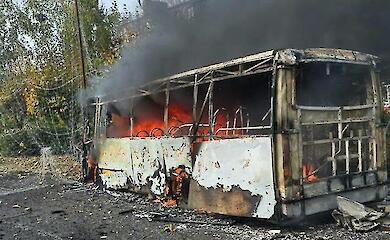
Russian forces struck a public bus in Kramatorsk: 30 dead and 18 injured

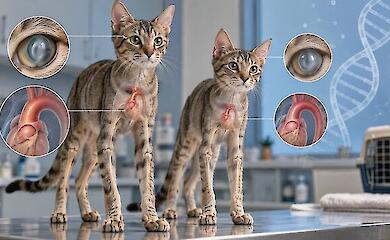
Marfan syndrome has been confirmed at the molecular level in domestic cats for the first time
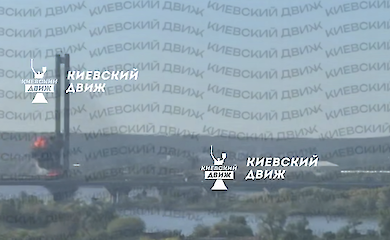
A Russian drone struck the South Bridge in Kyiv: metro services have been suspended

News about war
Russia is plotting to assassinate the heads of European defence firms in order to undermine support for Ukraine — FT
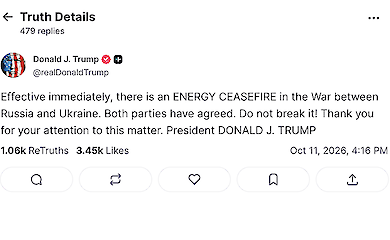
Trump announced an energy truce between Ukraine and Russia. A similar statement was made a month ago
Russian forces struck a public bus in Kramatorsk: 30 dead and 18 injured
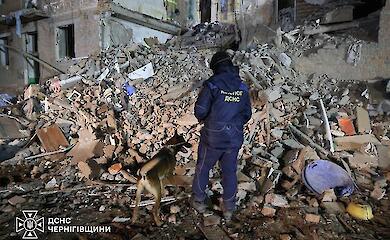
The death toll in Pryluky following the Russian missile strike has now risen to 22, including five children