


They even crushed small bones: what archaeologists have learnt about the ancient hunters of Malawi


The inhabitants of the Hora-1 site hunted within a relatively small area and made thorough use of their catch. The authors link these practices to the structure of their social relationships.
Ancient hunters in northern Malawi would even break the bones of animals’ fingers to extract a little fatty bone marrow. Having studied the finds from the Hora 1 site, archaeologists have suggested that its inhabitants obtained food close to their shelter and made thorough use of the carcasses. These findings are set out in a study published in the *Journal of Anthropological Archaeology*.
The paper was published in 2025. In an author’s explanation for The Conversation, published by Phys.org on 29 October 2026, the researchers described how food remains help shed light on the relationships between ancient human groups.
Details
Among hundreds of thousands of bone fragments, the authors were able to identify nearly 13,000 pieces. The strata at the site near Mount Hora, a granite mountain, span the last 21,000 years of human activity.
Most of the bones belonged to small animals: small antelopes, hares and monkeys. Parts of limbs, torsos and heads were found. According to the authors’ interpretation, the prey was often brought back whole, which is consistent with hunting in the vicinity of the site.
The fragmentation of the bones and the exposed phalanges indicate an effort to extract even small amounts of bone marrow. The researchers attribute this to the limited availability of dietary energy during dry-season occupations.
In a separate isotopic study from 2025, the team compared the composition of the animals’ tooth enamel with the local distribution of strontium isotopes. Analysis of 45 teeth from four sites supported the picture of hunting within a radius of tens of kilometres, with no evidence of long-distance migrations by prey.
Why this is important
The authors suggest that this attachment to a small area may have been combined with close bonds within the group and more limited contact with neighbours. The varying ages of the hunted animals also suggest collective hunting using traps or nets, which would have required coordination. It is not possible to identify the specific tools used for such hunting from the bones.
However, the researchers note no evidence of ongoing violent clashes. In their explanation, they write of the possibility of having ‘“one’s own” territory and a strong sense of cultural belonging to the group without resorting to violence towards other groups’.
The location of cultural boundaries remains a matter of interpreting the combined archaeological and genetic data. The bones allow us to reconstruct the hunting and butchering of animals, whilst social relationships must be inferred indirectly.
Source
Alex Bertacchi, Potiphar Kaliba, Jessica C. Thompson. Short-distance hunting strategies of Late Quaternary foragers in the miombo woodlands of Malawi. Journal of Anthropological Archaeology, vol. 77, article 101656, March 2025.
Alex Bertacchi et al. Biogeochemical evidence of landscape use by ancient hunter-gatherers in Malawi. Communications Earth & Environment, vol. 6, article 818, 17 October 2025. Sources: abstract of the first paper, full text of the isotopic study and the authors’ explanation on Phys.org.
Field and laboratory work was supported by the US National Science Foundation, the National Geographic Society, the Wenner-Gren Foundation, Emory University, Yale University and other foundations. This information is provided in the acknowledgements section of the isotope study.
An independent researcher, interested in archaeology and sacred geography. He researches them and writes about them.
Related news

The ‘King’ of the Iron Age may have been a woman: what ancient coins reveal


A lock from a ship that sank in 1583 was uncovered using tomography
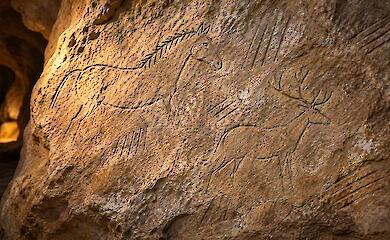
Hundreds of ancient engravings in a tourist cave in Spain had gone unnoticed for decades

Geologists have not found the source of Stonehenge’s Altar Stone in the areas of Scotland they have investigated

Popular news

Genetic evidence of natural selection has been found in dogs near the Chernobyl Nuclear Power Station



A fish with a transparent head was filmed in 4K at a depth of 600 metres


News about war

Russia is threatening to destroy bridges, ports and power stations in Ukraine in order to secure territorial concessions from Kyiv – FT


Emergency power cuts have been introduced in Kyiv and warming centres are being set up — Klitschko


Zelenskyy confirmed that the Russian warning system had been hacked: Ukraine has responded to the Russian Federation’s cyberattack

Stephen Hubbard has returned to the US after four years in prison in Russia: what is known about his case