

‘There can be no flexibility when it comes to political criteria’: what the EU is demanding of Ukraine


At the expert discussion on Ukraine’s European future, the debate centred not on slogans but on specific institutions: the courts, anti-corruption bodies, reform of the SBU, and the criteria by which the EU will assess actual progress.
Ukraine’s negotiations on accession to the European Union have already moved beyond the stage of political declarations. In 2026, the parties opened two negotiation clusters, and the most important of these – ‘Fundamentals’ – directly links the pace of the entire process to the state of the judiciary, anti-corruption institutions, democratic procedures and public administration.
It was precisely these issues that formed the focus of the second panel of the online discussion ‘Die Europäische Union als Zukunft der Ukraine’ (The European Union as Ukraine’s Future), organised by the Evangelische Akademie Bad Boll on 22 September. Participants included Wilfried Jilge, an expert from the German Council on Foreign Relations (DGAP), and Michael Gahler, a Member of the European Parliament and the standing rapporteur on Ukraine. During the discussion, they examined in detail the slowdown in certain reforms after 2024, the risks of a reversal in judicial reform, the independence of the NABU and the SAP, the unfinished transformation of the SBU, and the role of civil society.
Details
Why everything hinges on the ‘Fundamentals’ cluster
On 15 June 2026, the EU and Ukraine officially opened negotiations on Cluster 1 – ‘Fundamentals’. This cluster comprises chapters on the judicial system and fundamental rights, justice and security, public procurement, statistics and financial control. The Council of the EU specifically emphasised that this cluster is opened first and closed last, and that progress on it determines the overall pace of the negotiations.
On 14 July, the second cluster for Ukraine – ‘External Relations’ – was opened, covering external trade policy as well as the EU’s common foreign, defence and sanctions policies. As of 22 September, the remaining four clusters had not yet been opened.
This sequence explains why the debate on European integration is increasingly being reduced not to the question of ‘whether the EU supports Ukraine’s membership’, but to a much narrower question: whether specific reforms can be considered sustainable and irreversible.
The courts: international experts have become a political issue in their own right
During the discussion, Wilfried Jilge cited judicial reform as one of the key examples of how progress already made can prove to be unsustainable. He spoke primarily about the High Council of Justice (HCJ) and the High Qualification Commission for Judges (HQCJ), in the formation of which international experts were involved in vetting candidates for integrity.
This issue is also raised in the European Commission’s official report for 2025. The Commission noted that the mandate of the committee responsible for selecting members of the HQCJ, with the involvement of international experts, had expired in June 2025. Under current legislation, the next composition of such a commission could be formed solely by representatives of national bodies, which themselves have not yet undergone comprehensive reform. The European Commission recommended that independent international experts continue to play a substantive role in future selection processes.
The problem is not merely a procedural one. In the spring of 2025, the High Council of Justice was operating with a minimum quorum of 15 members out of the stipulated 21, which, according to the European Commission’s assessment, affected the body’s ability to fulfil its constitutional functions. In October 2025, the President appointed a further two members who had undergone international vetting, but some vacancies remained unfilled.
For the EU, this is not a technical debate about personnel commissions, but a test of whether the mechanisms designed to limit corporate and political influence on the judiciary will be maintained.
NABU and SAP: the backtracking took a few days, but the consequences remain
The most striking example of the political cost of the reforms was the conflict surrounding the National Anti-Corruption Bureau and the Specialised Anti-Corruption Prosecutor’s Office in the summer of 2025.
In July, the Verkhovna Rada passed a law that effectively placed the independent anti-corruption bodies under the authority of the politically appointed Prosecutor General. The decision sparked protests in Ukraine and sharp criticism from international partners. Following this, a new law was swiftly passed, restoring the independence of the NABU and the SAP.
The European Commission, however, noted that some of the problematic provisions of the July amendments remained in place. In particular, this concerned the ability to transfer and appoint prosecutors without a competitive selection process under martial law, and the Prosecutor General’s expanded access to pre-trial investigation materials outside the scope of NABU and SAPO cases. The Commission considered that such provisions create a risk of undue interference.
This episode is also significant for understanding the role of civil society. During the discussion, Yilge specifically referred to the protests against restrictions on the independence of anti-corruption bodies as an example of a situation where public pressure effectively halted an institutional backslide.
What exactly does Michael Gahler say?
Gahler himself had formulated an extremely firm position on the membership criteria even before the September debate. During the European Parliament’s debate on the enlargement strategy on 10 March 2026, he said:
“There can be no flexibility on political criteria – they must be met.”
At the same time, Galer drew a distinction between political and economic conditions. In the economic sphere, he said, the EU had already made use of transition periods to mitigate the consequences of accession for both existing EU members and the new country.
In July, whilst presenting the European Parliament’s report on Ukraine, Gahler once again highlighted two key issues: judicial reform and the independence of anti-corruption bodies. In an official statement by the European Parliament, he emphasised:
“The continuation of judicial reforms and the unhindered work of anti-corruption bodies remain key.”
On 8 July, the European Parliament adopted Galer’s report by 460 votes to 136, with 59 abstentions. This provides a more accurate picture of the political support for Ukraine’s path within the EU Parliament than general assessments of the level of support.
Jilge: stalling negotiations because of corruption crises is not the answer
Wilfried Jilge’s position is not simply that ‘reforms have slowed down’. Following a major corruption scandal in Ukraine at the end of 2025, he told Deutsche Welle that it would be “absolutely wrong” to slow down Ukraine’s path to the EU. Instead, the expert proposed using the “leverage of European integration” to consolidate functioning institutions and involve civil society in monitoring the reforms.
Yilge developed the same line of reasoning during the September debate: criticism of backsliding, he said, should not be used as an argument against Ukraine’s EU membership, but does provide grounds for linking further progress more strictly to verifiable fulfilment of the criteria.
SBU: reform is underway, but its final model has not yet been enshrined in law
Another specific point that Yilge addressed during the discussion was the reform of the Security Service of Ukraine. He highlighted the need to remove functions that do not correspond to the model of a modern European intelligence service, and to focus the SBU on counter-intelligence, counter-terrorism, cyber security and the protection of state secrets.
In 2025, the SBU approved a development strategy running until 2030, and the roadmap on the rule of law specifically provides for a review of the service’s powers. This means that the direction of the reform has been set. However, the institutional restructuring is not yet complete: the roadmap itself provides for further changes to the legislative framework and a clearer division of functions between law enforcement agencies.
The European Commission also pointed out that the checks on law enforcement officers carried out by the SBU, which were introduced in July 2025, did not provide sufficient safeguards against potential abuses.
Six to ten years — not a guaranteed timeframe
During the discussion, a period of six to ten years was cited as a realistic timeframe for full membership — provided the criteria are met and there is political will in both Ukraine and the EU member states. This is an expert assessment by the participants, not an official EU timetable.
The formal enlargement methodology does not set an automatic date for accession. The process remains merit-based: a country progresses as it meets the criteria, and each stage requires the consent of the Member States.
Therefore, interim models – access to specific EU policies and markets prior to full membership – were discussed as a practical tool. At the same time, participants highlighted a risk: ‘associated’ or partial status could evolve from a transitional solution into a substitute for full membership.
Integration is already underway — but it is important to distinguish between steps that have been completed and those that have not
The clearest example of sectoral integration that has already taken place is roaming. On 1 January 2026, Ukraine officially joined the EU’s ‘Roam Like at Home’ zone. Ukrainian subscribers can use mobile services in the 27 EU countries at domestic rates, whilst EU citizens enjoy similar conditions in Ukraine.
The situation is different with the SEPA payment area. During the discussion, it was cited as one of the areas for further integration; however, as of 22 September 2026, Ukraine is not yet a member of SEPA: The Verkhovna Rada is considering legislative amendments necessary to meet the criteria of the European Payments Council and to subsequently apply for membership.
This distinction is telling: some aspects of integration can be achieved well before membership, but each sector requires its own harmonisation of rules and verification of their implementation.
Why this is important
The launch of the ‘Fundamentals’ cluster has changed the nature of the debate on Ukraine’s accession to the EU. Now, political support alone does not drive the negotiations forward: concrete evidence is needed that judicial and anti-corruption institutions maintain their independence, that appointments are made through transparent procedures, and that the laws passed work in practice.
At the same time, the European side also faces its own constraints. The discussion covered future competition in the agricultural sector, the budgetary implications of enlargement and the need for transition periods. This means that the negotiations are not a one-sided test for Ukraine, but a process in which changes will also be required of the EU itself.
The main crossroads looks like this: acceleration may not come about by lowering political criteria, but rather through faster fulfilment of measurable conditions. This is precisely why the courts, NABU, the Specialised Anti-Corruption Prosecutor’s Office (SAPO), the Security Service of Ukraine (SBU) and civil society oversight are at the centre of the conversation about Ukraine’s European future.
Source
Evangelische Akademie Bad Boll – programme ‘Die Europäische Union als Zukunft der Ukraine’.
Council of the EU — opening of the ‘Fundamentals’ cluster, 15 June 2026.
Council of the EU — opening of the ‘External Relations’ cluster, 14 July 2026.
European Commission — Ukraine Report 2025.
European Parliament — report on Ukraine and statement by Michael Gahler, July 2026.
European Parliament — debate on the EU’s enlargement strategy, 10 March 2026.
Deutsche Welle – commentary by Wilfried Jilge on reforms and European integration.
European Commission – launch of ‘Roam Like at Home’ for Ukraine.
Verkhovna Rada — draft bill on legislative preparations for Ukraine’s accession to SEPA.
Maria Grynevych, project manager, journalist, co-author of Guidebook Sacred Mountains of the Dnieper Region, Lecture Course: Cult Topography of the Middle Dnieper Region.
Related news
Ukraine and the EU: why the negotiations are stalling over the courts, the agricultural market and the war


Refugee policy as a test for European integration: how Ukraine and other candidate countries pass it

War will not hinder Ukraine's accession to EU - European Commissioner


Denmark calls for Hungary to be stripped of EU voting rights for violating democratic norms
Popular news

Scientists have identified which childhood experiences are linked to happiness in adulthood
Russian forces struck a public bus in Kramatorsk: 30 dead and 18 injured


Marfan syndrome has been confirmed at the molecular level in domestic cats for the first time
A Russian drone struck the South Bridge in Kyiv: metro services have been suspended

News about war
Russia is plotting to assassinate the heads of European defence firms in order to undermine support for Ukraine — FT
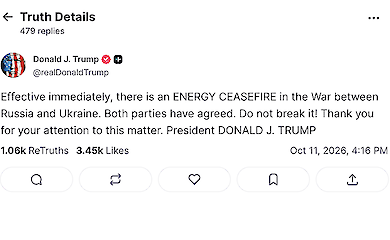
Trump announced an energy truce between Ukraine and Russia. A similar statement was made a month ago
Russian forces struck a public bus in Kramatorsk: 30 dead and 18 injured
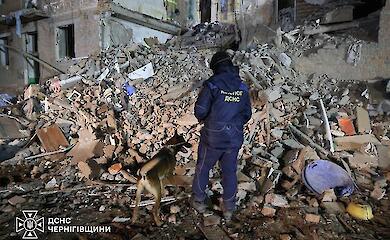
The death toll in Pryluky following the Russian missile strike has now risen to 22, including five children