


The Romans turned an ancient burial mound into a sanctuary — pig skulls containing coins were found nearby


In Suffolk, England, the Romans enclosed an ancient burial mound with a sacred fence and built a small sanctuary nearby. Archaeologists have uncovered six burials containing pig’s heads and limbs, some of which contained coins.
In Suffolk, England, archaeologists have discovered that the Romans turned an ancient Bronze Age burial mound into the centre of a religious complex. A small wooden sanctuary stood next to it, and pig skulls and limbs were neatly arranged in several pits — Roman coins were found on two of the skulls.
The burial mound itself predated the Romans by a long time: dating of the deposits in the surrounding ditch points to 2200–1600 BC. By the time the Roman sanctuary was established, it was already an ancient landmark in the local landscape.
Details
The monument near Red Lodge was excavated in 2016 prior to residential development. All that remains of the burial mound is a circular ditch approximately 45 metres in diameter; the central mound was destroyed by later ploughing. The original burial has not survived either, so archaeologists dated the structure based on the deposits at the bottom of the ditch.
During the Roman period, probably in the 2nd century CE, a rectangular, fenced-off area—a temenos, that is, a designated sacred territory—appeared around the burial mound. Researchers estimate that it covered an area of approximately 200 by 160 metres. Later, a small single-storey building measuring approximately 5 by 4.5 metres was constructed next to the burial mound. All that remains of it are the holes left by wooden posts, fragments of roof tiles and painted plaster.
The most unusual find was located right next to this building. In two pits, archaeologists discovered six so-called ‘head-and-hoof’ assemblages: pig skulls together with articulated parts of the forelimbs and hindlimbs. All the skulls were oriented towards the east, in the direction of the presumed sanctuary.
Coins lay on two of the skulls: a sestertius of Antoninus Pius from 156–157 and a dupondius of Faustina dated to 142. Traces of copper were preserved on yet another skull, which may indicate that a coin had previously been placed there. The varying dates of the remains and coins suggest that the pits were opened and reused on several occasions.
An almost complete cow skeleton, a dog’s grave and the remains of a rooster were also found on the site. Researchers regard their location and the manner in which they were laid out as possible ritual deposits. Judging by the finds, the sanctuary remained in use until the late 4th century.
However, the archaeologists found no inscriptions or other evidence that would allow them to identify the deity. The very identification of the building as a sanctuary and of the animals as ritual offerings is based on a combination of the layout, the unusual burials and other finds, rather than on direct written confirmation.
Why this is important
The discovery sheds light on religious life in Roman Britain outside the major cities and monumental stone temples. A small rural community was able to create a sacred space around a monument that was already several centuries old at the time.
The reuse of prehistoric burial mounds during the Roman period is also known from other British sites. But Red Lodge stands out due to the complex’s long-term development: first, a sacred enclosure appeared around the old burial mound, then a separate building was erected nearby, and ritual activities continued over the course of several centuries.
Why this particular burial mound came to hold such significance is unknown. The author of the study suggests that the ancient mound may have been associated with a mythologised ancestor or endowed with special power, though this remains an interpretation. Archaeological evidence more reliably suggests something else: the Romans did not obliterate the older monument, but deliberately incorporated it into the new religious space.
Source
This article is based on a Phys.org publication dated 3 September 2026: ‘Away from grand temples, a recycled Bronze Age burial mound became the focus of a Roman religious complex’.
Original source of the research: Angus Forshaw, ‘A Reused Bronze Age Barrow and Roman Religious Shrine Site at Red Lodge, Suffolk’, Britannia, published online on 12 August 2026. DOI: 10.1017/S0068113X26100841. The article is published under an open access licence (CC BY 4.0).
An independent researcher, interested in archaeology and sacred geography. He researches them and writes about them.
Related news
The letters have shed light on the role of Baghdad’s merchants in the history of ancient Kish

Bones from ancient dwellings have revealed evidence of violence in Scandinavia

Egypt is set to send the Fayum portraits abroad for the first time: 6 facts
Coca leaves have been found in Peru alongside sacrificed llamas
Popular news
Scientists have identified which childhood experiences are linked to happiness in adulthood

Russian forces struck a public bus in Kramatorsk: 30 dead and 18 injured


A Russian drone struck the South Bridge in Kyiv: metro services have been suspended

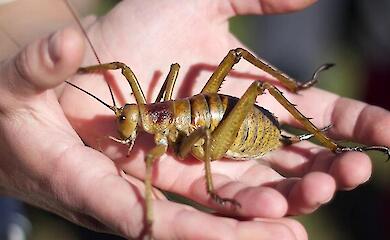
New Zealand has successfully restored populations of the country’s heaviest insect
News about war

‘There has been significant damage to energy infrastructure following attacks by the Russian Federation’ – Zelenskyy

Russia has launched a ballistic missile strike on Kyiv: a residential building has been hit, and there are casualties and injured people
Russian ballistic missile strike on a thermal power station in Kyiv: what is known

Russia is plotting to assassinate the heads of European defence firms in order to undermine support for Ukraine — FT