
The rainforests of Belize still bear traces of the ancient Maya


The old-growth forests in north-western Belize may still bear the ecological imprint of Mayan fields, canals and settlements. Above former flooded fields, the forest is, on average, taller and denser. However, this is a statistical correlation within a single region, rather than evidence applicable to the whole of Central America.
The old-growth forests in north-western Belize may still bear the ecological traces of Mayan fields, canals and settlements. Scientists have compared aerial laser scanning (LiDAR) data with ancient structures hidden beneath the vegetation.
The most striking differences were found above former flooded fields: the forest there was, on average, taller, denser and more heterogeneous. However, the study revealed a statistical correlation in one region, rather than proving that the Maya altered all of Central America’s tropical forests in the same way.
Details
The study was carried out by researchers from the University of Exeter and the University of Texas at Austin. The paper has been published in the journal *Scientific Reports* as an accepted and peer-reviewed preprint: it already has a permanent DOI, but may still undergo editorial revisions before the final version is released.
The researchers studied 47 square kilometres within the Río Bravo Conservation Area. This area is home to two major Maya sites — Wari Camp and Gran Cacao — as well as settlements, ancient walls and a system of flooded fields with canals. Following the departure of a significant portion of the population around a thousand years ago, the area has experienced relatively little modern human impact and is now covered by old-growth forest.
LiDAR data collected in 2016 made it possible to simultaneously visualise the terrain beneath the canopy and the three-dimensional structure of the vegetation. The researchers compared the height, density and distribution of the tree canopies with three types of Maya heritage: flooded fields, settlements and walls on elevated terrain. The analysis was carried out for areas ranging in size from 100 to 500 metres.
At a scale of 100–300 metres, former flooded fields were associated with taller, denser and more diverse tree canopies. Ancient canals, even after being partially filled in, continue to channel water, whilst the areas between them are better drained. The authors suggest that changes in the water regime may have steered the forest’s development in a different direction, but further palaeoecological data are needed to test this mechanism.
In areas of ancient settlements, vegetation was more frequently concentrated in the upper part of the canopy, and the canopy itself was denser. Possible explanations include the limestone and plaster from ruined buildings, which altered soil properties, as well as the survival of species useful to the Maya, such as the ramón tree. These causes remain hypotheses for the time being.
For ancient walls, the correlation proved weaker and mainly concerned the vertical alignment of the tree canopies. At a scale of 500 metres, almost all correlations with infrastructure disappeared, whilst the terrain continued to have a noticeable influence on the forest. The study covers only one region of Belize, reveals correlations, and some forms of Maya agriculture leave no discernible traces in the LiDAR data at all.
Why this is important
The study shows that old-growth tropical forest does not necessarily imply an area that has never been influenced by humans. Even centuries later, abandoned canals, fields and stone structures may still be linked to the distribution of trees and the formation of the forest canopy.
This is important for nature conservation: if the history of land use is not taken into account, differences between forests may be mistakenly attributed solely to climate, soil or modern human impact. LiDAR surveys, which archaeologists typically use to locate structures beneath vegetation, also allow the forest itself to be studied at the same time.
The findings do not imply that modern-day deforestation is harmless or that any form of intervention improves the ecosystem. The authors emphasise that current changes to tropical landscapes are occurring on an unprecedented scale. Larger-scale studies are needed to understand whether the pattern identified extends across the entire Maya region.
Source
- Sara Eshleman et al., ‘The enduring legacy of the ancient Maya on tropical forests’, *Scientific Reports*, published 26 August 2026. DOI: 10.1038/s41598-026-66716-6.
- Andrew Merrington, ‘Old-growth tropical forests bear lasting legacy of ancient Maya civilisation’, University of Exeter, 1 September 2026.
- ‘Old-growth tropical forests bear lasting legacy of ancient Maya civilisation’, Phys.org, 1 September 2026.
An independent researcher, interested in archaeology and sacred geography. He researches them and writes about them.
Related news
The letters have shed light on the role of Baghdad’s merchants in the history of ancient Kish

Bones from ancient dwellings have revealed evidence of violence in Scandinavia


Egypt is set to send the Fayum portraits abroad for the first time: 6 facts
Coca leaves have been found in Peru alongside sacrificed llamas
Popular news

Scientists have identified which childhood experiences are linked to happiness in adulthood
Russian forces struck a public bus in Kramatorsk: 30 dead and 18 injured

A Russian drone struck the South Bridge in Kyiv: metro services have been suspended

New Zealand has successfully restored populations of the country’s heaviest insect
News about war

‘There has been significant damage to energy infrastructure following attacks by the Russian Federation’ – Zelenskyy
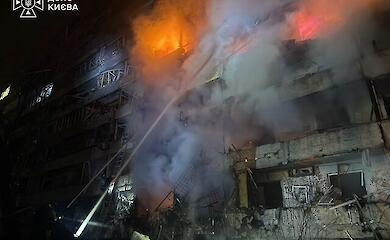
Russia has launched a ballistic missile strike on Kyiv: a residential building has been hit, and there are casualties and injured people
Russian ballistic missile strike on a thermal power station in Kyiv: what is known

Russia is plotting to assassinate the heads of European defence firms in order to undermine support for Ukraine — FT