


The genome of a spider named after Stephen Colbert, which is rich in repeats, has been sequenced


Researchers have produced the first reference genome for the family Euctenizidae. It will aid the study of spider populations in coastal dunes, although some parameters still need to be refined.
Scientists have produced the first reference genome for the spider Aptostichus stephencolberti, named after the American comedian Stephen Colbert. In a study published in the *Journal of Heredity*, the authors described DNA consisting of nearly 78 per cent repetitive sequences. The work lays the groundwork for the study and conservation of this inhabitant of the Californian dunes.
Details
DNA from a single female specimen collected from the Marina Dunes Nature Reserve was used for the assembly. The main assembly contains 3.63 billion base pairs; based on the sequences, the authors estimated the genome size at 3.87 billion. Repetitive regions account for 77.67 per cent of the main assembly.
There is a discrepancy here with the press release from the University of California, Davis: it cites 4.6 billion base pairs and a genome size approximately 50 per cent larger than that of humans. These figures do not match the parameters of the published assembly, so the comparison cannot be incorporated into the study’s conclusions without further clarification.
The number of chromosomes is also still an estimate: the authors suggest around 52 in a single set, or approximately 104 in a pair. The exact karyotype has yet to be established; the assembly does not cover all chromosomes continuously from one end to the other.
The spider itself, about the size of a small coin, lives in the coastal dunes between San Francisco Bay and Monterey. Females hide in silk-lined burrows with a camouflaged entrance and spring out to catch their prey when they sense a vibration. The species was named in 2008: Colbert, on his programme, asked for the spider to be named after him upon learning that musician Neil Young had already been honoured in this way.
Why this is important
A large amount of DNA does not in itself mean more genes: a significant proportion of this assembly consists of highly repetitive sequences. For scientists, this provides an opportunity to compare the structure of the genomes of different spiders.
There is also a conservation aspect. These spiders rarely leave their territories, and their habitat is fragmented. Genomic data will help distinguish between populations that may require separate protection. Rising sea levels and invasive species threaten their narrow coastal strip.
‘We Californians love our beaches, and these spiders share them with us,’ said co-author Jason Bond in a university press release.
The new assembly provides a tool for future research; on its own, it does not yet reveal how the genetic diversity of all populations within the species is changing.
Source
Stephen Richards et al., Journal of Heredity. The article was published on 8 September 2026; the university highlighted it in a press release dated 28 October. The work was carried out as part of the California Conservation Genomics Project, with support from the State of California and the US National Science Foundation.
Mykola Potyka has a wide range of knowledge and skills in several fields. Mykola writes interestingly about things that interest him.
Related news
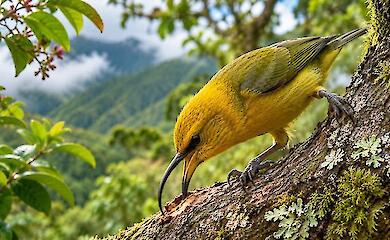
A Hawaiian bird with a ‘double’ beak pecks at a tree with its whole body - scientists have discovered how


Why did the kings of Norway need Sámi ancestors? Historians have re-examined the sagas


A fish with a transparent head was filmed in 4K at a depth of 600 metres

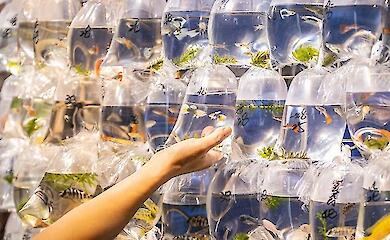
Up to 107,000 wild species have been identified as being used or traded
Popular news

Genetic evidence of natural selection has been found in dogs near the Chernobyl Nuclear Power Station

A fish with a transparent head was filmed in 4K at a depth of 600 metres


News about war

Russia is threatening to destroy bridges, ports and power stations in Ukraine in order to secure territorial concessions from Kyiv – FT

Emergency power cuts have been introduced in Kyiv and warming centres are being set up — Klitschko


Zelenskyy confirmed that the Russian warning system had been hacked: Ukraine has responded to the Russian Federation’s cyberattack

Stephen Hubbard has returned to the US after four years in prison in Russia: what is known about his case