


Students may be expelled for refusing to take or failing the ‘Fundamentals of National Resistance’ module


From 1 October, more than 414,000 students at Ukrainian universities and colleges began studying ‘The Fundamentals of National Resistance’. The law explicitly states that refusing to take the compulsory module or failing the final assessment may constitute grounds for expulsion, but it sets out a number of exceptions.
From 1 October 2026, a new subject, ‘Fundamentals of National Resistance’, has been introduced in Ukrainian universities and higher vocational education institutions. In the 2026/2027 academic year, 414,231 students at 948 institutions are required to take the course, according to the Ministry of Education and Science.
The course is not compulsory for everyone without exception. However, for students subject to the legal requirement, refusal to take the course or failing the final assessment are explicitly stated as grounds for expulsion from the educational institution.
Details
The new rules are set out in Law No. 4826-IX, adopted by the Verkhovna Rada on 25 March 2026. Training for students under the new model began on 1 October.
The subject is included in the educational programmes and curricula for Ukrainian citizens who are enrolled in full-time or dual-track programmes and are pursuing a vocational higher education qualification or a bachelor’s degree. For medical, pharmaceutical and veterinary programmes, the requirement also applies to master’s degree programmes.
The Act expressly stipulates that failure to pass the final assessment or refusal to study ‘Fundamentals of National Resistance’ constitutes grounds for expulsion, save where exceptions are provided for by law.
Students are exempt from the course if they have already completed military service; have successfully studied this subject as part of a previous course of study; hold a certificate confirming completion of basic general military training and the acquisition of a military speciality; are not enrolled in a full-time or dual-track programme; or who reside in the temporarily occupied territory of Ukraine.
For students whose religious beliefs preclude the use of weapons, weapon-related components may be replaced by other parts of the programme. People with disabilities or partial loss of working capacity may, upon presentation of medical documentation, be exempted from practical sessions that could be harmful to their health. The final assessment for such students is based on the components they were able to complete.
The Ministry of Education and Science approved the standard programme by Order No. 1002 of 30 June 2026. It focuses on actions in situations posing a security threat, the preservation of life and health, first aid and preparedness for national resistance. The law separately provides for practical training in the handling and firing of small arms at a specifically designated training facility, in compliance with safety regulations.
However, the course does not entail students undertaking military service. According to the Ministry of Education and Science, studying this subject does not require students to take the military oath, undergo a medical examination, report to a military registration and enlistment office or a military training centre, obtain a military speciality, or automatically acquire the status of a person liable for military service.
Why this is important
The wording regarding expulsion is not a media interpretation, but a provision of the law. Part nine of the new Article 6-2 of the Law ‘On the Fundamentals of National Resistance’ directly links refusal to undertake the subject or failure in the final assessment with the possibility of expulsion.
However, the statement ‘any student will be expelled for failing a course’ would be inaccurate. The law sets out categories of students exempt from the subject and special conditions for people with health restrictions and for those whose religious beliefs prohibit the use of weapons. Furthermore, the grounds for expulsion are specifically a failure to pass the final assessment or a refusal to undertake the course, rather than automatically missing a single session or receiving an unsatisfactory mark for a single topic.
For students, the practical considerations are the status of the subject within their study programme and the rules governing final assessment at their specific institution. If a student falls into one of the categories of exemption provided for by law, this must be taken into account when organising their studies.
Source
Law of Ukraine No. 4826-IX of 25 March 2026 ‘On Amendments to Certain Laws of Ukraine Concerning Specific Issues Relating to the Preparation of Ukrainian Citizens for National Resistance’. The Act supplemented the Act ‘On the Fundamentals of National Resistance’ with Article 6-2; Part Nine sets out the consequences of withdrawing from the subject or failing the final assessment.
Ministry of Education and Science of Ukraine, 1 October 2026: details regarding the launch of the course and the number of students and institutions.
Maria Grynevych, project manager, journalist, co-author of Guidebook Sacred Mountains of the Dnieper Region, Lecture Course: Cult Topography of the Middle Dnieper Region.
Related news

Students are not free labour: who will be paid for their work experience and what will happen to their work experience record?


Students at Kyiv National University protested, demanding the rector's dismissal


Occupiers force Ukrainian students to serve Russian military-industrial complex - Centre for National Resistance


Not enough money to have fun: a student in Kyiv robbed a box to collect money for the AFU
Popular news

Scientists have identified which childhood experiences are linked to happiness in adulthood
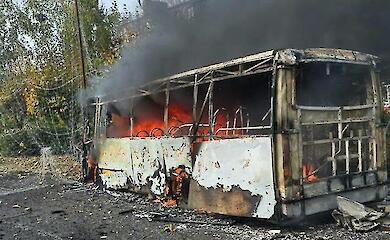
Russian forces struck a public bus in Kramatorsk: 30 dead and 18 injured


Marfan syndrome has been confirmed at the molecular level in domestic cats for the first time
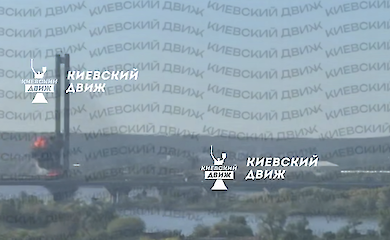
A Russian drone struck the South Bridge in Kyiv: metro services have been suspended

News about war
Russia is plotting to assassinate the heads of European defence firms in order to undermine support for Ukraine — FT
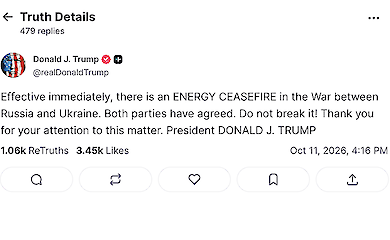
Trump announced an energy truce between Ukraine and Russia. A similar statement was made a month ago
Russian forces struck a public bus in Kramatorsk: 30 dead and 18 injured
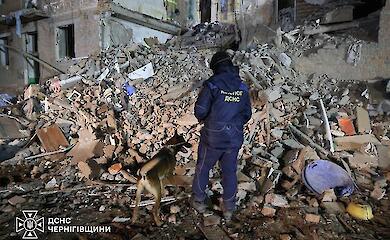
The death toll in Pryluky following the Russian missile strike has now risen to 22, including five children