
Skulls from Egyptian royal tombs have pointed to human sacrifices


A re-examination of an old collection of skeletal remains has revealed signs of violence that were previously thought to be post-mortem injuries.
A re-analysis of the remains from Abydos has lent support to the theory that some of the courtiers of Egypt’s earliest rulers were killed so that they could be buried alongside them. Potentially fatal injuries sustained around the time of death were found on 18 of the 46 skulls examined.
Details
Bioarchaeologist Roselyn A. Campbell from Purdue University studied the collection held in Cambridge. The remains originate from burials at First Dynasty royal complexes, dating from approximately 3078–2900 BC.
Most of the injuries identified are linear skull fractures. Injuries caused by sharp objects were also found. Modern forensic methods make it possible to distinguish such injuries from damage to dry bone that occurred after death.
Flinders Petrie, who excavated the burials in the 1920s, suspected sacrificial killings but did not identify any conclusive evidence of fatal violence. He reburied most of the skeletons, retaining only the skulls.
Why this is important
This study demonstrates how new methods are altering the conclusions drawn from older excavations. However , 39 per cent refers to the proportion of injured skulls in the sample studied, not the proportion of victims amongst all those buried.
The preserved skulls represent only 5–15 per cent of those buried at each site. There are no complete skeletons, and the paraffin used to stabilise the bones obscures part of their surface. Consequently, the manner of death of the remaining individuals and the circumstances of the alleged sacrifices remain unknown.
Source
Peer-reviewed article by Roselyn A. Campbell in *Frontiers in Environmental Archaeology*, Volume 5, Article 1858940, 5 October 2026. DOI: 10.3389/fearc.2026.1858940. Licence: CC BY. The initial analysis was partly funded by the University of California, Los Angeles.
An independent researcher, interested in archaeology and sacred geography. He researches them and writes about them.
Related news
The ‘King’ of the Iron Age may have been a woman: what ancient coins reveal

A lock from a ship that sank in 1583 was uncovered using tomography
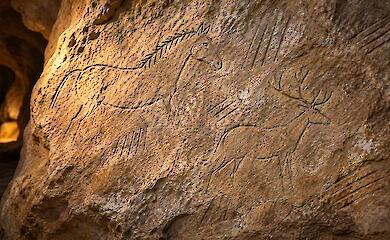
Hundreds of ancient engravings in a tourist cave in Spain had gone unnoticed for decades

Geologists have not found the source of Stonehenge’s Altar Stone in the areas of Scotland they have investigated

Popular news

Genetic evidence of natural selection has been found in dogs near the Chernobyl Nuclear Power Station



A fish with a transparent head was filmed in 4K at a depth of 600 metres

News about war
Russia is threatening to destroy bridges, ports and power stations in Ukraine in order to secure territorial concessions from Kyiv – FT

Emergency power cuts have been introduced in Kyiv and warming centres are being set up — Klitschko

Zelenskyy confirmed that the Russian warning system had been hacked: Ukraine has responded to the Russian Federation’s cyberattack

Stephen Hubbard has returned to the US after four years in prison in Russia: what is known about his case