


Scientists have proposed a model for AI governance based on the principles of Pope Leo XIV


Researchers from Poland and Finland have proposed a model for governing artificial intelligence based on the principles of Catholic social teaching and Pope Leo XIV’s encyclical. The key idea is to allocate roles between the state, companies and society, whilst retaining specific human responsibility for AI decisions.
Researchers from the John Paul II Catholic University of Lublin and the University of Eastern Finland have developed a model for the governance of artificial intelligence, in which ethical principles should determine not only the rules for using the technology, but also who bears responsibility for its decisions.
The authors draw on the social teaching of the Catholic Church and Pope Leo XIV’s encyclical *Magnifica Humanitas*, which is devoted to the protection of the human person in the age of artificial intelligence.
Details
The model was developed by Stanisław Fel, Marta Choroszewicz and Jarosław Kozak. The paper has been published in the journal *AI and Ethics*.
The authors propose a so-called normatively grounded hybrid model. Government bodies, technology companies, experts, civil society organisations, citizens and international institutions may all participate simultaneously in the governance of AI; however, their roles and responsibilities must be clearly defined.
The researchers identify eight key principles: human dignity, the common good, the universal purpose of goods, social justice, solidarity, subsidiarity, shared responsibility, as well as transparency and accountability.
One example concerns the allocation of social benefits. An algorithm may assist in assessing an application, but, according to the proposed model, the final decision must not be an impersonal outcome generated by an automated system. A specific person must be responsible for this decision; the applicant must be given an explanation of the decision in clear language and be afforded the opportunity to appeal against it. Such systems must also undergo independent auditing.
These provisions are in line with the encyclical *Magnifica Humanitas*, in which Leo XIV opposes the complete delegation of sensitive decisions—those affecting people’s rights, opportunities and freedoms—to algorithms, and emphasises the need for human responsibility and public oversight.
Why this is important
Debates on the governance of AI often boil down to the question of who should set the rules — the state, technology companies, or a combination of both. The authors propose shifting the focus: first, to define the principles governing the distribution of power and responsibility, so that the involvement of multiple institutions does not lead to a situation where, ultimately, no one is accountable for the consequences of the system’s operation.
That said, the paper presents a normative model rather than an experimental test of the effectiveness of a specific regulatory system. It illustrates how, in the authors’ view, AI governance should be organised, but does not in itself prove that the proposed framework will work better in practice.
Source
Study: Stanisław Fel, Marta Choroszewicz, Jarosław Kozak, ‘A normatively grounded hybrid model of AI governance: insights from the teaching of Leo XIV’, AI and Ethics (2026). DOI: 10.1007/s43681-026-01336-4.
An official statement from the University of Eastern Finland and Pope Leo XIV’s encyclical *Magnifica Humanitas* were used to verify the context.
Mykola Potyka has a wide range of knowledge and skills in several fields. Mykola writes interestingly about things that interest him.
Related news

How to store family photos and videos so you don’t lose your archive




Should you restart your smartphone once a week? What the experts say
Popular news

Scientists have identified which childhood experiences are linked to happiness in adulthood


Marfan syndrome has been confirmed at the molecular level in domestic cats for the first time

Media reports: one EU country is blocking the opening of accession negotiation clusters for Ukraine


New scans have revealed hidden cameras near Tutankhamun’s tomb

News about war
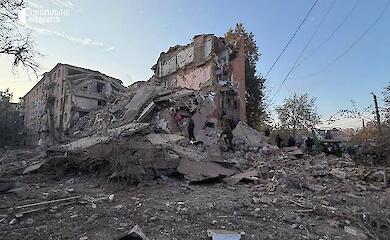
Russia has struck a multi-storey residential block in Pryluky with a missile: there are fatalities, and people are being rescued from the rubble


Western media report on the situation regarding train services in Ukraine following shelling by the Russian Federation

"Russia wants Ukrainians to flee their cities, and we must do everything we can to save people" – Zelenskyy
A Russian drone struck the South Bridge in Kyiv: metro services have been suspended