

Scientists have investigated how closely laboratory models resemble human embryos

Scientists have developed a method for assessing blastoids using molecular data. The analysis revealed the limitations of existing models.
Researchers at the University of Sydney have developed a method to test the accuracy of blastids — models of early embryos created from stem cells. None of the four methods tested was able to fully replicate a human blastocyst.
Details
The team combined more than 14,000 datasets on RNA from individual cells of human embryos. The resulting map shows how cells change during the early stages of development. They compared this with data from blastoids derived from different source cells and using different protocols.
The analysis took into account the cells’ molecular characteristics and the course of their specialisation. Some models reproduced the three main cell lineages relatively well. In others, certain cell types were represented inaccurately, or there were cells for which no clear counterpart could be identified in the embryo.
Why this is important
Blastoids enable the study of early development, but conclusions depend on the accuracy of the specific model. These structures are research models, not actual human embryos. Outward similarity is not sufficient to consider them biologically equivalent.
This study evaluates the molecular correspondence of four methods. Its results do not prove that the models replicate all the functions of the embryo. The authors have made the data and comparison tools publicly available for further verification.
Source
Long S. et al., Systematic transcriptomic evaluation of blastoid models of early human development, Cell Systems (2026), article 101738. DOI: 10.1016/j.cels.2026.101738. See also the University of Sydney’s official press release on Scimex and the authors’ dataset.
The work was supported by the NHMRC and the Metcalf Award, awarded to Pengyi Yang; Raja Jothi’s contribution was funded by the US NIH/NIEHS internal research programme. The authors declared no conflicts of interest.
Mykola Potyka has a wide range of knowledge and skills in several fields. Mykola writes interestingly about things that interest him.
Related news
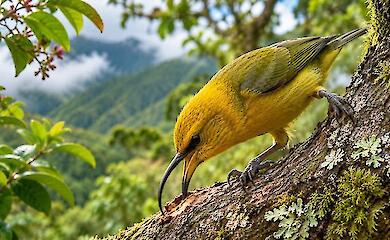
A Hawaiian bird with a ‘double’ beak pecks at a tree with its whole body - scientists have discovered how


Why did the kings of Norway need Sámi ancestors? Historians have re-examined the sagas


A fish with a transparent head was filmed in 4K at a depth of 600 metres

Up to 107,000 wild species have been identified as being used or traded
Popular news

Genetic evidence of natural selection has been found in dogs near the Chernobyl Nuclear Power Station

A fish with a transparent head was filmed in 4K at a depth of 600 metres


News about war

Russia is threatening to destroy bridges, ports and power stations in Ukraine in order to secure territorial concessions from Kyiv – FT


Emergency power cuts have been introduced in Kyiv and warming centres are being set up — Klitschko


Zelenskyy confirmed that the Russian warning system had been hacked: Ukraine has responded to the Russian Federation’s cyberattack

Stephen Hubbard has returned to the US after four years in prison in Russia: what is known about his case