
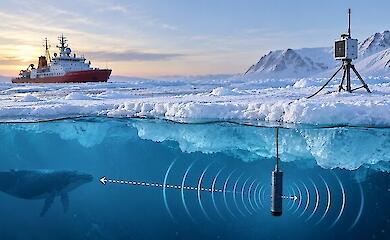

Scientists have found a way to determine where the biggest earthquakes are likely to occur


Researchers at UC Riverside have developed a method that identifies locked sections of subduction zones based on movements of the Earth’s surface. Based on data prior to the 2025 earthquake in Kamchatka, the model corresponded with the main rupture zone, but does not predict the timing of the event.
Geophysicists at the University of California, Riverside, have developed a method that helps to identify which sections of subduction zones are most locked and are accumulating strain. This approach can improve long-term seismic risk assessments, but does not predict when an earthquake will occur.
When tested in Kamchatka, a model built using GNSS satellite measurements of ground motion prior to the 8.8-magnitude earthquake in 2025 identified an area that subsequently largely coincided with the main rupture zone.
Details
The method is primarily intended for subduction zones — boundaries where one tectonic plate subducts beneath another. It is precisely there that the planet’s largest earthquakes occur. Some sections of the plate boundary can remain ‘locked’ by friction for decades. Whilst the plates continue to move, elastic strain accumulates in such sections.
Axel J. Periollat and Gareth J. Funning used GNSS velocities measured in Kamchatka between the earthquakes of 1952 and 2025. A probabilistic algorithm explored a range of possibilities regarding which elements of the fault surface might be locked, without specifying the location of such zones in advance. As a result, the model identified a broad area of high locking probability and several more compact sections within it.
The main area of high locking probability coincided with the location where the rupture occurred during the 2025 earthquake, whilst the more compact sections were found to be close to the zone where it began. The authors also compared the 2025 event with the major earthquake of 1952 and concluded that both ruptures affected the same deep-seated region. However, in 2025, the shallow-water section of the fault shifted less, which is consistent with a weaker tsunami.
It is important to note that the published paper appeared on 15 July 2026, after the 2025 earthquake had already occurred. It therefore represents a retrospective validation of the method using data collected prior to the event, rather than a public forecast of a specific earthquake made in advance.
Why this is important
If the method is validated in other regions, it could help to pinpoint more accurately the sections of subduction zones where the greatest stress accumulates. The team is already applying the approach to Japan, Mexico, New Zealand and the north-western Pacific coast of the US.
However, the method has significant limitations. It does not predict the date of an earthquake or the magnitude of a potential tsunami. Furthermore, many of the hazardous sections of the faults lie beneath the ocean, where ground-based GNSS observations are insufficient, and the shallow-water portion of subduction zones remains the least well measured. The authors explicitly state that marine geodetic data and additional observations are required for a more reliable assessment.
Source
The study by Axel Perioll and Gareth Fanning, ‘Linking Interseismic Locking to Coseismic Rupture: The 2025 Mw 8.8 Kamchatka Earthquake’, has been published in the journal Geophysical Research Letters. DOI: 10.1029/2026GL121826. The paper is available as open access and was supported by NASA. Official UC Riverside material: UCR News.
Mykola Potyka has a wide range of knowledge and skills in several fields. Mykola writes interestingly about things that interest him.
Related news

Why ‘zombie cells’ accumulate as we age: 5 findings from a new study


Counting to five revealed how children’s inner speech develops: 5 conclusions

Are you thinking quickly right now – or will fatigue get in the way more later on? 5 findings from the study

Same calories – different reactions: 5 insights into ultra-processed food

Popular news

Scientists have identified which childhood experiences are linked to happiness in adulthood

Russian forces struck a public bus in Kramatorsk: 30 dead and 18 injured


Marfan syndrome has been confirmed at the molecular level in domestic cats for the first time
A Russian drone struck the South Bridge in Kyiv: metro services have been suspended

News about war

Russia is plotting to assassinate the heads of European defence firms in order to undermine support for Ukraine — FT

Trump announced an energy truce between Ukraine and Russia. A similar statement was made a month ago
Russian forces struck a public bus in Kramatorsk: 30 dead and 18 injured
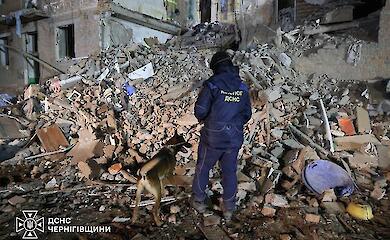
The death toll in Pryluky following the Russian missile strike has now risen to 22, including five children