
Satellites have detected signs of two magma chambers beneath the Masaya volcano


Different parts of the volcano moved in opposite directions. The model attributes this to changes in two magma chambers.
Researchers at Pennsylvania State University have discovered evidence of two magma chambers beneath the Masaya volcano in Nicaragua. The conclusion is based on satellite measurements of ground movement from January 2018 to February 2024.
Details
Lizzie Johnson’s team used Sentinel-1 radar imagery and the InSAR method. This technique allows small surface displacements to be tracked, even in cloudy conditions.
From 2018 to mid-2022, the ground to the north of the Santiago crater subsided, then began to rise. The authors attribute this change in movement to the central reservoir being replenished with magma from deep underground.
At the same time, the area immediately surrounding Santiago continued to subside. This discrepancy is explained by a model featuring two sources of deformation: a central one at a depth of approximately 3.2 kilometres and a shallower one, at around 200 metres.
Why this is important
Around two million people live in the vicinity of Masai. These observations help us to understand magma movement and detect changes in the volcano’s activity.
The authors have not identified any immediate threat to local residents. The study helps to improve monitoring, but does not predict the date of the next eruption.
The depths of the reservoirs are estimates derived from the model based on surface movements. Further observations are needed to refine our understanding of the underground system.
Source
E. Johnson, J. C. Kim and K. Vautier. Double Trouble: Two Active Magma Reservoirs Identified at Masaya Volcano, Nicaragua, Using Satellite Geodesy. Geophysical Research Letters, 53(14), e2026GL123214. Published 23 July 2026. DOI: 10.1029/2026GL123214.
Press release from Pennsylvania State University. The work was supported by the US National Science Foundation (NSF).
Mykola Potyka has a wide range of knowledge and skills in several fields. Mykola writes interestingly about things that interest him.
Related news
Scientists have discovered that there is not always liquid magma beneath volcanoes

Scientists have made an unexpected discovery off the coast of Hawaii
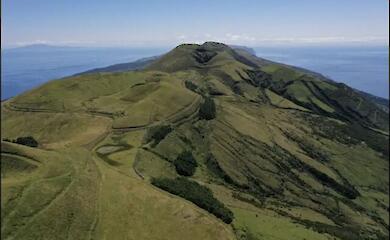
An island in the Atlantic narrowly escaped a hidden eruption - scientists have discovered

Volcano has been "sleeping" for 100,000 years, but has been saving magma all this time - study
Popular news

Genetic evidence of natural selection has been found in dogs near the Chernobyl Nuclear Power Station


A fish with a transparent head was filmed in 4K at a depth of 600 metres


News about war

Russia is threatening to destroy bridges, ports and power stations in Ukraine in order to secure territorial concessions from Kyiv – FT


Emergency power cuts have been introduced in Kyiv and warming centres are being set up — Klitschko


Zelenskyy confirmed that the Russian warning system had been hacked: Ukraine has responded to the Russian Federation’s cyberattack

Stephen Hubbard has returned to the US after four years in prison in Russia: what is known about his case
